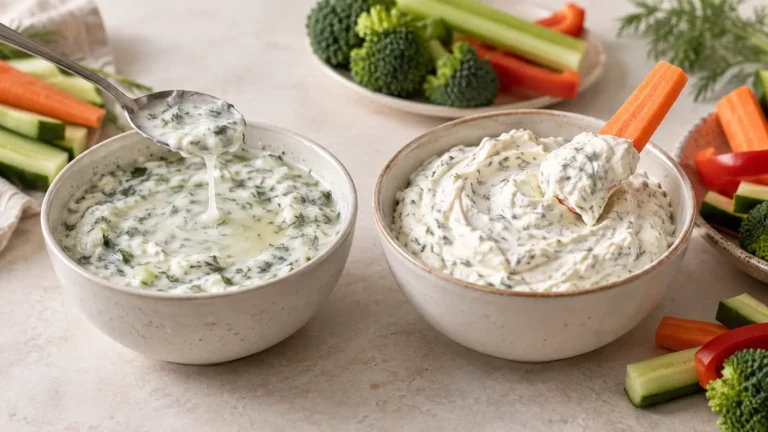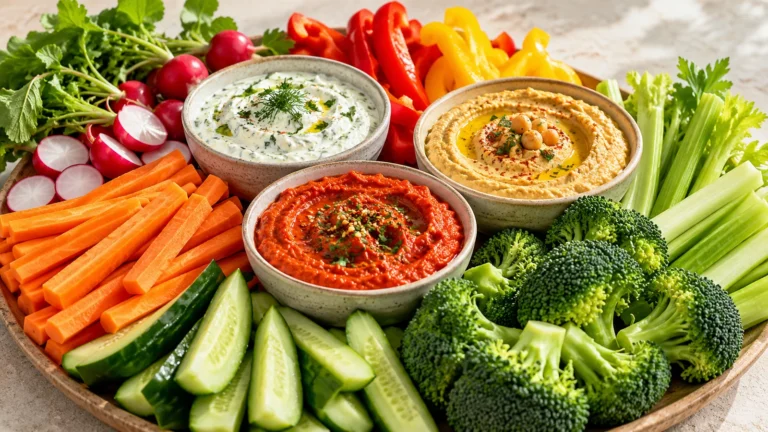
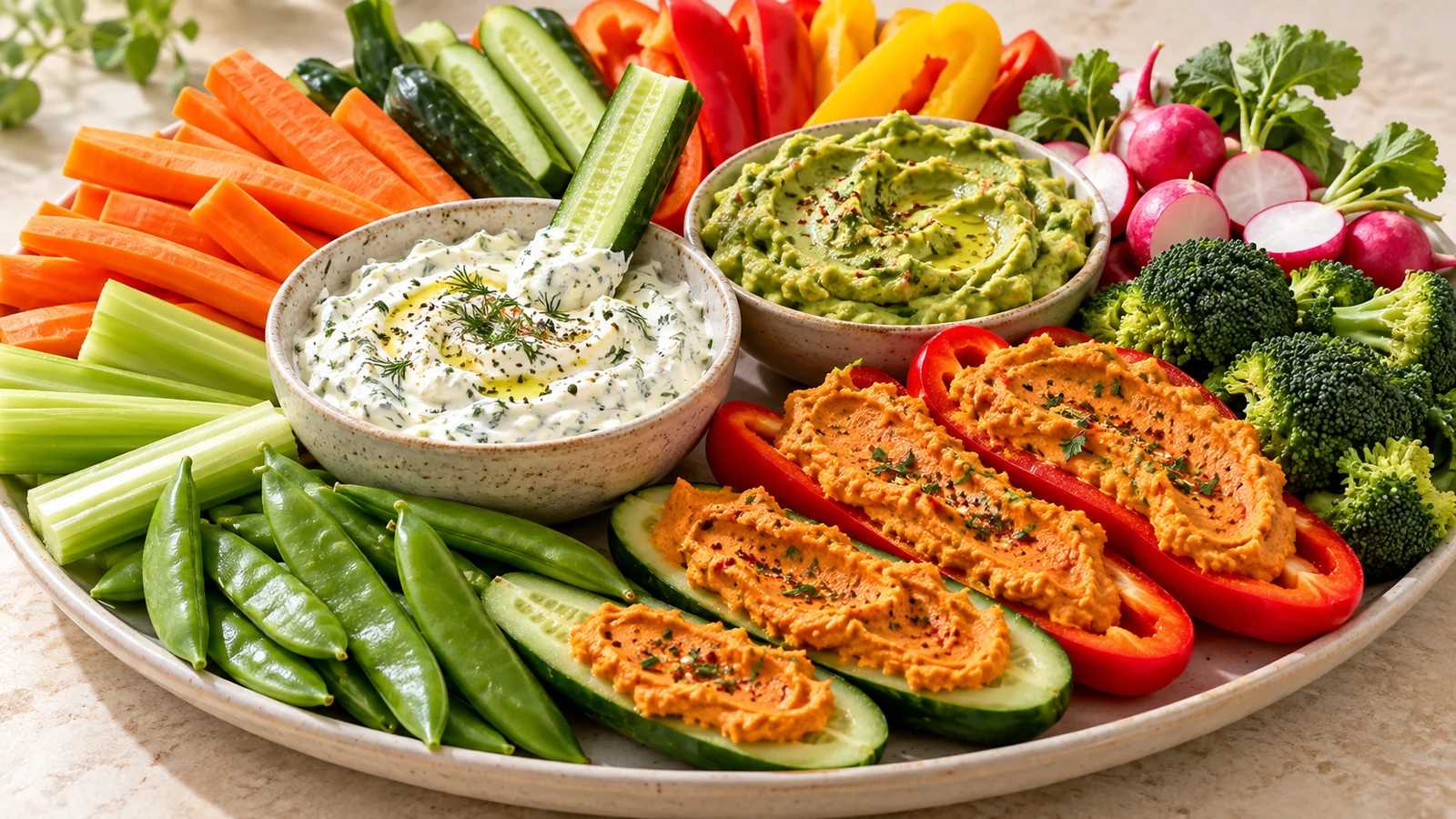
Dip vs spread comes down mainly to texture and how the food is served. A dip should be soft enough to scoop with a vegetable stick, while a spread needs enough body to stay on toast, a sandwich or a wrap. Both can start with the same ingredients; controlling moisture often determines which one you make.
Quick answer: A dip is usually softer and easier to scoop. A spread is usually thicker, more stable and less likely to drip. Many recipes can become either one by controlling moisture and blending time.
Dip vs Spread: Texture and Uses at a Glance
| Feature | Dip | Spread |
|---|---|---|
| Texture | Softer and scoopable | Thicker and more stable |
| Best use | Vegetables, chips and crackers | Toast, sandwiches and wraps |
| Moisture | Usually slightly higher | Usually lower |
| Serving test | A carrot can scoop it without breaking | It stays on bread without running |
What makes a recipe a dip?
A vegetable dip should be soft enough to scoop but thick enough to cling. Thin vegetables such as cucumber need a gentler texture than sturdy carrots or broccoli. If a dip slides straight off the food, it is too loose for most trays.
What makes a recipe a spread?
A spread needs enough body to remain on bread, crackers or wraps. Drained beans, cream cheese, roasted vegetables, avocado and thick yogurt all work well. Excess liquid is the most common reason a spread becomes messy.
How to turn a dip into a spread
Drain watery ingredients before blending.
Use less lemon juice, milk, water or oil at first.
Add a thick base such as beans, cream cheese, Greek yogurt or roasted vegetables.
Chill the mixture so it firms before serving.
Add liquid back one teaspoon at a time only if needed.
If the mixture is already too loose, use the methods in How to Fix a Watery Dip.
How to turn a spread into a dip
Loosen a thick spread gradually with water, lemon juice, yogurt, olive oil or another liquid that fits the recipe. Blend or stir after each small addition. Stop when vegetables can scoop it without excessive pressure.
12 recipes that can work both ways
1. Roasted red pepper white bean
Keep it thick for sandwiches and toast, or add a little lemon and water for a vegetable dip. Use the roasted red pepper white bean recipe.
2. Roasted garlic white bean
White beans create a stable base. A thicker batch works in wraps; a softer batch suits carrots and peppers. See the roasted garlic white bean dip.
3. Avocado lime
Mash it thick for toast or blend it slightly softer for vegetables. Prepare close to serving for the best color. See the avocado lime dip.
4. Beet and feta
Use less liquid for crostini and wraps, or soften it for a colorful vegetable-board dip. See the beet and feta dip.
5. Roasted carrot tahini
Roasted carrot gives body while tahini supports a smooth texture. Adjust water carefully. See the roasted carrot tahini dip.
6. Eggplant without tahini
Drain the roasted eggplant well for a spreadable texture; loosen it only when serving as a dip. See the eggplant dip.
7. Pea and mint
Blend briefly for a textured toast spread or longer for a smoother vegetable dip. See the pea and mint dip.
8. Yellow squash
Roasting removes excess moisture, making the mixture adaptable for crackers, sandwiches or vegetables. See the yellow squash dip.
9. Cream cheese herb
Use it thick as a sandwich spread or loosen it with sour cream or yogurt for dipping. See the cream cheese veggie dip.
10. Cottage cheese herb
Blend cottage cheese until smooth, then control the final texture with lemon juice or yogurt. See the cottage cheese veggie dip.
11. Greek yogurt herb
Use strained yogurt for a thicker spread and regular Greek yogurt for a soft dip. See the Greek yogurt veggie dip.
12. Hummus-style chickpea mixture
Keep it dense for sandwiches, or add cold water gradually for a creamier dipping consistency. Tahini contains sesame. See our Classic Hummus for Veggies recipe for the base mixture.
Frequently asked questions
Are dips and spreads the same thing?
They often share ingredients, but their intended texture and use are different. A recipe can sometimes serve both purposes after a small moisture adjustment.
Can any dip be used as a sandwich spread?
Not always. Very loose dairy dips can soak bread. Thicker bean, cheese, avocado and roasted-vegetable dips usually adapt more successfully.
How thick should a vegetable dip be?
It should cling to the vegetable after one scoop without running immediately back into the bowl.
For refrigerated storage guidance, see the dedicated guide: How Long Does Veggie Dip Last?