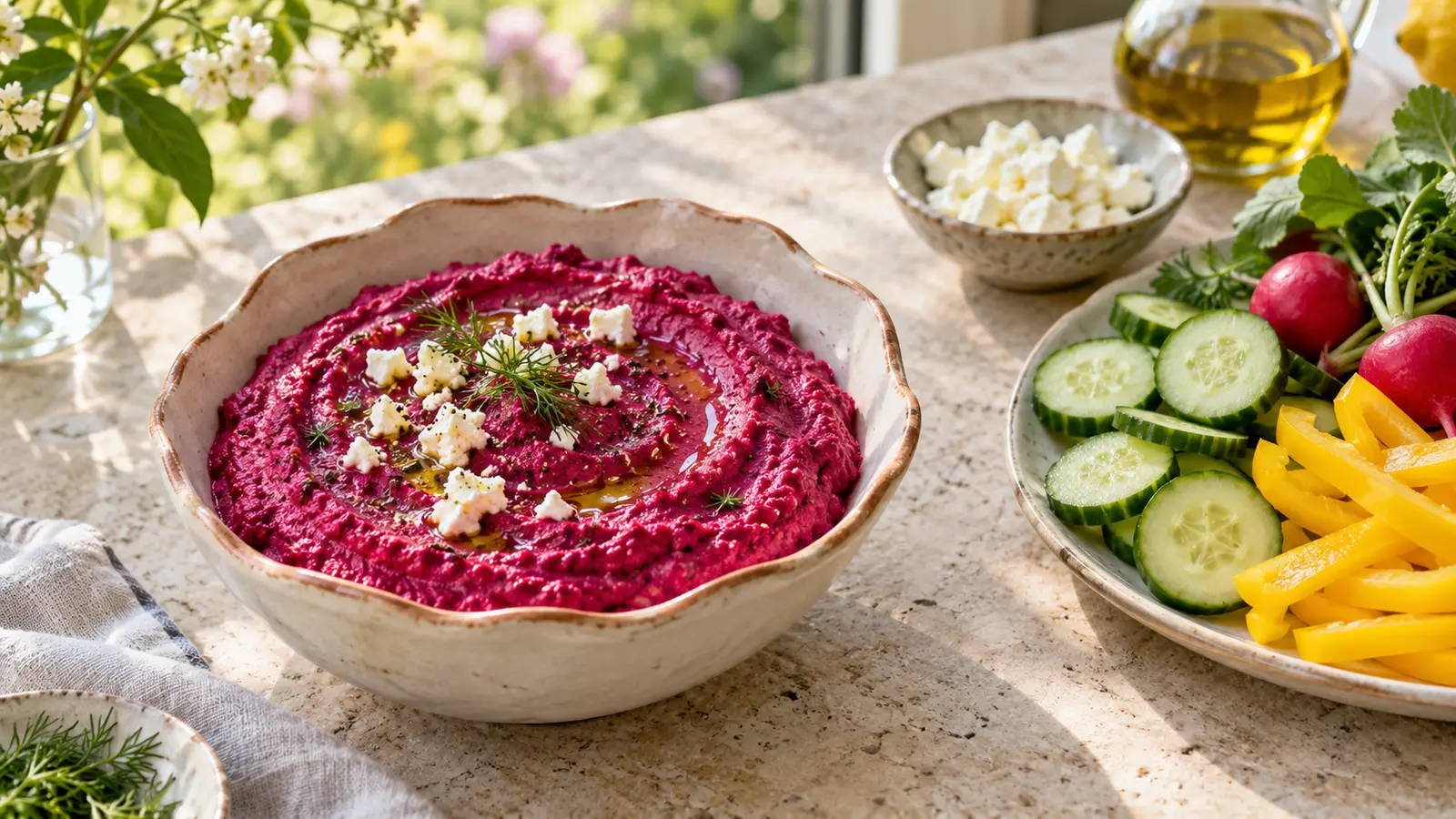
A vivid beet-and-feta dip with a small amount of Greek yogurt, olive oil, lemon and garlic.
Roasted beet remains the defining ingredient in this dip; feta adds body, saltiness and tang. A small amount of plain Greek yogurt smooths the texture without replacing the beet-and-feta base. The recipe does not use chickpeas or tahini.
Beetroot and Feta Dip
In the UK and Australia, beet is commonly called beetroot. This beetroot and feta dip combines cooked beetroot, block feta, Greek yogurt, lemon and garlic. Pat the beetroot dry before blending so the dip stays thick enough for vegetable sticks or a crudités platter.
Shortcuts
Plain vacuum-packed cooked beets are the easiest shortcut. Plain canned beets can work when thoroughly drained; pickled beets change the flavor substantially.
If it is too thin
Add more well-drained cooked beet first. See How to Fix a Watery Dip for broader troubleshooting.
Best vegetables
Cucumber, carrots, celery, peppers, radishes, cauliflower and broccoli all work. See Vegetable Charcuterie Board Dips for board presentation.
Storage
Use the central storage guide.
Ingredients
Method
- Roast 2–3 medium beets at 400°F / 205°C in a covered dish or foil packet until knife-tender, about 45–70 minutes.
- Cool, peel and measure 10 oz / 285 g cooked beet. Pat away obvious surface moisture.
- Process beet, feta, Greek yogurt, olive oil, lemon, garlic and pepper until creamy.
- Add 1 tbsp water only if needed, then reassess before adding more.
- Taste before adding salt.