
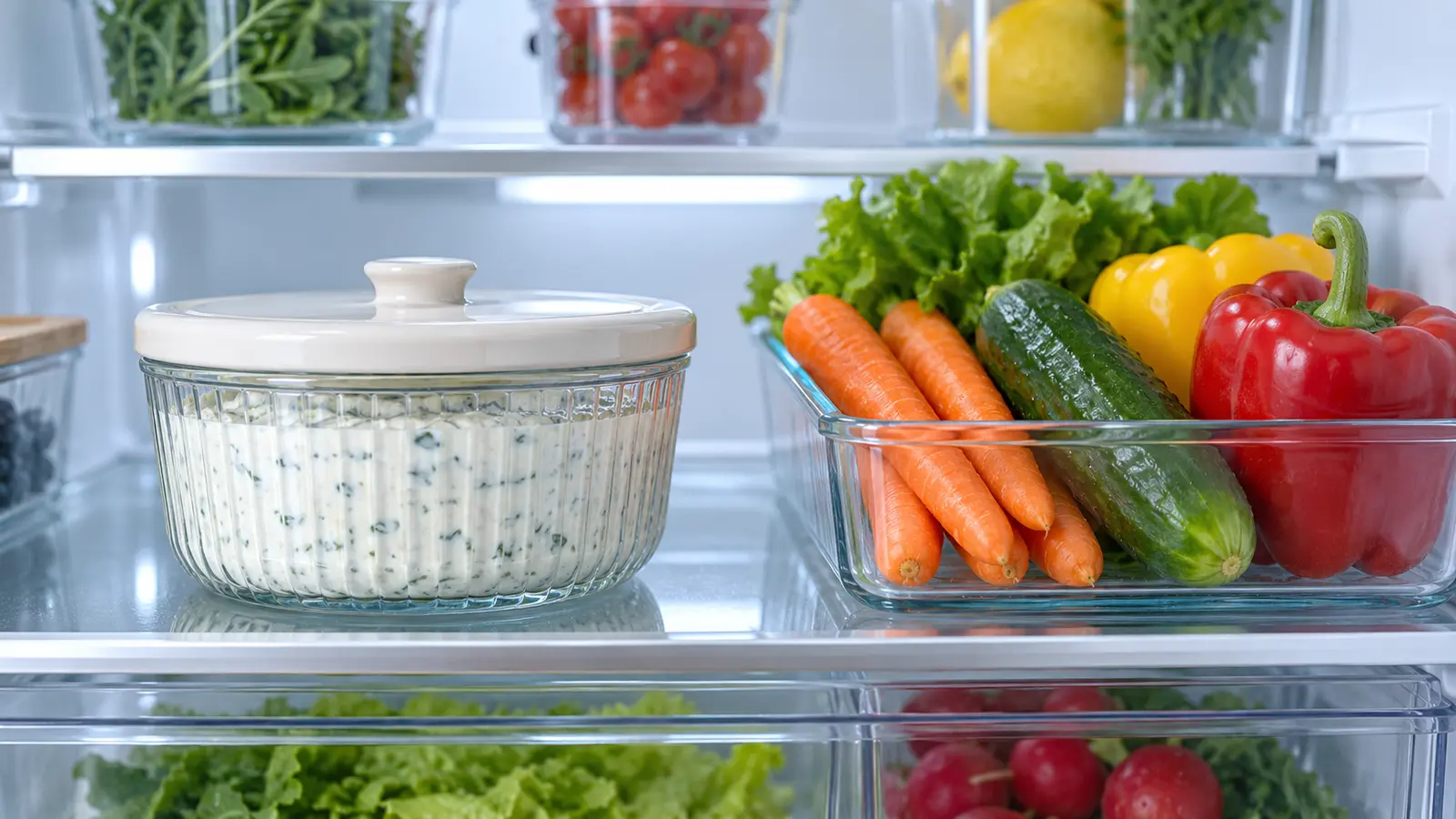
A central storage and serving-safety guide for homemade and store-bought vegetable dips.
For homemade perishable dips, a conservative starting point is the USDA general leftovers framework: refrigerate promptly at 40°F / 4°C or below and use refrigerated leftovers within about 3–4 days. This is general leftover guidance, not a laboratory-tested shelf life for every dip recipe.
| Situation | Practical guidance |
|---|---|
| Homemade refrigerated dip | Use the USDA general leftovers baseline of about 3–4 days when handled safely. |
| Room temperature | No more than 2 hours under ordinary conditions. |
| Above 90°F / 32°C | No more than 1 hour. |
| Store-bought dip | Follow the manufacturer/package directions and FoodKeeper where applicable. |
| Frozen leftovers | General USDA quality guidance is about 3–4 months; recipe-specific texture may decline sooner. |
Room-temperature clock does not reset
Putting a dip back in the refrigerator does not erase the time it already spent unrefrigerated. For parties, serve smaller portions and keep reserve containers cold.
Do not top up an old warm bowl
When replenishing a party spread, replace a serving bowl rather than pouring fresh cold dip on top of dip that has been sitting out.
Watery does not automatically mean spoiled
Separation or wateriness can be a texture issue. Check time and temperature first, then use How to Fix a Watery Dip if the food has been handled safely.
Mold on soft dip
For soft, high-moisture foods such as dip, discard the whole product when mold is present rather than scraping only the visible spot.
Store-bought dates
A “Best If Used By” date is generally a quality indicator rather than one universal food-safety cutoff. Follow package directions, manufacturer guidance and actual storage conditions.
Freezing
Freezing can preserve food, but texture and flavor may change. Thaw frozen dip in the refrigerator and treat freezer durations as quality guidance rather than recipe-specific guarantees.