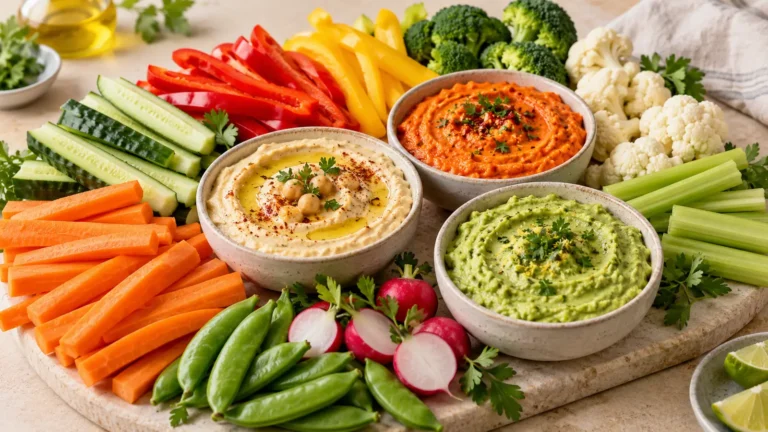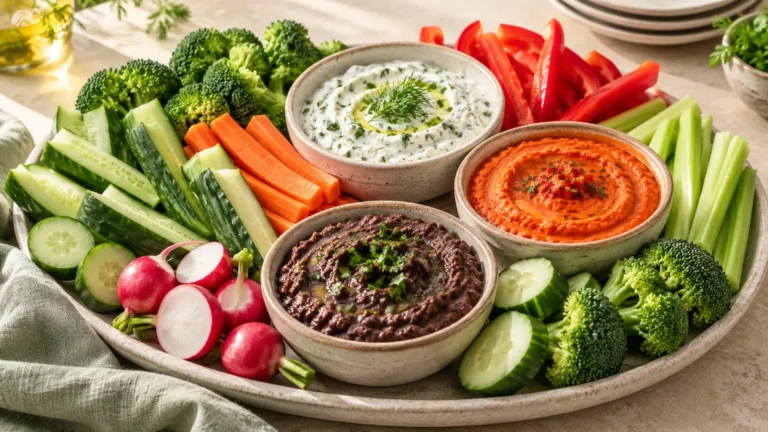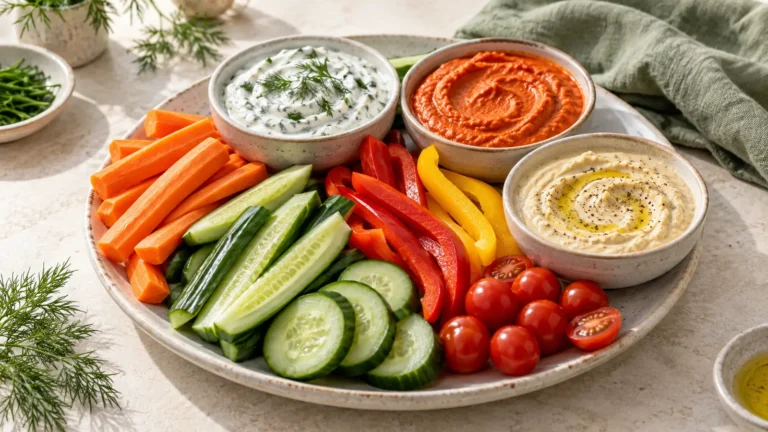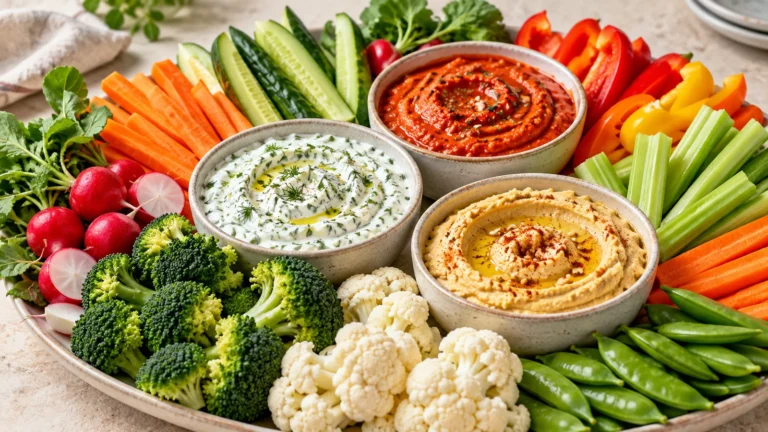
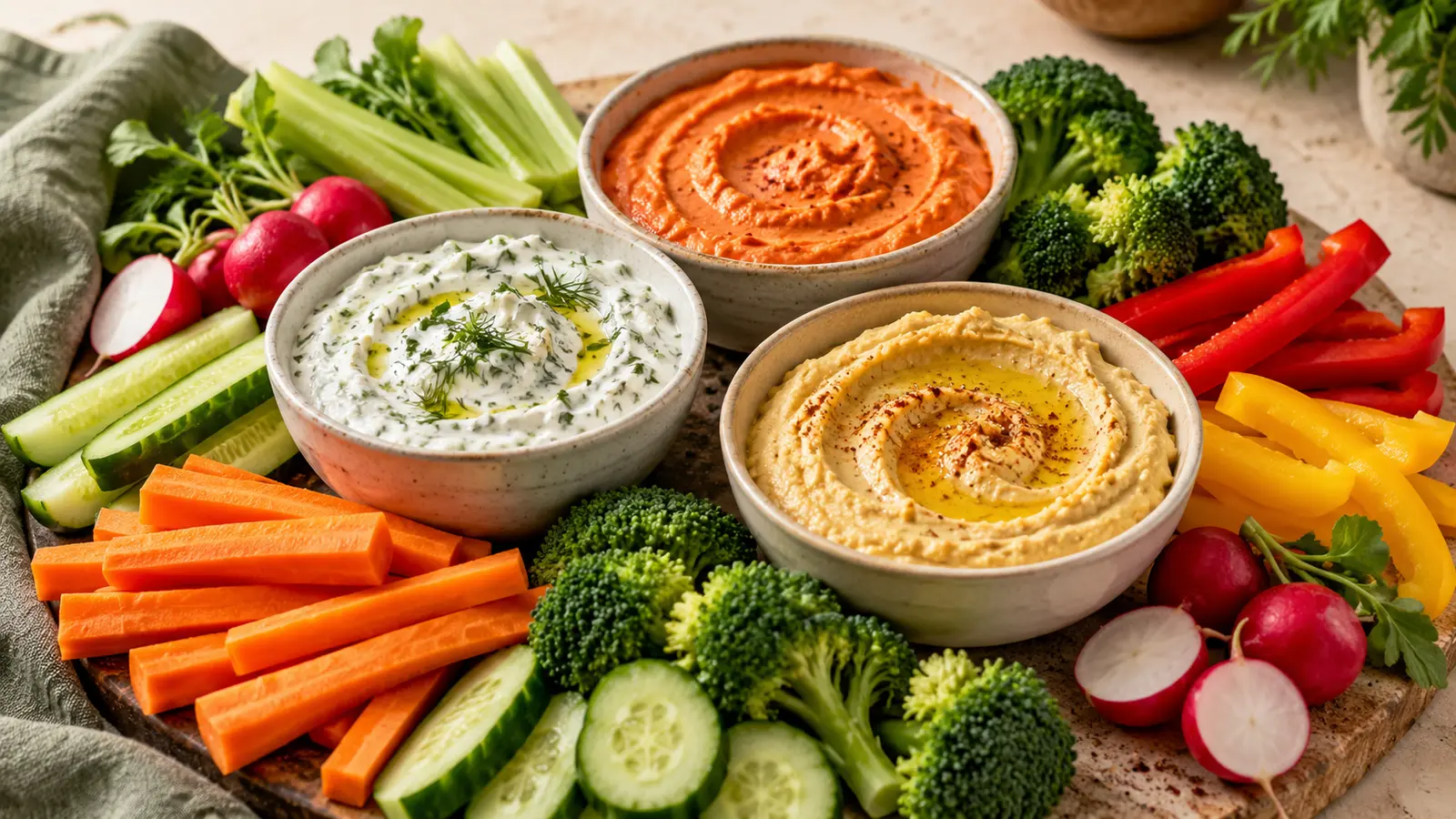
Vegetable dips without mayo can still be creamy, flavorful and satisfying. Greek yogurt, cream cheese, cottage cheese, beans, tahini, avocado and roasted vegetables all provide different textures without relying on mayonnaise.
The best base depends on what you want from the dip. Yogurt produces a lighter, tangier result, while cream cheese creates a thicker texture. Beans and roasted vegetables work especially well for plant-based dips, and tahini adds richness with a distinctive sesame flavor.
Keep in mind that “no mayo” does not automatically mean dairy-free, vegan or allergy-safe. Greek yogurt, sour cream and cream cheese contain milk, while tahini contains sesame. Always check ingredient labels when preparing food for someone with an allergy.
12 Vegetable Dips Without Mayo
1. Spinach Dip Without Mayo
Spinach Dip Without Mayo combines spinach with cream cheese and sour cream for a thick, creamy result. It is a useful option when you want the familiar texture of spinach dip without adding mayonnaise. Serve it with carrots, celery, bell peppers or crackers.
2. Cream Cheese Vegetable Dip
Cream Cheese Vegetable Dip uses cream cheese as its main base. Herbs and seasonings add flavor while the cream cheese keeps the texture substantial enough for sturdy vegetables such as broccoli, carrots and celery.
3. Greek Yogurt Vegetable Dip
Greek Yogurt Vegetable Dip is tangy, creamy and quick to prepare. Greek yogurt works particularly well with fresh herbs, lemon and garlic. Choose a thicker yogurt if you want the dip to hold its shape on a vegetable tray.
4. Roasted Garlic White Bean Dip
Roasted Garlic White Bean Dip blends white beans with roasted garlic for a smooth, savory dip. The beans create body without dairy or mayonnaise, making this option suitable for many plant-based menus when prepared as written.
5. Roasted Red Pepper White Bean Dip
Roasted Red Pepper White Bean Dip combines creamy white beans with the sweet and slightly smoky flavor of roasted peppers. Its warm color also provides an attractive contrast beside green cucumbers and broccoli.
6. Roasted Carrot Tahini Dip
Roasted Carrot Tahini Dip pairs naturally sweet roasted carrots with creamy tahini. Lemon juice and seasonings can balance the sweetness. Because tahini is made from sesame, identify this dip clearly when serving guests with allergies.
7. Spicy Roasted Cauliflower Dip
Spicy Roasted Cauliflower Dip uses roasted cauliflower for body and a lightly caramelized flavor. Spices give it a smoky or warming finish, while tahini helps create a smoother consistency.
8. Pea and Mint Dip
Pea and Mint Dip offers a fresh flavor and naturally bright green color. Peas provide the base, while mint and lemon keep the dip lively. It pairs especially well with cucumbers, sugar snap peas and radishes.
9. Eggplant Dip Without Tahini
Eggplant Dip Without Tahini uses cooked eggplant for a soft, savory texture without mayonnaise, yogurt or tahini in the primary recipe. Roasting the eggplant first adds deeper flavor and helps reduce excess moisture.
10. Roasted Yellow Squash Dip
Roasted Yellow Squash Dip transforms tender squash into a smooth vegetable-based dip. Roasting concentrates its flavor, while herbs, citrus or spices prevent the finished dip from tasting flat.
11. Avocado Lime Dip
Avocado Lime Dip gets its creamy texture directly from ripe avocado. Lime adds acidity and helps balance the richness. Prepare it close to serving time and cover the surface well during refrigeration to limit browning.
12. Classic Hummus
Classic hummus is traditionally made with chickpeas, tahini, lemon and garlic, so mayonnaise is unnecessary. Adjust the blending liquid gradually: too much can make the hummus runny, while too little may leave it dense or grainy.
How to Choose Between These Mayo-Free Dips
Choose the base according to the vegetables and occasion:
- Use cream cheese or thick Greek yogurt for sturdy carrots, celery and broccoli.
- Choose white bean or hummus-style dips for a dairy-free platter.
- Pair cucumber and radishes with fresh herb, yogurt or pea dips.
- Use roasted pepper, carrot or cauliflower dips when you want stronger color and deeper flavor.
- Choose avocado dip when it will be prepared and served shortly afterward.
Offering two contrasting vegetable dips without mayo can make a platter more interesting. For example, combine a pale herb dip with a roasted red pepper dip rather than serving two dips with similar colors and flavors.
No Mayo Does Not Mean Dairy-Free
A mayonnaise-free recipe may still contain yogurt, sour cream, feta, cottage cheese or cream cheese. If milk must be avoided, use the recipes specifically identified as dairy-free and verify every packaged ingredient.
For more suitable options, see our collection of Dairy-Free Vegetable Dips.
Tahini is another ingredient that deserves attention because sesame is recognized as a major food allergen in the United States. The FDA’s food-allergy guidance explains the major allergens and the importance of reading packaged-food labels.
How to Fix the Texture
If your dip is too thin, avoid adding more liquid immediately. Yogurt-based dips may improve after chilling, while bean dips can often be thickened with additional beans. Roasted vegetables should be drained when they release significant moisture.
Use How to Fix a Watery Dip for corrections based on the specific dip base.
If the dip is too thick, add liquid gradually—usually one teaspoon at a time. Depending on the recipe, suitable options may include water, lemon juice, olive oil or yogurt.
Storage and Serving
Place prepared dips in covered containers and refrigerate them promptly. Storage time depends on the ingredients, preparation method and freshness of the components, so avoid assuming that every dip keeps for the same number of days.
Consult How Long Does Veggie Dip Last? for the site’s central storage and serving-safety guidance. The USDA-developed FoodKeeper resource can also help with general food-storage decisions.
Final Tip
The easiest way to make successful vegetable dips without mayo is to select a naturally creamy base rather than trying to imitate mayonnaise. Start with yogurt, beans, cream cheese, tahini, avocado or roasted vegetables, then adjust the seasoning and consistency to match the vegetables you plan to serve.