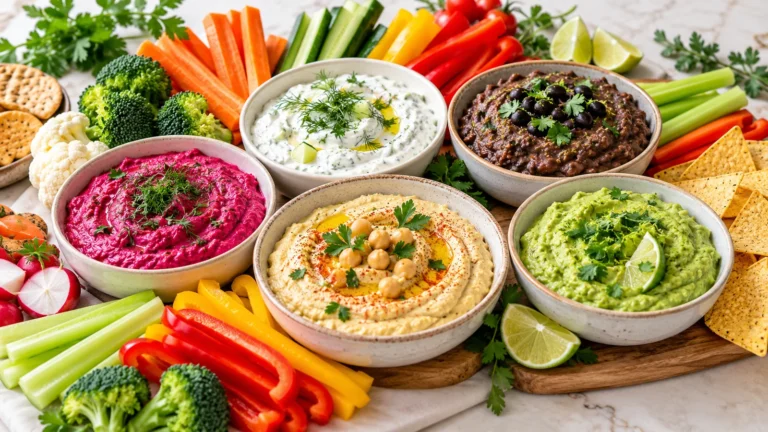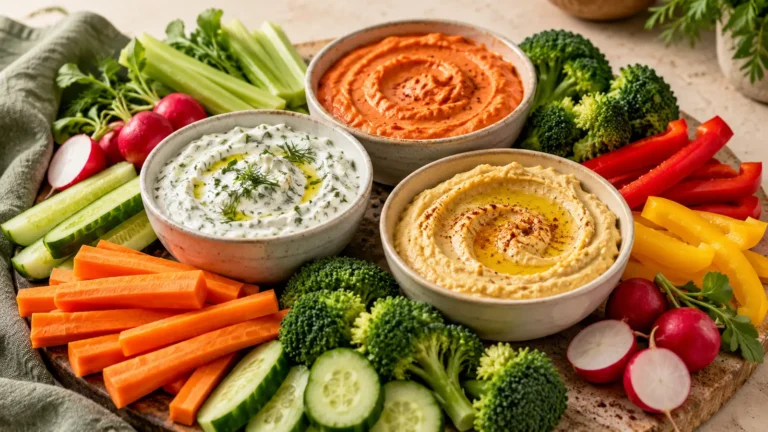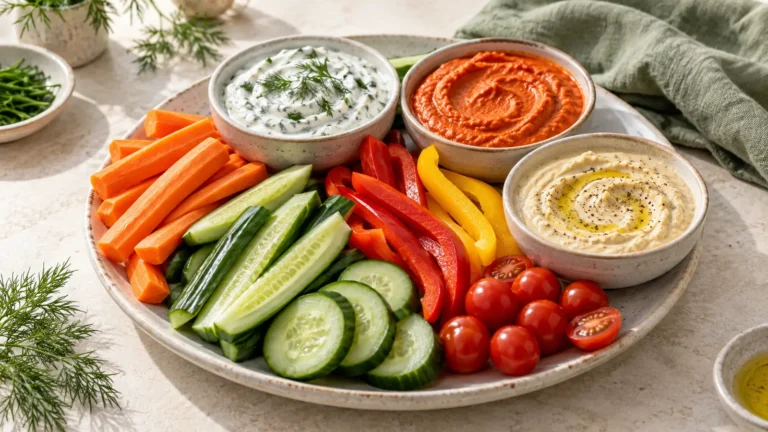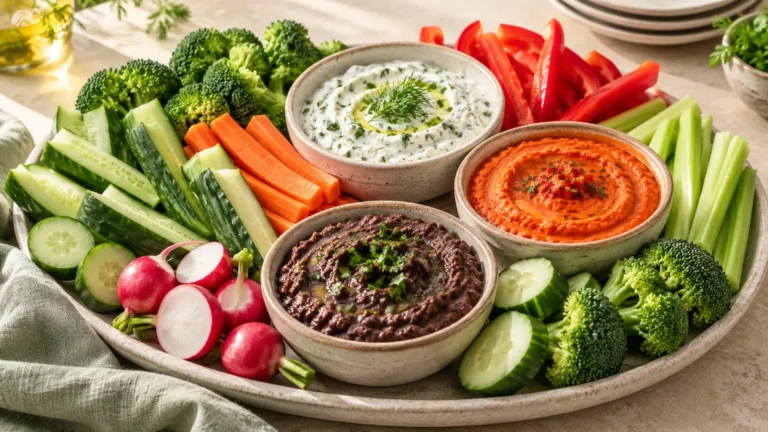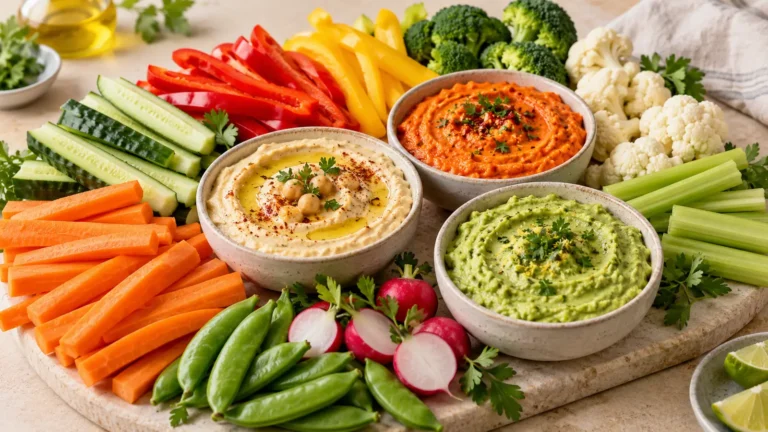
Gluten-free vegetable dips can make a colorful snack tray or party platter easy to share. Greek yogurt, beans, avocado and roasted vegetables all provide useful starting points. The important step is checking the finished recipe: a dip without bread or flour is not automatically suitable for someone who needs strict gluten avoidance.
Packaged seasonings, sauces and flavored dairy products deserve a closer look. Serving matters too. A shared knife or a cracker dipped into the bowl can introduce gluten even when the dip was prepared with carefully selected ingredients.
Quick answer: Choose a simple base, check every packaged ingredient, and keep gluten-containing bread and crackers separate when cross-contact matters. The 12 ideas below offer different colors, flavors and textures for fresh vegetables.
Choose Gluten-Free Vegetable Dips for Your Tray
| What you want | Recipe to consider | Ingredients to check |
|---|---|---|
| A creamy herb dip | Greek yogurt vegetable dip | Yogurt and packaged seasonings; contains dairy. |
| A bean-based option | Classic hummus | Chickpeas, tahini and any added flavorings; contains sesame. |
| A colorful dairy-free option | Roasted red pepper white bean dip | Jarred peppers, beans and seasonings. |
| A fresh green dip | Avocado lime dip | Any packaged additions used in the finished recipe. |
Need options without dairy as well? Start with hummus, white bean or avocado dip and compare the recipes in our dairy-free vegetable dip guide. A dairy-free label does not by itself establish that a product is gluten-free.
12 Gluten-Free Vegetable Dips to Try
These are dip ideas rather than a guarantee about every brand of ingredient. Choose products appropriate to the person you are serving, particularly for seasonings, sauces and prepared components.
1. Greek Yogurt Herb Dip
Stir dill, chives, parsley, lemon and garlic into plain Greek yogurt. Keep it thick enough to cling to a carrot or broccoli floret. For a measured version, start with our Greek Yogurt Vegetable Dip and check the labels on the yogurt and seasonings you use.
2. Classic Hummus
Blend chickpeas with tahini, lemon juice, garlic and water until smooth. Hummus pairs well with carrots, cucumber, peppers and celery. Check packaged tahini and chickpeas when strict gluten avoidance is necessary. Tahini also contains sesame, so identify it clearly for guests with a sesame allergy.
3. White Bean Lemon Dip
Blend well-drained white beans with lemon, garlic and olive oil. Add water gradually until the dip is creamy but still scoopable. Its mild flavor lets fresh herbs stand out, and its texture works particularly well with celery and bell peppers. Our Roasted Garlic White Bean Dip offers another white-bean direction.
4. Avocado Lime Dip
Mash or blend ripe avocado with lime, cilantro and a little salt. For a softer texture, add water a teaspoon at a time. Serve it with cucumber, radishes and peppers, and prepare it reasonably close to serving for the freshest color.
5. Cottage Cheese Herb Dip
Blend plain cottage cheese until smooth, then stir in lemon, dill and chives. The result is mild, creamy and substantial enough for broccoli or carrots. See our Creamy Cottage Cheese Vegetable Dip for a complete recipe; verify the specific dairy product and seasonings used.
6. Sour Cream Herb Dip
Combine sour cream with chopped herbs, garlic and lemon. It is a familiar choice for mixed vegetable trays and needs very little preparation. If using a packaged seasoning blend instead of individual herbs and spices, check its label before serving.
7. Cream Cheese Vegetable Dip
Soften cream cheese and mix it with sour cream, fresh herbs and lemon until it is easy to scoop. This thicker dip suits sturdy carrots, celery and broccoli. For the full method, use our Cream Cheese Vegetable Dip as a starting point and verify each packaged ingredient.
8. Roasted Red Pepper White Bean Dip
Blend drained roasted red peppers with white beans, garlic and a squeeze of lemon. The peppers add color and sweetness; the beans give the mixture body. Drain jarred peppers well and check their ingredient label before using them.
9. Black Bean Lime Dip
Blend black beans with lime juice, cumin and a little smoked paprika. Leave it slightly textured or process it until smooth. Its savory flavor pairs well with bell peppers, celery and carrots. If using canned beans or a prepared spice mix, check the packaging.
10. Cucumber Dill Yogurt Dip
Finely chop or grate cucumber, squeeze away excess moisture, and fold it into plain yogurt with dill and lemon. Draining the cucumber helps the dip remain thick on a platter. Serve it with carrots, peppers and cauliflower. For measured amounts and the cucumber-draining method, see our Cucumber Yogurt Dip for Veggies. Check the yogurt and any dried seasoning blend you use for your guests’ needs.
11. Carrot Ginger Tahini Dip
Blend tender cooked carrots with tahini, ginger and lemon. Add a little water until the mixture is soft enough for dipping but still holds on a vegetable stick. Tahini is made from sesame, so this option is unsuitable for someone avoiding sesame. For another tahini-based option without carrots, try our Lemon Tahini Dip for Vegetables.
12. Roasted Cauliflower White Bean Dip
Roast cauliflower until tender and lightly browned, then blend it with white beans, lemon and garlic. Adjust the texture with small amounts of water or olive oil. This mellow dip is especially good beside colorful raw peppers, carrots and radishes. For a different white bean variation made with roasted garlic, see our Roasted Garlic White Bean Dip.
“No Gluten Ingredients” Is Not the Same as a Verified Gluten-Free Product
Fresh vegetables and simple dip bases can make planning easier, but the final result depends on everything added to the bowl. Review packaged spice blends, flavored yogurt, sauces and prepared vegetables rather than judging a product by its name or appearance.
In the United States, “gluten-free” is a defined, voluntary claim on food labels. The FDA’s gluten-free labeling guidance explains the labeling framework. A homemade dip does not become a certified product simply because its recipe uses ingredients that appear gluten-free.
Keep the Vegetable Tray Separate
If you also offer bread or regular crackers, place them on a separate plate. Give each dip its own spoon and avoid using the same knife for gluten-containing foods. Guests may not know what has touched a shared bowl, so a simple, clearly separated serving setup is more useful than an unqualified “gluten-free” sign.
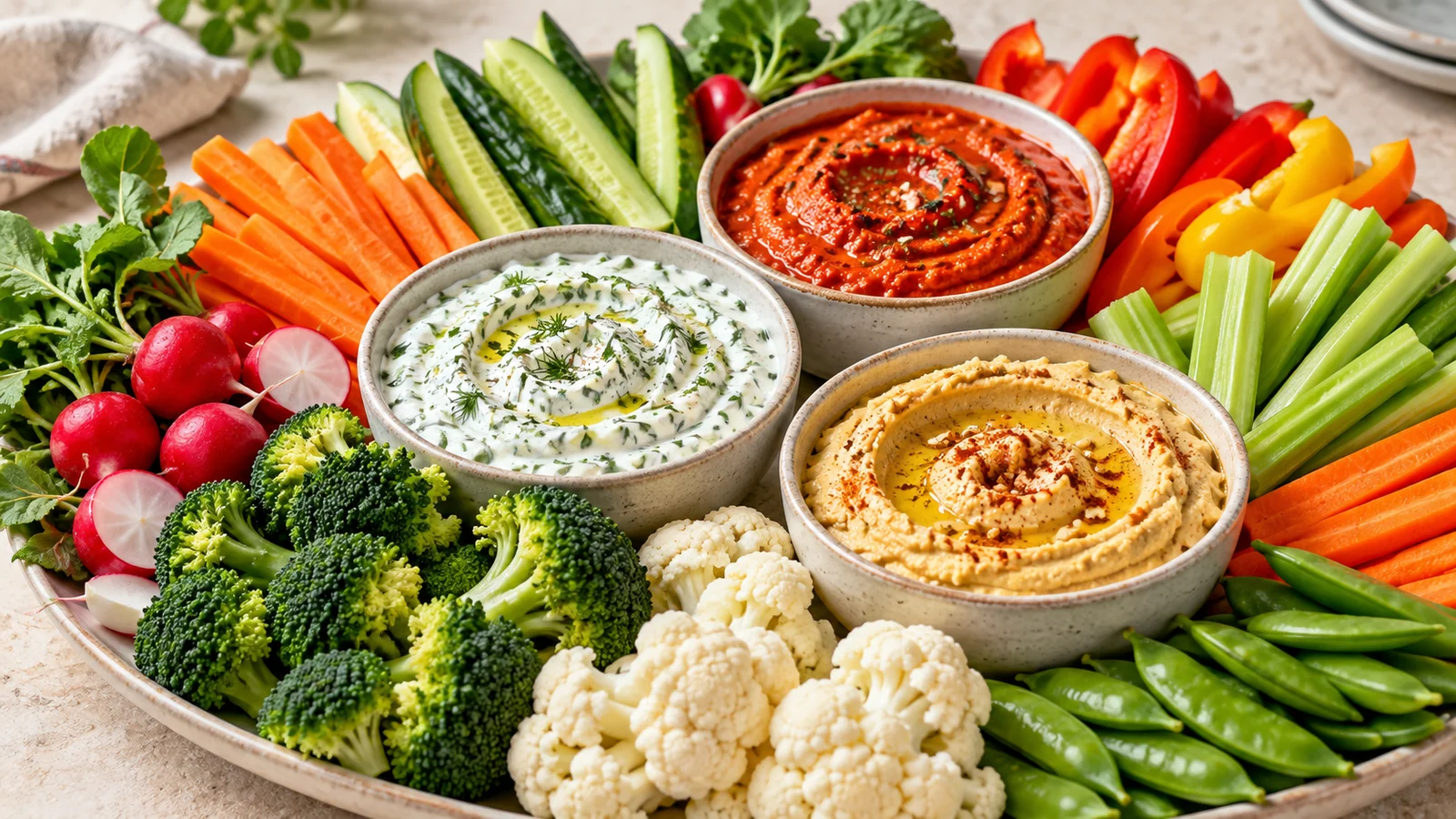
For a larger platter, choose dips with contrasting bases: for example, one herbed yogurt dip, one bean dip and one colorful roasted-vegetable dip. Our Best Dips for a Vegetable Tray guide can help you plan the mix.
Frequently Asked Questions
Is hummus gluten-free?
A simple homemade hummus may be made with chickpeas, tahini, lemon and garlic, but packaged products and additional ingredients vary. Check the label and consider how the hummus will be served.
Is ranch dip gluten-free?
Not automatically. The answer depends on the particular dressing, seasoning blend or recipe. Check packaged ingredients instead of assuming all ranch-style dips are alike.
Are fresh vegetables gluten-free?
Plain fresh vegetables do not contain gluten. Prepared or seasoned vegetables may include other ingredients, and shared utensils can create cross-contact.
Can I serve these dips with crackers?
Yes, but select crackers appropriate to the guest’s needs. When serving regular crackers as well, keep them separate and provide dedicated utensils for the dips.
More Vegetable Dip Ideas
Explore 25 Vegetable Dip Recipes for more flavors and textures. That broader collection is not a gluten-free list, so check the ingredients of each recipe before serving it to someone who avoids gluten.