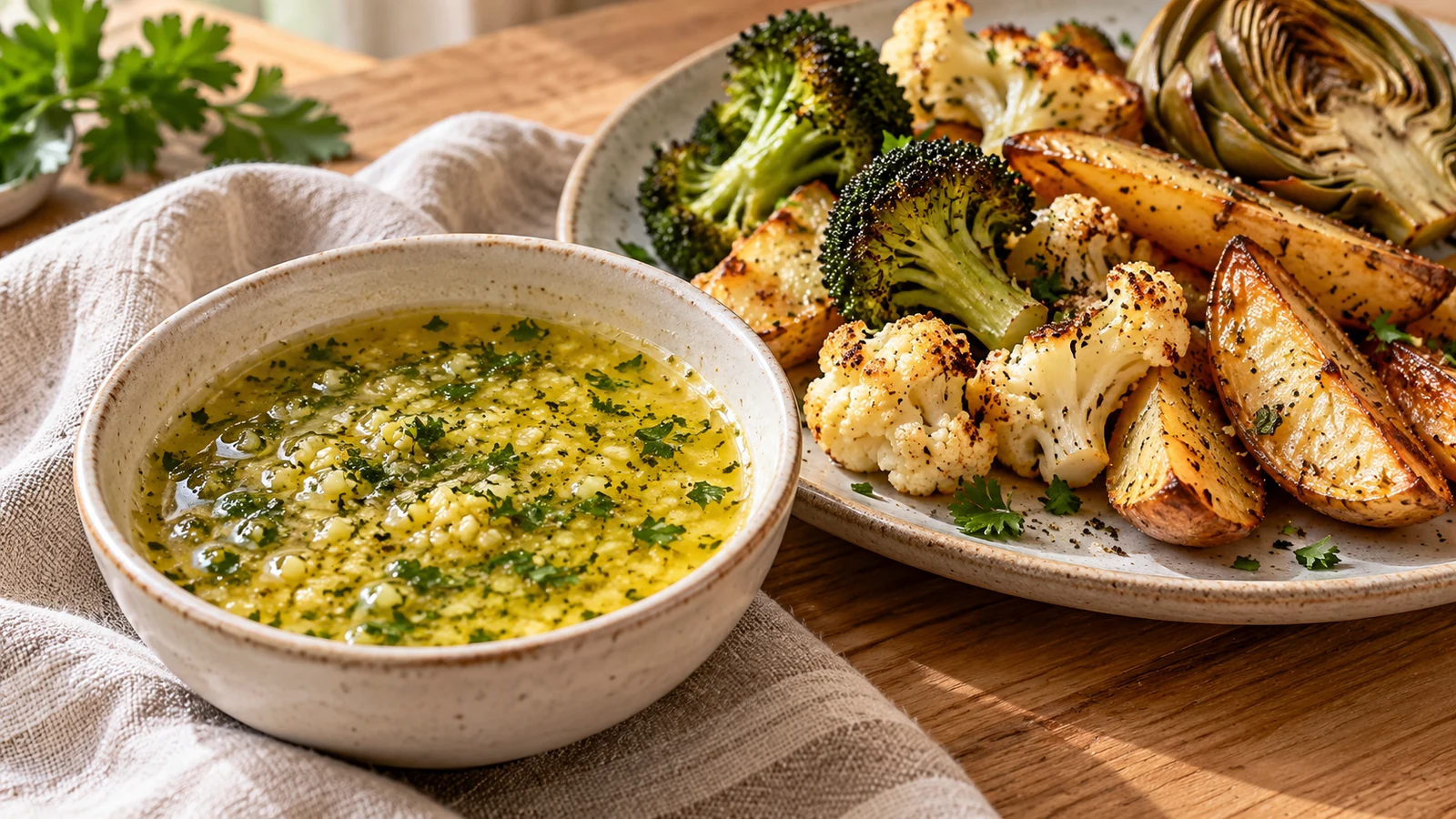
This garlic butter dipping sauce combines melted butter, gently cooked garlic and fresh parsley in a warm sauce for vegetables. Serve it alongside steamed artichokes, spoon it over broccoli, or dip roasted potato wedges into a small bowl.
The trick is keeping the heat low. Garlic should soften and release its aroma without turning dark, while the butter stays golden rather than browned. A little lemon juice is optional if you want a brighter finish.
Unlike a thick yogurt or cream cheese dip, this sauce is loose when warm. Stir it before serving so each spoonful includes some of the garlic and herbs.
Garlic Butter Dipping Sauce Recipe
Garlic Butter Dipping Sauce for Vegetables
Ingredients
Method
- Place the butter in a small saucepan over low heat. Let it melt slowly, stirring occasionally.
- Stir in the finely minced garlic. Cook gently for about 2–3 minutes, stirring frequently, until fragrant and slightly softened. Keep the heat low enough that the garlic does not brown.
- Remove the saucepan from the heat. Stir in the parsley, salt and pepper. Add the optional lemon juice carefully and stir well.
- Taste a small spoonful once it has cooled enough. Adjust the seasoning, then transfer to a heatproof serving bowl. Serve warm and stir occasionally.
Notes
Choosing Ingredients for Garlic Butter Dipping Sauce
Butter
Unsalted butter gives you control over the seasoning. If you use salted butter, leave out the measured salt and taste the finished sauce before adding any.
Regular butter works well here. You do not need to clarify it or remove the milk solids. Small pale flecks in the melted butter are normal.
Fresh garlic
Finely mince the garlic so it distributes throughout the sauce. Large pieces can remain sharp and collect at the bottom of the bowl.
Three medium cloves provide a starting point for this batch. Use two if you prefer a gentler flavor. For a stronger sauce, increase the garlic after trying the basic version.
Parsley and lemon
Parsley adds freshness without covering the butter and garlic. Chop it finely and add it after cooking.
Lemon juice is optional. Start with the measured teaspoon rather than squeezing a whole lemon into the pan. Too much can overwhelm a small batch and leave a separate watery layer.
How to Keep the Garlic from Burning
Use a small saucepan over low heat and stay close while the garlic cooks. It should smell fragrant and look pale, with perhaps a faint golden edge.
If it starts coloring quickly, lift the pan off the burner and stir. The pan retains heat, so turning down the burner alone may not cool it immediately.
Dark brown garlic can make the whole sauce taste bitter. If that happens, starting again gives a better result than trying to cover the bitterness with lemon or extra seasoning.
For easier control:
- Mince the garlic evenly.
- Avoid a smoking-hot pan.
- Stir frequently, especially around the edges.
- Remove the sauce from the heat as soon as the garlic smells fragrant and has softened.
Best Vegetables to Serve with Garlic Butter Dipping Sauce
Warm cooked vegetables are a useful match for this sauce. Drain steamed vegetables well before serving so excess water does not dilute the butter.
| Vegetable | How to serve it |
|---|---|
| Artichokes | Dip the tender base of cooked leaves into a small bowl of sauce. |
| Broccoli | Spoon lightly over steamed or roasted florets. |
| Cauliflower | Serve alongside roasted florets for dipping. |
| Potato wedges | Offer the sauce separately to preserve their crisp edges. |
| Asparagus | Drizzle over cooked spears just before serving. |
| Carrots | Toss cooked carrots with a small amount, then taste before adding more. |
For a platter of cold cucumber, celery and pepper strips, a thicker Greek yogurt vegetable dip may cling more easily.
You can also browse our sauces for vegetables for different flavors and textures.
Getting the Right Consistency
Homemade garlic butter dipping sauce is naturally thin while warm. It coats food lightly rather than forming a thick layer.
As it cools, the butter thickens and eventually firms up. That change is expected. Serve a small amount at a time and gently warm more when needed.
The garlic and parsley will settle toward the bottom. Stir before spooning or dipping to redistribute them.
If you add lemon juice, you may notice small droplets beneath the butter. Stir them back through before serving. This simple melted-butter sauce does not stay permanently emulsified.
Avoid adding flour to thicken this version. Flour needs a different cooking method and additional liquid to become a smooth sauce. If you want something thicker for broccoli or cauliflower, try our cheese sauce for vegetables.
Simple Flavor Variations
Make one small adjustment at a time so you can taste how it changes the sauce.
Lemon garlic butter: Add the optional lemon juice and a little finely grated lemon zest. Avoid the bitter white pith.
Chili garlic butter: Stir in a small pinch of crushed red pepper flakes after removing the pan from the heat.
Chive butter sauce: Replace the parsley with finely chopped chives for a mild onion flavor.
Garlic powder option: If fresh garlic is unavailable, start with ¼ teaspoon garlic powder. Stir it into the melted butter and taste before adding more. It produces a different flavor and a smoother texture.
Serving and Reheating
Make the sauce close to serving time whenever possible. Put it in a heatproof bowl beside your cooked vegetables, with a small spoon for stirring.
To reheat a chilled portion, place it in a small saucepan over the lowest heat. Stir and remove it as soon as it becomes liquid and warm. Avoid vigorous bubbling, which can overcook the garlic.
Reheat only the portion you plan to use. Refrigerate leftovers promptly in a covered container rather than leaving the serving bowl on the counter. For general handling guidance, see the USDA’s advice on leftovers and food safety.
Frequently Asked Questions
Can I use salted butter?
Yes. Omit the measured salt, then taste the finished sauce. The amount needed will depend on your butter and whether the vegetables are already seasoned.
Why did my garlic butter dipping sauce turn solid?
Butter firms as it cools. Warm the sauce gently and stir until it becomes liquid again. This is an expected texture change.
Is this the same as pizza-shop garlic dipping sauce?
The flavor may be familiar, but this recipe uses regular butter and fresh garlic. Commercial dipping sauces can use different fats and other ingredients, so their texture may stay smoother as they cool.
Can I make it without lemon?
Yes. Lemon is optional. Butter, garlic, parsley and seasoning provide the base flavor.
Can I serve it with bread?
Yes. Serve a small warm portion with breadsticks or crusty bread, alongside the vegetables.
Can I use it as a drizzle?
Yes. Spoon a little over cooked vegetables just before serving, then toss gently if needed. Start with a small amount so the butter complements the vegetables without pooling underneath.