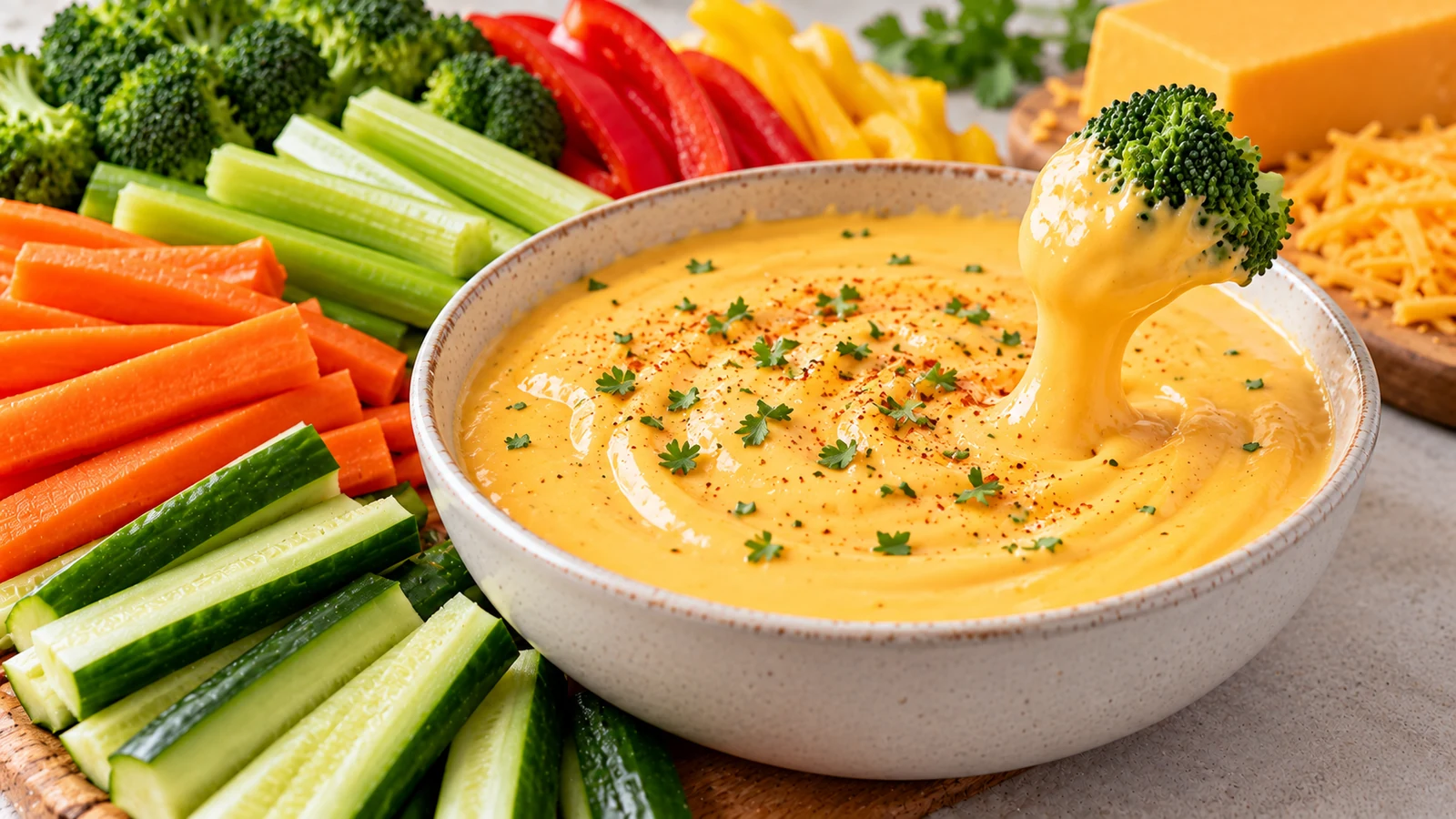
This cheese sauce for vegetables is a smooth cheddar sauce designed for broccoli, cauliflower, carrots and other cooked vegetables. A simple butter-and-flour base helps the cheese melt into the milk without turning the sauce oily or grainy.
Quick answer: Make a light roux with butter and flour, whisk in milk until smooth and slightly thickened, then remove the pan from direct heat before gradually stirring in freshly grated cheddar. Serve warm over vegetables or slightly thicker as a dipping sauce.
Why this cheddar cheese sauce works with vegetables
Cooked vegetables contain moisture, so the sauce needs enough body to coat them instead of running straight onto the plate. Cheddar provides a familiar savory flavor, while a small amount of Dijon adds depth without making the sauce taste strongly of mustard. For a chilled alternative, try our cream cheese vegetable dip.

Cheese Sauce for Vegetables
Ingredients
Method
- Make the roux. Melt the butter in a saucepan over medium-low heat. Whisk in the flour and cook for about 1 minute without letting it brown.
- Add the milk. Pour it in gradually while whisking. Continue cooking and whisking until the mixture is smooth and lightly thickened.
- Lower the heat. Remove the pan from direct heat or reduce it to very low. Stir in the Dijon and garlic powder.
- Add the cheddar gradually. Stir in small handfuls, allowing each addition to melt before adding more. Do not boil the sauce after the cheese goes in.
- Season and serve. Taste before adding salt, then add black pepper as desired. Serve warm.
Notes
Best vegetables for cheddar cheese sauce
Broccoli and cauliflower hold thicker sauces especially well, while carrots, green beans and asparagus also work. For a separate raw-broccoli snack option, explore our best dip for raw broccoli guide. For more raw vegetable pairings and cold dips, use our Best Vegetables for Dipping guide instead.
How to keep cheese sauce smooth
Use freshly grated cheese and keep the heat gentle. Pre-shredded cheese may contain anti-caking ingredients that can affect melting. Most importantly, avoid boiling after adding the cheddar: excessive heat can make a cheese sauce separate or become grainy.
Sauce versus dip consistency
For spooning over cooked vegetables, the sauce should flow slowly from a spoon. For dipping, let it thicken slightly as it cools. If you are looking for more warm, scoopable options rather than a pourable sauce, browse our hot vegetable dips guide. For other non-cheese options for cooked vegetables, see our Best Sauces for Vegetables.
Frequently asked questions
Why is my cheese sauce grainy?
High heat is a common cause. Add the cheese over very low heat or off the heat and stir it in gradually rather than boiling the finished sauce.
Can I make the sauce thicker for dipping?
Yes. Use slightly less milk or let the finished sauce cool briefly. It thickens as its temperature drops.
What vegetables are best with cheese sauce?
Broccoli, cauliflower and carrots are practical starting points because their texture stands up well to a warm cheddar sauce.