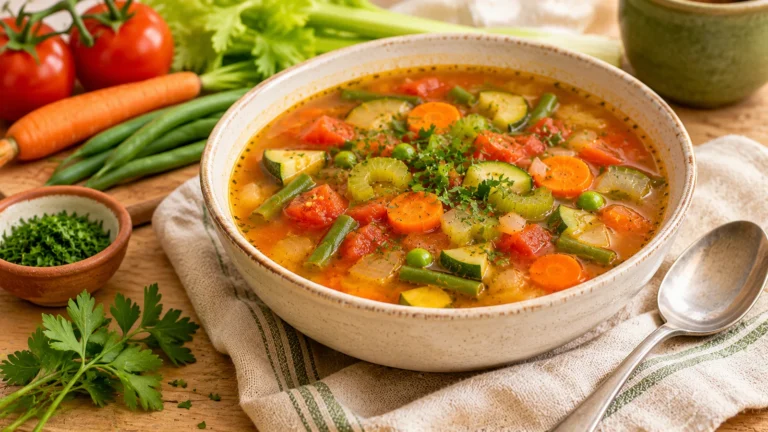

Creamy vegetable soup is an easy one-pot way to turn carrots, potatoes, celery, peas and corn into a comforting bowl with a thick, spoonable texture. This version gets much of its creaminess from blending the tender potatoes into the broth—not from heavy cream or a flour-and-butter roux. If you prefer visible potato cubes in a light broth without milk or blending, try our Vegetable Soup with Potatoes. Some of the vegetables stay chunky, so every bowl has a little color and texture.
Quick answer: Soften onion, carrot and celery in olive oil. Add diced Yukon Gold potatoes, garlic, thyme and vegetable broth, then simmer until the potatoes are tender. Blend some of the vegetables into the liquid, leaving the rest intact. Stir in frozen peas, frozen corn and a cup of unsweetened milk, then simmer gently until hot. The ingredient proportions and one-pot method here are adapted from Yumna Jawad’s Creamy Vegetable Soup at Feel Good Foodie.
Editorial transparency: Vegetable Dips has not independently prepared or taste-tested this soup. Times and servings are source-based planning estimates. This is an experimental soup topic for a site primarily focused on vegetable dips, rather than the launch of a new soup category.
What Makes Creamy Vegetable Soup Thick Without Heavy Cream?
Tender potatoes contain starch that helps the broth gain body when part of the soup is blended. The remaining carrot, celery, corn and peas keep a vegetable-soup texture instead of turning the entire pot into a puree. A modest amount of unsweetened milk makes the broth more velvety, but a full carton of cream is not needed. For a classic chunky, tomato-tinted alternative without milk or blending, see our Homemade Vegetable Soup Recipe.
There is more than one valid approach. Inspired Taste’s blended vegetable soup, for example, makes a smoother base with potatoes and a small splash of a creamy ingredient. This recipe keeps additional vegetables visible after partial blending.
Creamy Vegetable Soup Ingredients
- 2 tablespoons extra-virgin olive oil: Helps soften the vegetables without frying them hard.
- 1 medium onion, diced: Provides an aromatic foundation. Yellow onion is an easy choice.
- 2 celery stalks, sliced, and 2 large carrots, sliced: Cut into small, reasonably even pieces so they soften at a similar rate.
- 4 Yukon Gold potatoes, diced (about 3–4 cups): Their tender texture helps thicken the broth when partially blended.
- 2 garlic cloves, minced, and 2 teaspoons dried thyme: Add savory flavor without needing a packaged soup mix. For more herb combinations and timing guidance, see our Vegetable Soup Seasoning guide.
- 4 cups low-sodium vegetable broth: Gives the vegetables enough liquid to simmer. Use a broth suitable for your dietary requirements.
- 1½ cups frozen peas and 1½ cups frozen corn: Add these near the end to keep some distinct pieces in the final bowl.
- 1 cup plain unsweetened plant milk or regular milk: Use unsweetened and unflavored milk, not vanilla or sweetened alternatives.
- Salt, ground black pepper and optional fresh parsley: Season to taste because broth sodium levels vary.
How to Make Creamy Vegetable Soup
- Soften the first vegetables. Warm olive oil over medium heat in a large, heavy pot. Add onion, celery and carrot; season lightly and cook for about five minutes, stirring occasionally.
- Add potatoes and herbs. Stir in diced potatoes, minced garlic and dried thyme. Cook briefly, about one minute, while stirring to prevent the garlic from scorching.
- Simmer in broth. Pour in four cups of vegetable broth. Bring to a gentle boil, reduce the heat, cover and simmer for around 20 minutes, until the potatoes and carrots are easily pierced with a fork.
- Blend some, not all. Turn off the heat and carefully use an immersion blender to blend part of the pot. Leave visible vegetable pieces if you want the soup to feel hearty rather than completely smooth.
- Finish with peas, corn and milk. Return to gentle heat and stir in frozen peas, corn and unsweetened milk. Simmer for roughly five minutes, until everything is hot. Taste and adjust seasoning, then serve with optional parsley.
Printable Creamy Vegetable Soup Recipe

Creamy Vegetable Soup (No Heavy Cream)
Ingredients
Method
- In a large heavy pot, warm olive oil over medium heat. Add onion, celery and carrots. Season lightly with salt and pepper; stir occasionally until they begin to soften, about 5 minutes.
- Stir in the diced potatoes, minced garlic and thyme. Cook about 1 minute, stirring so the garlic does not burn.
- Add low-sodium vegetable broth, bring to a gentle boil, then reduce to a steady simmer. Cover and cook about 20 minutes, until potato and carrot pieces are easily pierced with a fork.
- Turn off the heat. Use an immersion blender to puree some of the softened vegetables while leaving visible pieces for texture. If using a countertop blender, follow its hot-liquid instructions and blend in small, safely vented batches.
- Return soup to low heat, then stir in frozen peas, corn and unsweetened milk. Simmer gently about 5 minutes until heated through. Taste and adjust salt and pepper; ladle into bowls and garnish with parsley if desired.
Notes
How Smooth Should the Soup Be?
For a soup that is creamy but still looks like vegetable soup, blend just enough potato and broth to thicken the liquid. Leave some carrot and celery pieces visible. The peas and corn go in afterward, so they stay distinct even if you blend the base quite thoroughly.
If you prefer a completely smooth soup, you can blend a greater portion—but that is a texture variation and may give a different look from the recipe here. If using a countertop blender with hot liquid, avoid filling it to the top and follow its instructions for venting and working in safe batches. Trapped steam can force hot liquid out.
How to Fix Soup That Is Too Thick or Too Thin
- Too thick: Stir in a little warm vegetable broth or unsweetened milk, then reheat gently and reassess the consistency.
- Too thin: Simmer uncovered briefly to reduce excess liquid, or blend another portion of the cooked potatoes. You do not need to add dry flour directly to the pot.
- Too bland: Taste only after the final vegetables and milk are in. A small amount of salt, black pepper or lemon juice can brighten the finished bowl.
- Vegetables still hard: Continue simmering before blending; potato and carrot pieces should be fork-tender first.
Useful Variations Without Changing the Base Recipe
Dairy-free: Choose unsweetened plant milk and vegetable broth without dairy ingredients. Check every label; a brand-specific product might contain allergens or additives. An unsweetened oat or almond beverage changes the flavor slightly.
More vegetables: You may experiment with small broccoli or cauliflower pieces, or a handful of spinach near the end. For a soup designed specifically around broccoli and a partly blended potato base, see our Broccoli Soup Recipe. This changes the recipe and cooking time, so add tender vegetables only once the potatoes are cooked. The standard reference version uses carrots, celery, potatoes, peas and corn. For a completely smooth carrot-based option with fresh ginger, compare our Carrot Soup Recipe. If you prefer a fully blended soup focused on roasted cauliflower rather than potatoes, see our Cauliflower Soup Recipe. For a lighter, broth-based option with broccoli, cauliflower and leafy greens, see our Vegetable Soup Without Tomatoes.
Extra smooth: Blend more potatoes and broth for a puree-style bowl. Extra chunky: Blend less and keep more vegetables whole. Neither variation has been independently tested for this article.
What to Serve with Creamy Vegetable Soup
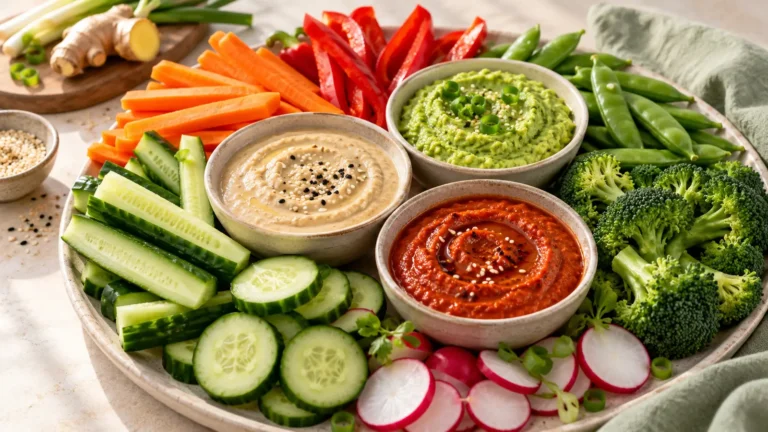
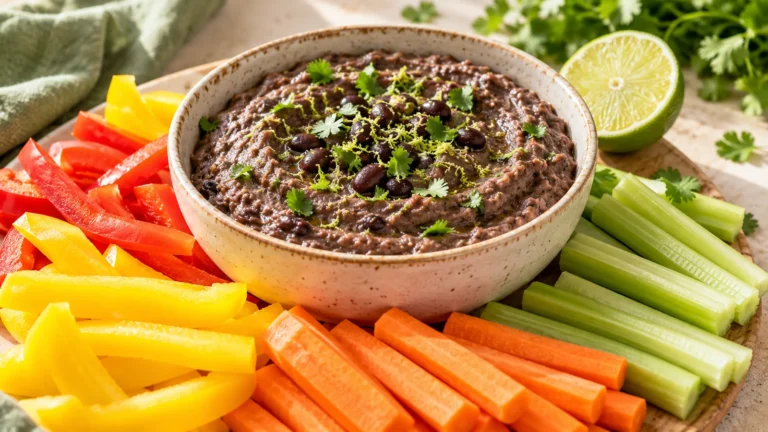
Crusty bread or toast makes a simple side. For a vegetable-focused appetizer spread, you can also serve a separate tray of fresh carrots and cucumbers, plus celery, while the soup is simmering. Our Dips for a Vegetable Tray guide covers the cold side of that meal. The dip is a separate dish—it is not something that must be stirred into the soup.
This soup is a test of whether readers who enjoy vegetable appetizers are also interested in easy vegetable-based lunches. We are not presenting it as a vegetable dip, nor suggesting that dips and soups have identical search intent.
Make-Ahead, Storage and Reheating
Because this soup contains cooked vegetables and milk or plant milk, cool leftovers promptly in shallow containers and refrigerate at 40°F (4°C) or below. FoodSafety.gov lists soups and stews for 3–4 days in the refrigerator. Refrigerate within two hours of cooking (one hour when temperatures exceed 90°F / 32°C).
The soup may become thicker after chilling because of the blended potato. Reheat a portion in a saucepan, stirring so it heats evenly; add a splash of broth if needed. For leftovers, FoodSafety.gov advises reheating to 165°F (74°C). Milk-containing soups can change texture when frozen and reheated, so freezing quality is less certain than refrigeration.
Frequently Asked Questions
Can I make creamy vegetable soup without heavy cream?
Yes. Blending some cooked potatoes into vegetable broth creates much of the thickness, while unsweetened milk adds a little creaminess. Heavy cream is not required.
Can I make this vegetable soup vegan?
Use vegetable broth and a verified plant-based, unsweetened milk; check the exact products for animal-derived ingredients. This preparation does not rely on butter or cream.
Do I have to blend all of the soup?
No. A partly blended base stays creamy but preserves small pieces of vegetables, and the peas and corn are added after blending.
Can I use frozen vegetables?
Yes. The referenced recipe uses frozen peas and corn. Different frozen vegetable mixes may require a different heating time and could alter the final texture.
Does creamy vegetable soup have to contain potatoes?
No, but this particular version uses them to thicken the broth. Beans, squash or cauliflower can also be blended into soups, yet they produce a different formula.
How long does vegetable soup keep in the refrigerator?
For cooked soups and stews, FoodSafety.gov recommends 3–4 days at 40°F (4°C) or colder, provided leftovers were cooled and stored promptly.
Recipe References and Transparency
Recipe amounts and baseline method: Feel Good Foodie — Creamy Vegetable Soup. Additional discussion of pureeing potatoes for body: Inspired Taste — Easy Creamy Vegetable Soup. Refrigerator storage and safe reheating: FoodSafety.gov. This guide is research-based and does not claim independent recipe development, taste testing, or measured nutrition values.