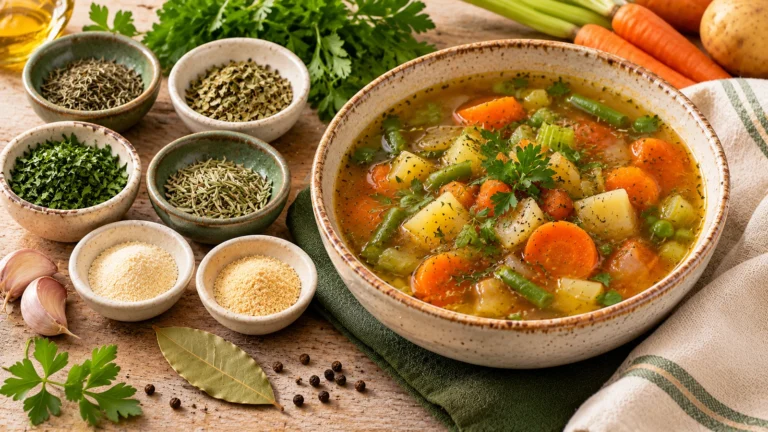
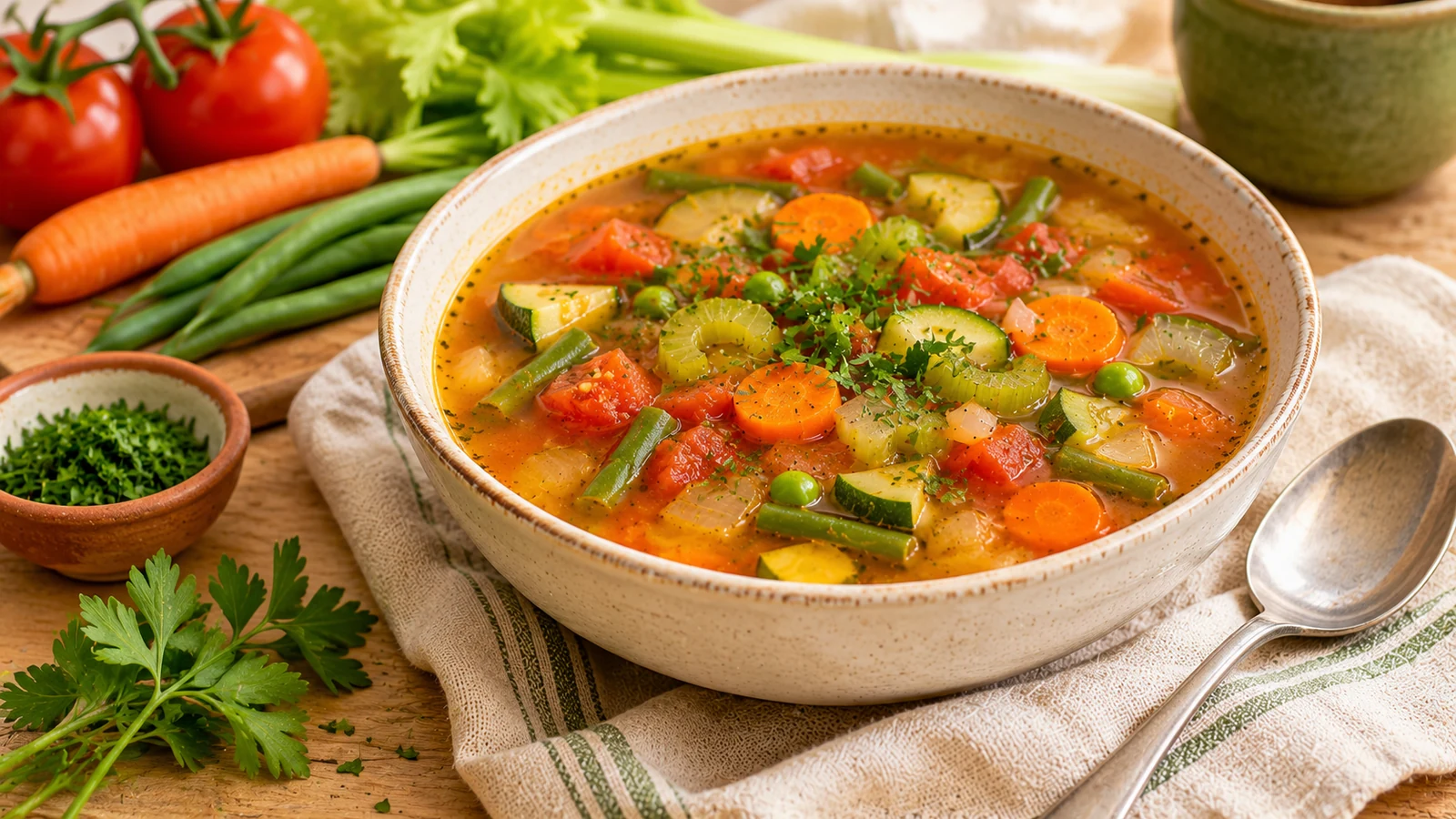
Homemade vegetable soup recipe is a classic stovetop bowl of tender carrots, celery, green beans, zucchini and peas in a light, savory broth with diced tomatoes. No cream, blender, pasta or potatoes are required. Each spoonful keeps the vegetables distinct rather than turning them into a purée, so it works well as a simple lunch or weeknight soup.
Quick answer: Sauté chopped onion, carrots and celery in olive oil for about 6–8 minutes. Add garlic, a 14.5-ounce can of diced tomatoes, 4 cups vegetable broth, green beans and dried Italian herbs. Simmer about 12–15 minutes; add zucchini for another 6–8 minutes and frozen peas in the final 3–4 minutes. Season after tasting the broth. This research-based approach draws from University of Maryland Extension and West Virginia University Extension.
Editorial transparency: Vegetable Dips has not independently cooked, tasted, timed or measured this exact vegetable combination. The ingredient choices and stovetop method are adapted from university extension recipes; the approximately 45-minute total time and six-bowl yield are planning estimates rather than tested measurements.
Why This Homemade Vegetable Soup Is Different
This is a brothy, chunky soup, not a blended soup. Diced tomatoes supply a little color and acidity without turning the broth into a thick tomato sauce. Carrots, celery and green beans remain recognizable pieces, while zucchini and peas go in later to avoid cooking them for as long as the firmer vegetables.
Our Creamy Vegetable Soup uses potatoes and partial blending to thicken the liquid, which makes it a different texture. Our Vegetable Soup Without Tomatoes omits tomatoes entirely and features cabbage, kale, broccoli and cauliflower. The recipe here is the classic light, tomato-tinted option; it is not suitable for someone avoiding tomatoes.
Vegetable Soup Recipe Ingredients
- 2 tablespoons olive oil: To sauté the aromatics before adding the broth.
- 1 medium yellow onion, diced: A savory starting flavor.
- 2 medium carrots, chopped small: Cut into even pieces so they become tender in the broth.
- 2 celery stalks, diced: A classic soup aromatic.
- 2 garlic cloves, minced: Add briefly after the onions and carrots soften.
- 1 cup green beans, trimmed and chopped: Fresh or frozen beans can work; check tenderness while cooking.
- 1 can (14.5 oz) diced tomatoes with juice: Adds light tomato flavor; this soup is not tomato-free.
- 4 cups low-sodium vegetable broth: Choose an unsweetened savory broth; check the label for ingredients and salt.
- 1 teaspoon dried Italian herb blend: Or a modest combination of thyme and oregano.
- 1 medium zucchini, diced: Added toward the end so its pieces do not soften excessively.
- 1 cup frozen green peas: Stir into the soup for the last few minutes.
- Salt, black pepper and optional chopped parsley: Finish to taste, rather than adding a fixed large amount of salt.
This list is designed to keep vegetables as the main feature, with no added pasta, rice, beans other than green beans, or potatoes. For a heartier potato-forward soup with intact cubes and no tomatoes, see our Vegetable Soup with Potatoes. Those ingredients can make other satisfying soups, but they change the formula and cooking schedule. The quantity of broth can be increased slightly if you prefer a more liquid-to-vegetable ratio.
How to Make Homemade Vegetable Soup
- Prepare the vegetables. Wash the produce. Dice the onion, carrots, celery and zucchini into similar-size bites, mince garlic and cut green beans into short pieces.
- Soften the base vegetables. Heat olive oil in a large pot over medium heat. Add onions, carrots and celery. Stir occasionally for around 6–8 minutes, until the onion softens and the carrots begin to tenderize.
- Add garlic briefly. Stir in minced garlic for about 30 seconds. Avoid allowing it to scorch.
- Build the broth. Pour in the diced tomatoes and their juice, the vegetable broth, chopped green beans and dried herbs. Bring to a gentle boil, then turn down to a steady simmer for about 12–15 minutes.
- Add zucchini and peas later. Stir in zucchini and simmer about 6–8 minutes. Add the frozen peas during the final 3–4 minutes, until all vegetables are tender and the peas are fully heated.
- Taste before serving. Check whether the broth needs salt or pepper, taking its sodium content into account. Ladle into bowls and finish with optional parsley.
Printable Homemade Vegetable Soup Recipe
Homemade Vegetable Soup (Classic Brothy Recipe)
Ingredients
Method
- Wash and dice onion, carrots, celery, and zucchini. Mince garlic; trim and cut green beans.
- In a large soup pot, heat olive oil over medium heat. Add onion, carrot, and celery and cook about 6–8 minutes, stirring occasionally. Add garlic for about 30 seconds.
- Add diced tomatoes and their juices, vegetable broth, green beans and dried herbs. Bring to a gentle boil, then simmer about 12–15 minutes or until firmer vegetables are nearly tender.
- Add zucchini and simmer for roughly 6–8 minutes. Add frozen peas during the last 3–4 minutes to heat through; adapt timing to actual vegetable tenderness.
- Taste before adding salt because broth sodium varies. Adjust with salt and pepper if needed, garnish with optional fresh parsley and serve hot. Refrigerate leftovers promptly.
Notes
What Makes Vegetable Soup Brothy Instead of Creamy?
A brothy soup keeps the liquid separate from the vegetables. It is made with stock or broth and no roux, milk, heavy cream or blended potato. A can of diced tomatoes adds some redness, so the liquid is lightly tomato-tinted rather than completely clear. If you want a thick and creamy bowl without heavy cream, the method in Creamy Vegetable Soup is a better fit.
Cutting the vegetables into small, even pieces helps them cook at similar rates. If the broth looks too concentrated while simmering, you can add a little water or extra low-sodium vegetable broth. If the soup seems too watery for your preference, avoid thickening it with flour unless you intend to create a different, thicker preparation.
When to Add Frozen Vegetables
Frozen peas generally need much less time than raw carrots or green beans. Add them toward the end so they heat through without a long simmer. Frozen green beans may cook faster than fresh green beans; check texture and add them later if the pieces are already thin or partially cooked. Follow safe storage directions on frozen packages and cook until heated through.
Best Herbs and Spices for Classic Vegetable Soup
Dried thyme and oregano are simple choices that fit the tomato and vegetable base. You can use a small amount of packaged Italian seasoning in place of measuring individual herbs, but check for added salt. If the broth tastes flat, taste first rather than adding every spice available. Fresh parsley is a bright finishing herb, while rosemary can dominate a delicate broth if used heavily.
For specific ratios and timing for dried and fresh herbs, see our Vegetable Soup Seasoning guide. The example soup here uses only a teaspoon of dried mixed herbs as a conservative editorial starting point; adjust once the vegetables are tender.
Easy Variations That Change the Soup
- Tomato-free option: Do not simply omit the tomatoes and expect the same broth; use our separately written Vegetable Soup Without Tomatoes, which is designed around that ingredient constraint.
- More vegetables: A handful of sliced mushrooms or chopped bell peppers can be added as an optional variation, but cooking times may differ.
- More hearty starch: Potatoes, pasta or rice change the amount of liquid absorbed and the timing; these are separate soup approaches, not ingredients needed for this version.
- Different seasoning: Try fresh basil near the end for a stronger tomato-herb direction, or a few chopped chives for a milder finish.
Serving Ideas for a Vegetable Soup Dinner
Serve this chunky soup with crusty bread, a simple green salad, or a small toasted sandwich. Because it is a relatively light broth-based dish, a more substantial side makes it suitable for a larger dinner. A small serving of fresh herbs can improve presentation without changing the underlying recipe.
For different colors and vegetable-centered pairings, the Roasted Cauliflower Soup Recipe offers a blended pale soup, while our Carrot Soup Recipe is an orange ginger-forward bowl. These are distinct recipes rather than direct substitutions.
Make Ahead, Refrigeration and Reheating
To prepare ahead, chop vegetables and keep them appropriately refrigerated until use. Finished soup should be cooled promptly in shallow containers and refrigerated at 40°F (4°C) or colder. The USDA leftovers guidance recommends refrigerating leftovers within two hours (one hour above 90°F / 32°C) and using properly chilled leftovers within three to four days.
For a pot of soup, divide the leftovers into smaller, shallow containers instead of leaving a large hot pot on the counter. Reheat leftovers thoroughly according to FoodSafety.gov; a cooking thermometer can confirm 165°F (74°C) for reheated leftovers. Frozen soup is useful for longer storage, though soft zucchini pieces may change texture when thawed.
Frequently Asked Questions
What vegetables go in a classic vegetable soup recipe?
Carrots, celery, onion, green beans, zucchini and peas are all common choices. This version also includes canned diced tomatoes and vegetable broth. Many recipes use different vegetables depending on season and pantry availability.
Can I make homemade vegetable soup without tomatoes?
Yes, but choose a tomato-free formula and verify that the broth contains no tomato ingredients. Our vegetable soup without tomatoes guide covers that separately.
Do you have to add potatoes to vegetable soup?
No. This recipe deliberately omits potatoes, pasta and rice to keep the soup light and brothy. A potato-based version will be heartier and often needs different cooking times.
How long do you cook vegetable soup?
For the chopped vegetables used here, plan on about 30 minutes of cooking after roughly 15 minutes of preparation. This is an estimated schedule. Use tenderness rather than an exact timer to judge when it is ready.
Can frozen vegetables be used?
Yes, as an adaptation. Frozen peas are included already; other frozen vegetables may need less cooking than fresh produce. Adjust the order and check texture rather than cooking them all for the same amount of time.
Is homemade vegetable soup always vegan or gluten-free?
Not automatically. The base ingredients here are plant-based, but packaged broth and seasoning brands vary. Check the exact labels if you need to avoid gluten, dairy or other allergens.
Is this the same as minestrone?
No. Minestrone often features beans and pasta in a tomato-based broth, while this particular recipe focuses on vegetables without pasta or dry beans. Those ingredients would create a different style of soup.
Sources and Recipe Transparency
The combination of onion, carrot, green beans, broth, tomato and zucchini and its basic stovetop method were informed by University of Maryland Extension — Garden Vegetable Soup and West Virginia University Extension — Garden Vegetable Soup. Celery and peas are editorial additions to our version; for a separate illustration of flexible seasonal vegetables, see Colorado State University Extension — Vegetable Soup. Food handling follows USDA guidance. This exact adaptation has not been independently tested; its yield and cooking time are practical estimates.