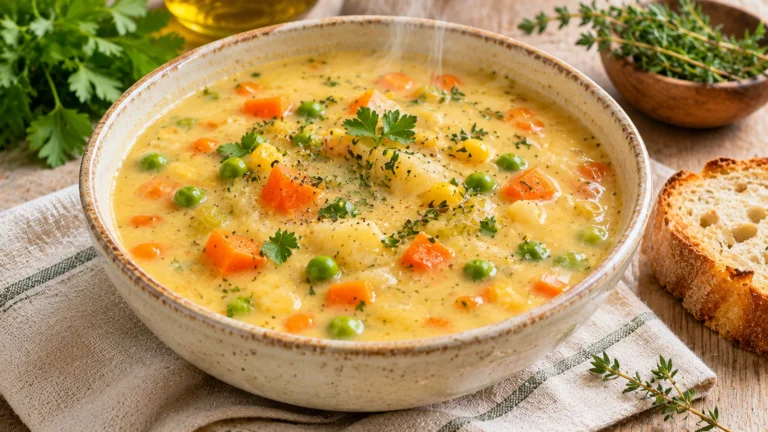
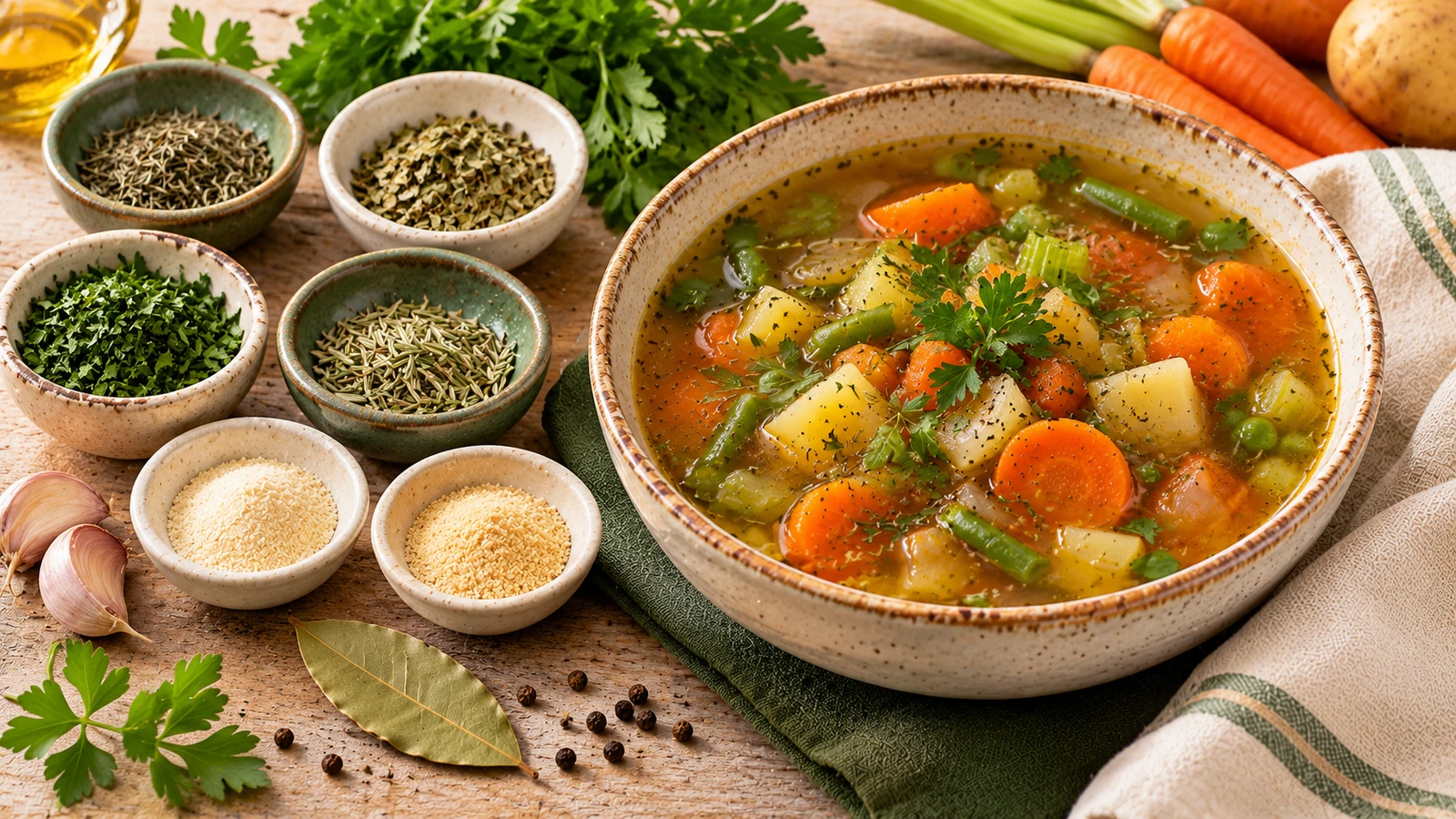
Vegetable soup seasoning can be as simple as thyme, oregano, parsley and a little pepper, or it can lean toward cumin, rosemary, basil or ginger depending on the vegetables. The goal is not to add every herb in the cupboard: choose a few flavors that fit your broth, add them at the right time, then taste before adding more salt.
Quick answer: For a pot with about 4 cups vegetable broth and 2–3 cups vegetables, Utah State University Extension’s Create a Soup guide suggests about 2–3 teaspoons dried herbs, plus other seasonings as desired. A starting combination is 1 tsp dried thyme, ½ tsp oregano, ½ tsp dried parsley and ¼ tsp crushed rosemary. Add small amounts of garlic powder, onion powder or black pepper if the soup needs them. Adjust gradually after the vegetables soften.
Editorial transparency: The herb range and soup framework come from extension resources. Our specific salt-free blend is an editorial starting suggestion, not a measured or kitchen-tested formula. Its purpose is to help you season an existing soup, not replace the soup recipe itself.
What Seasoning Is Good in Vegetable Soup?
A balanced vegetable soup often begins with aromatics—onion, garlic and celery—before you add broth. For a complete example using these aromatics, read our Homemade Vegetable Soup Recipe. Dried thyme offers a mild savory backbone. Oregano and basil can push the soup toward an Italian-style flavor, while rosemary gives a stronger pine-like note and needs a light hand. Parsley and fresh herbs offer a brighter finish. Whole bay leaves are suited to simmering, but must be removed before serving.
These are options, not a rule that every vegetable soup needs all of them. Utah State University Extension’s culinary herb guidance identifies bay, parsley, marjoram, thyme and rosemary among herbs used in soups, and recommends adding fresh delicate herbs late in cooking.
Vegetable Soup Seasoning Blend: A Salt-Free Starting Mix
The following small-batch blend is intended for one pot using roughly four cups of broth. It contains about 2¼ teaspoons of dried leafy herbs, which falls within the extension starting range, plus a little garlic powder, onion powder and pepper. It is not a universal measurement for every type of soup.
- 1 teaspoon dried thyme — savory, gently earthy foundation
- ½ teaspoon dried oregano — optional Mediterranean-style depth
- ½ teaspoon dried parsley — mild supporting herb
- ¼ teaspoon dried rosemary, finely crushed — concentrated aroma; omit if you dislike it
- ¼ teaspoon garlic powder — optional when fresh garlic is not already prominent
- ¼ teaspoon onion powder — optional when the soup lacks an onion base
- ⅛ teaspoon ground black pepper — optional gentle heat
- 1 whole bay leaf, optional — add separately while simmering and remove before serving
No salt is mixed into this blend so you can account for your broth’s existing sodium. The completed soup is only low in sodium if the broth and other ingredients support that claim; the blend itself does not make the entire recipe low-sodium.
Printable Vegetable Soup Seasoning Recipe Card
Vegetable Soup Seasoning Blend (Salt-Free Starter)
Ingredients
Method
- In a small bowl combine the dried thyme, oregano, parsley, crushed rosemary, garlic powder, onion powder and black pepper.
- For a vegetable soup containing about 4 cups broth and 2–3 cups chopped vegetables, begin with this small batch of seasoning. Add after the broth and vegetables go into the pot. If you use a whole bay leaf, place it into the pot separately.
- Allow the soup to simmer until the vegetables are tender, generally around 20–30 minutes depending on the vegetables. Remove the whole bay leaf before serving.
- Taste the soup after simmering. Add salt only as needed, taking account of the sodium in the broth. Add optional fresh parsley near the end, stir, and adjust a pinch at a time.
Notes
When to Add Herbs and Spices to Soup
- Begin with aromatics. Cook onion, celery, carrots and garlic according to your soup recipe. If using garlic powder rather than fresh garlic, it can join the broth-seasoning stage.
- Add dried herbs with broth. Stir in the blend when the vegetables and broth are added. Dried herbs need time in liquid to soften and distribute flavor.
- Simmer gently. Allow time for the vegetables to become tender. A whole bay leaf can simmer with the broth; remove it before serving.
- Finish with fresh herbs. Add chopped parsley, dill or chives near the end so they stay fresh-tasting and green.
- Taste before salting. Different broths contain very different amounts of salt. Taste the finished soup, then add salt, pepper or lemon in tiny increments rather than adding another full batch of herbs at once.
For most stovetop vegetable soups, the extension’s soup framework gives a 20–30-minute simmer for tender vegetables, though potatoes, squash and other dense vegetables can take longer. Its printable guide specifically adds fresh herbs toward the end and allows roughly five more minutes of simmering.
Best Herbs by Type of Vegetable Soup
| Soup style | Seasoning direction | Finishing touch |
|---|---|---|
| Classic chunky vegetable soup | Thyme, parsley, a little bay and black pepper | Parsley and a small squeeze of lemon |
| Tomato-based vegetable soup | Basil, oregano and thyme | Fresh basil at the end |
| Creamy blended vegetable soup | Thyme or chives; a restrained pinch of rosemary | Chopped chives or parsley |
| Carrot or squash soup | Ginger, cumin or a small pinch of coriander | Fresh herbs or citrus to taste |
| Mushroom-and-vegetable soup | Thyme, parsley and black pepper | Fresh parsley |
| Cabbage or bean vegetable soup | Bay, oregano, marjoram and garlic | Parsley or lemon |
These pairings are culinary suggestions, not separate kitchen-tested batches. For example, our Broccoli Soup Recipe uses a mild vegetable base with milk and a little cheddar rather than a heavily spiced broth. Choose two or three flavors, rather than adding every herb in the table.
How to Season Our Vegetable Soup Recipes
Creamy Vegetable Soup
Our Creamy Vegetable Soup has potatoes, carrots, peas and corn, with some vegetables blended into the broth. A small amount of thyme or parsley suits the mild dairy-and-potato base. Taste after blending: thick soups can need different finishing adjustments from clear broths.
Vegetable Soup Without Tomatoes
Our Vegetable Soup Without Tomatoes uses broccoli, cauliflower, cabbage and kale in a clear vegetable broth. Bay leaf and thyme are options for the simmer; add fresh parsley near the end. The absence of tomatoes does not automatically make the soup suitable for a medical low-acid diet.
Cauliflower Soup Recipe
The Cauliflower Soup Recipe already uses roasted garlic, shallots, thyme, white miso, Dijon and lemon. It does not need a full extra seasoning blend; evaluate the existing savory ingredients before adding more dried herbs.
Carrot Soup Recipe
Our Carrot Soup Recipe uses fresh ginger and apple cider vinegar. A small pinch of cumin can be explored as a variation, but do not assume more herbs will improve the ginger-forward balance. The vinegar also means this is not automatically a low-acid soup.
Fresh vs. Dried Herbs for Soup
As a broad substitution guide, University of Minnesota Extension advises using roughly one-third the amount of dried herbs when replacing fresh herbs, because dried herbs are typically more concentrated. That means about 1 teaspoon dried for 1 tablespoon fresh as a starting point. Varieties and ages differ, so taste rather than relying on an exact conversion.
Dried herbs suit the simmering stage. Fresh parsley, basil, chives and dill are often best stirred in close to serving. A robust fresh rosemary sprig can withstand more heat than delicate basil leaves, but the flavor may overwhelm a light vegetable soup.
What to Add When Vegetable Soup Tastes Bland
- Check salt first. Some low-sodium broths need adjustment, while full-sodium stocks may not. Taste before adding another teaspoon of herb blend.
- Try a small touch of acidity. Lemon juice or vinegar may brighten some soups, but both change acidity and may not suit all diners or recipes.
- Build savory depth with aromatics. Cooked onion, garlic and celery often matter more than adding large amounts of powdered seasoning.
- Give dried herbs time. A short simmer can help dried leaves hydrate and blend into the broth.
- Avoid piling on strong spices. Start with tiny amounts of cayenne, rosemary or smoked paprika and adjust as you go. Too many bold spices can hide the vegetables.
A The Kitchn guide notes that poultry seasoning, often based on sage and thyme, can also be used for vegetable soup; it does not necessarily contain poultry. Still, read commercial labels, because packaged blends vary in salt and other additions.
How to Store a Homemade Soup Seasoning Blend
Mix only the dry components in a clean, completely dry jar with a tight lid, label its contents and date, and keep it away from light and heat. Store fresh parsley separately in the refrigerator; do not put fresh herbs into a room-temperature dried blend. If you make several batches, scale the dry ingredients proportionally and stir before each use. Dried herbs gradually lose aroma, so check their fragrance rather than assuming a jar lasts forever.
Keep the optional bay leaf whole and separate, rather than grinding it into the jar. That makes it easy to remove after the soup has simmered.
Frequently Asked Questions
What are the best herbs for vegetable soup?
Thyme, parsley, oregano and a small amount of rosemary are practical options. The best combination depends on whether the soup is tomato-based, blended, ginger-forward or made with mild vegetables.
How much dried seasoning should I use for four cups of broth?
Utah State University Extension suggests approximately 2–3 teaspoons of dried herbs for a pot with four cups broth. Start within that range, then taste after simmering. Garlic powder and onion powder are separate aromatics, not counted as dried leafy herbs in our mix.
Can I use Italian seasoning in vegetable soup?
Yes, but read what is already in it—often basil, oregano and other dried herbs—and use it in place of some herbs rather than adding the full homemade mix on top.
When should I add fresh parsley?
Toward the end of cooking or as a garnish. Fresh herbs can lose their delicate flavor when simmered for a long time.
Can I make vegetable soup seasoning without salt?
Yes. The suggested spice blend contains no added salt. Always check the broth and other packaged ingredients separately if you need to control sodium.
Do I need a bay leaf in vegetable soup?
No. It is optional. If you use one, keep it whole during simmering and remove it before serving.
Will this seasoning make any vegetable soup taste better?
Not necessarily. The mix is a starting point, not a tested universal solution. Existing seasonings, broth strength and the vegetables determine whether adding more herbs helps.
Sources and Editorial Standards
Starting dried-herb quantities and soup sequence: Utah State University Extension — Create a Soup. Culinary herbs and timing: Utah State University Extension — Culinary Herbs. Fresh/dried conversion: University of Minnesota Extension — Drying Herbs. Additional background on poultry seasoning in soup: The Kitchn. Our example blend, pairings and FAQ are research-based editorial guidance, not the result of independently tested recipes.