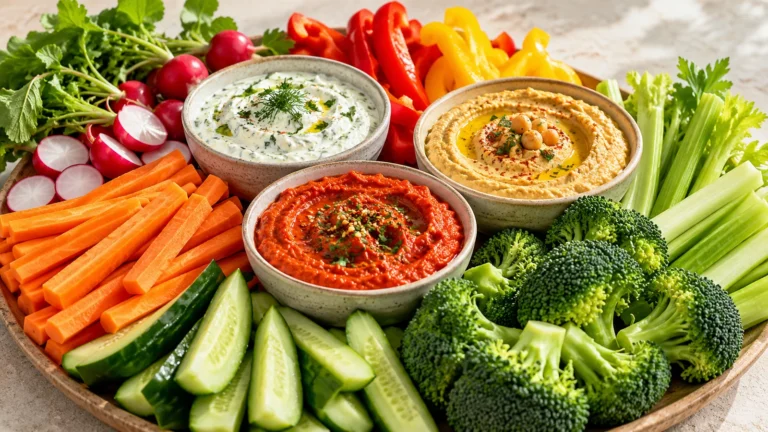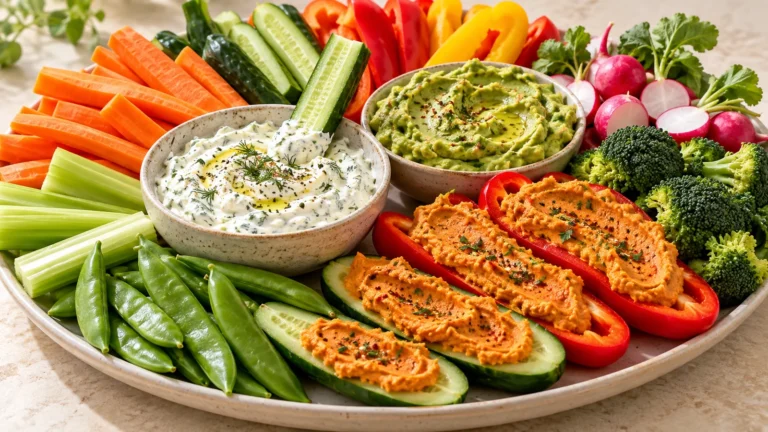
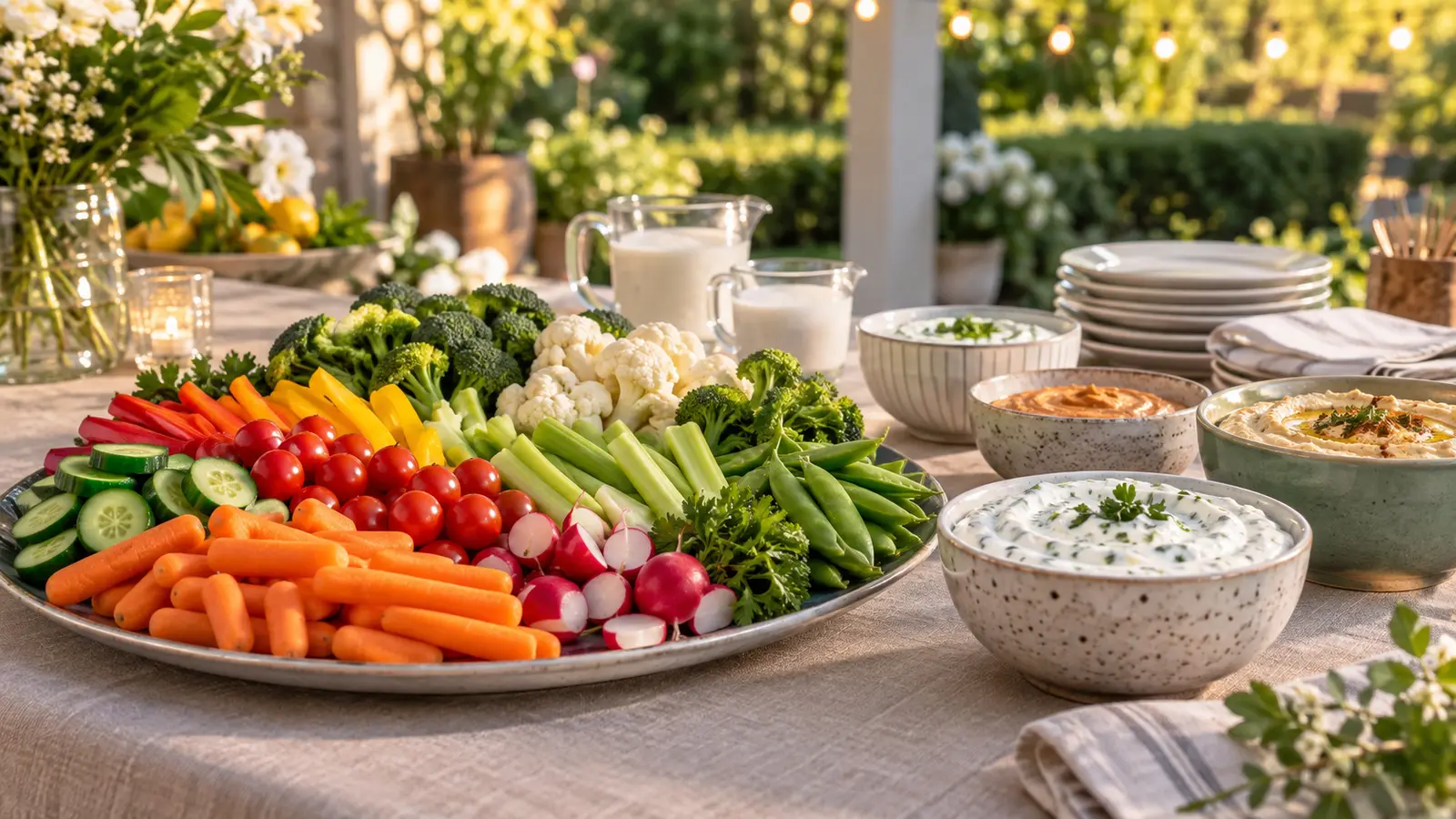
How much vegetable dip per person should you prepare for a party? A useful planning range is 2–4 tablespoons per guest, depending on the amount of other food available and how important the vegetable platter is to the menu.
For many casual parties, start with 3 tablespoons of dip per person. Use 2 tablespoons when the vegetables are one of many appetizers and 4 tablespoons when the veggie tray is a central snack. These quantities are practical planning estimates, not official serving requirements.
How Much Vegetable Dip Per Person by Party Size
Use the light estimate for a menu with several competing appetizers, the standard estimate for most parties and the generous estimate for a vegetable-focused spread.
| Guests | Light: 2 tbsp | Standard: 3 tbsp | Generous: 4 tbsp |
|---|---|---|---|
| 10 | 1.25 cups | 1.88 cups | 2.5 cups |
| 15 | 1.88 cups | 2.81 cups | 3.75 cups |
| 20 | 2.5 cups | 3.75 cups | 5 cups |
| 25 | 3.13 cups | 4.69 cups | 6.25 cups |
| 30 | 3.75 cups | 5.63 cups | 7.5 cups |
| 40 | 5 cups | 7.5 cups | 10 cups |
| 50 | 6.25 cups | 9.38 cups | 12.5 cups |
| 75 | 9.38 cups | 14.06 cups | 18.75 cups |
| 100 | 12.5 cups | 18.75 cups | 25 cups |
Vegetable Dip Quantity Calculator
Enter the number of guests, select a serving level and choose how many dip flavors you plan to offer. For choosing vegetables to serve alongside, see our best vegetables for dipping guide. Add an optional buffer only when the circumstances justify it.
Store-bought container calculator
The calculator estimates the total amount of dip required. If you select multiple flavors, it divides that total among them rather than multiplying the full quantity by the number of flavors.
How the Calculation Works
The basic formula is:
Guests × tablespoons per person ÷ 16 = cups of dip
There are 16 tablespoons in one US cup and 2 tablespoons in one US fluid ounce.
For example, 20 guests at the standard level require:
20 guests × 3 tablespoons = 60 tablespoons
60 ÷ 16 = 3.75 cups of dip
When estimating how much vegetable dip per person to serve, choose the level before applying an optional buffer. This prevents the extra percentage from being counted twice.
Choosing the Right Serving Level
Light: 2 tablespoons per person
Choose the light level when the vegetable platter is one of several appetizers. This may be appropriate when the menu also includes cheese, crackers, chips, spreads, small sandwiches or other substantial snacks.
Standard: 3 tablespoons per person
The standard level works well for many casual parties, family gatherings and game-day tables. It provides enough dip for repeated visits to the vegetable tray without assuming that every guest will eat a large portion.
Generous: 4 tablespoons per person
Choose the generous level when vegetables and dip are a major part of the menu, the event lasts several hours or the guests are likely to snack heavily. It can also be useful when serving particularly sturdy vegetables such as carrots, broccoli, cauliflower and celery.
Serving More Than One Dip
Calculate the total quantity first and then divide it among the flavors. Do not prepare the full estimated quantity for every dip.
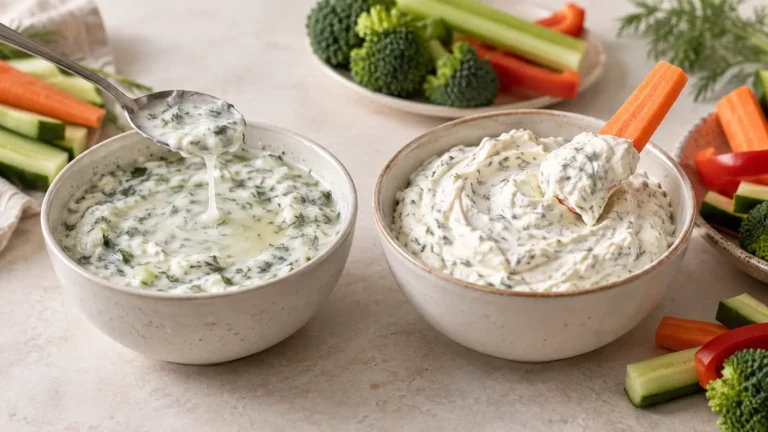
If the calculator recommends 6 cups total and you want three flavors, a simple starting point is 2 cups of each. You can adjust the division based on expected popularity. For example, prepare more of a familiar ranch-style or creamy herb dip and smaller quantities of a spicy or strongly flavored option.
Try to offer meaningful contrast rather than several nearly identical dips. One creamy dip, one plant-based option and one bold or smoky flavor will usually provide more variety than three similar dairy-based recipes.
Estimating Store-Bought Dip Containers
Do not treat the package’s net-weight ounces as though they were fluid ounces. Weight and volume are different measurements.
Instead, check the nutrition label for:
- The serving size in tablespoons.
- The number of servings in the container.
- The total tablespoons provided by the container.
Multiply the tablespoons per serving by the number of servings. Then divide the total tablespoons required for the party by the number of tablespoons in each container and round up to the next whole container.
Should You Add a Buffer?
The calculator offers optional buffers of 0%, 5%, 10% and 15%. A buffer can be useful when the final guest count is uncertain or when the vegetable tray is expected to be especially popular.
Avoid adding a large buffer automatically. If you already selected the generous 4-tablespoon level, an additional 15% may produce more dip than the party needs.
Do Different Vegetables Change the Estimate?
Dense vegetables that carry generous scoops—such as broccoli, cauliflower and bell pepper wedges—may lead guests to use more dip. Cucumber slices and thin vegetable sticks generally carry less.
The range already allows for normal variation, so you usually do not need a separate calculation for every vegetable. Focus on the overall role of the platter and the number of other foods being served.
Frequently Asked Questions
How much vegetable dip per person is enough?
Plan approximately 2 tablespoons for light snacking, 3 tablespoons for a typical party or 4 tablespoons for a generous vegetable-focused spread.
How much dip do I need for 20 people?
For 20 guests, prepare approximately 2.5 cups at the light level, 3.75 cups at the standard level or 5 cups at the generous level.
Does offering three dips triple the quantity?
No. Calculate one total quantity and divide it among the three flavors. The number of flavors changes the distribution, not the total amount required.
Should I make extra dip?
A small buffer may help when attendance is uncertain. Start with 5% or 10% rather than automatically adding a large amount.
More Party Planning Help
For more menu ideas, see Party Vegetable Dips. For larger gatherings, use Dips for a Crowd. For boards and appetizer arrangements, see Vegetable Charcuterie Board Dips.
Serving Dip Safely
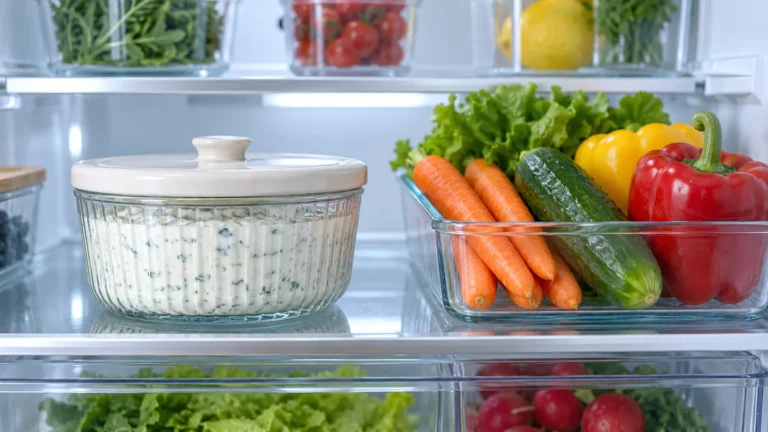
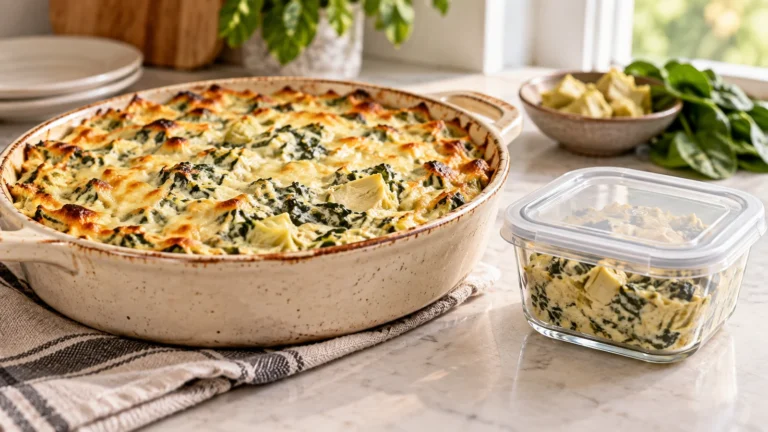
Keep reserve dip refrigerated and refill the serving bowl in smaller quantities rather than placing the entire batch on the table. Review the USDA’s Leftovers and Food Safety guidance and use the storage and safety guide for additional time-and-temperature information.