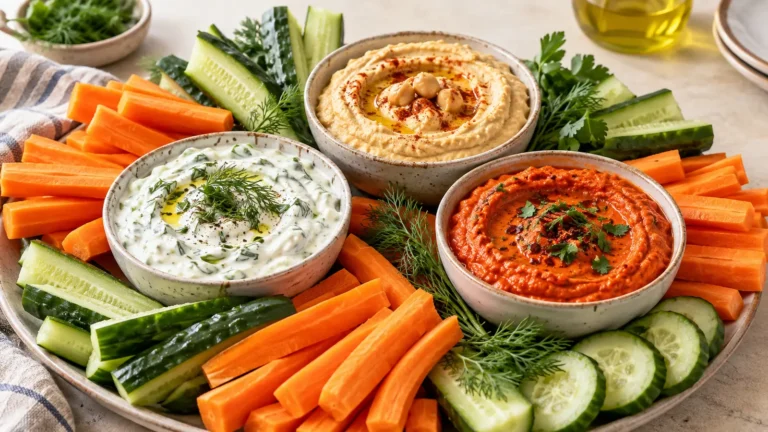
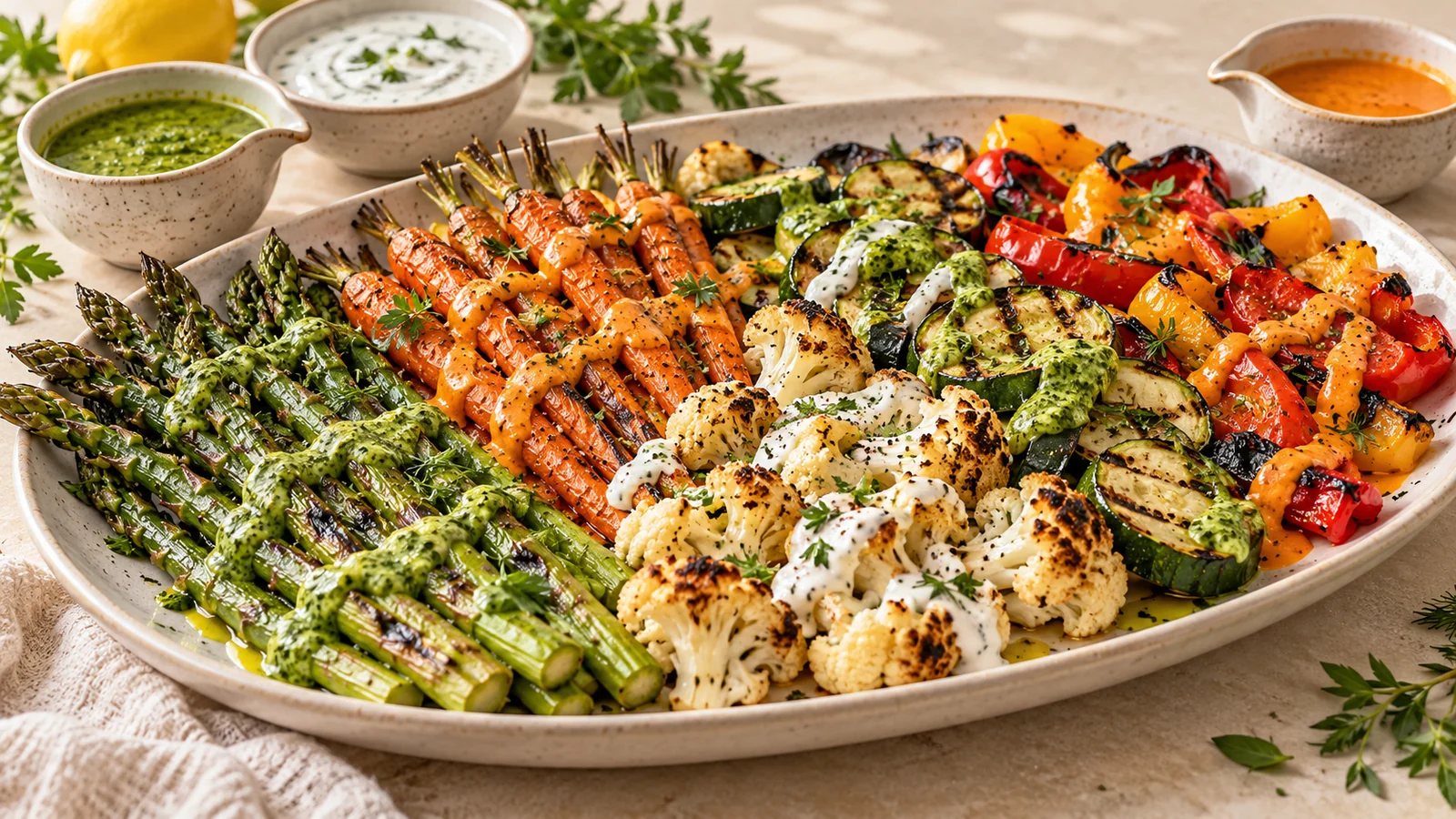
Sauces for vegetables can turn a simple tray of roasted carrots, grilled zucchini or steamed broccoli into a more flavorful dish. The best choice depends on how the vegetables are prepared: raw vegetables often suit a thicker sauce served alongside them, while roasted and grilled vegetables welcome a loose sauce that can be spooned or drizzled over the top.
This guide focuses on sauces that coat vegetables. If you want something thick enough to scoop with a carrot stick, explore our 25 vegetable dip recipes instead.
Quick answer: For roasted vegetables, start with lemon tahini or a fresh herb sauce. For grilled vegetables, try green herb, peanut lime or roasted red pepper sauce. For raw vegetables, a spoonable Greek yogurt herb sauce is an easy choice.
10 sauces for vegetables to try
These are flavor ideas rather than ten fully measured recipes. Add liquid gradually and taste as you go: the finished sauce should flow from a spoon while still coating the vegetables.
1. Lemon tahini sauce
Whisk tahini with lemon juice, grated garlic and cold water. At first, tahini may appear to thicken as water is added; keep whisking and add a little more water until the sauce loosens. Spoon it over roasted cauliflower, carrots or broccoli. Tahini contains sesame, one of the major food allergens identified by the FDA.
2. Greek yogurt herb sauce
Stir fresh dill, chives, parsley and lemon into plain Greek yogurt. Add water one teaspoon at a time until the mixture falls easily from a spoon. It is especially good with broccoli, carrots and zucchini. Our Greek yogurt vegetable dip recipe provides a thicker starting point that you can thin for this use.
3. Garlic Parmesan yogurt sauce
Combine Greek yogurt, finely grated Parmesan, garlic, lemon and parsley. Loosen with a little water, then spoon over warm asparagus or broccoli. Taste before adding salt because Parmesan already contributes a savory, salty flavor.
4. Peanut lime sauce
Whisk unsweetened peanut butter with lime juice, ginger and warm water. Add a small amount of soy sauce if you want more savory depth. This sauce pairs well with grilled peppers, broccoli and carrots. Check the ingredients of your soy sauce if you need to avoid wheat or soy.
5. Fresh green herb sauce
Finely chop parsley, cilantro or chives with garlic. Stir in lemon juice or vinegar and enough olive oil for a loose, spoonable texture. This bright sauce works particularly well on grilled zucchini, asparagus and peppers. You can vary the herbs according to what is fresh and available. If you prefer a thicker, scoopable herb dip with avocado and Greek yogurt, try our Green Goddess Dip.
6. Roasted red pepper sauce
Blend well-drained roasted red peppers with a little yogurt or white beans, lemon, garlic and smoked paprika. Add water until it can be poured in a ribbon over roasted cauliflower or grilled eggplant. Drain the peppers first so the flavor remains concentrated.
7. Miso ginger sauce
Whisk miso with grated ginger, lime juice and water; add a few drops of sesame oil if desired. Spoon lightly over grilled eggplant, green beans or broccoli. Miso and soy sauce can both be salty, so taste the sauce before seasoning further. Check the specific miso product for its ingredients and allergens.
8. Avocado lime herb sauce
Blend ripe avocado with lime juice, fresh herbs and enough water to make a smooth sauce. It brings a creamy finish to grilled corn, peppers and zucchini. Prepare it fairly close to serving for its freshest flavor and color.
9. Tomato basil sauce
Blend roasted tomatoes with basil, garlic and a little olive oil. Serve warm or at room temperature over roasted zucchini, eggplant or peppers. If the tomatoes release a lot of liquid, reduce them briefly before blending to keep the sauce flavorful.
10. Chili yogurt sauce
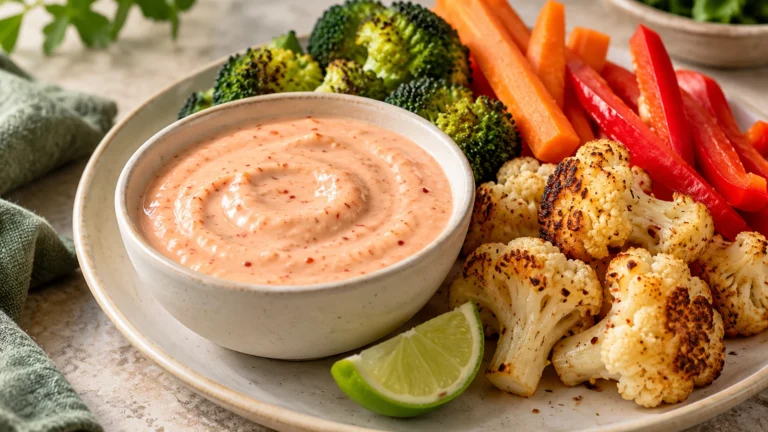
Mix plain Greek yogurt with lemon or lime juice, chili flakes and garlic powder. Thin it gradually for drizzling over roasted cauliflower, sweet potato or carrots. Start with a small amount of chili and adjust after tasting. For a distinct sweet-and-spicy yogurt sauce using sweet chili sauce and Sriracha rather than chili flakes, see our Bang Bang Sauce with Greek Yogurt. For fries rather than a drizzle, see our dips for sweet potato fries and choose a thicker sauce.
Dip, sauce or dressing: what changes?
A dip is usually thick enough to cling to a vegetable when you scoop it. A sauce flows from a spoon and can be drizzled, brushed or tossed with cooked vegetables. A dressing is typically used to coat salads or chopped ingredients evenly.
The boundaries are flexible. Add a little water or lemon juice to a Greek yogurt dip to turn it into a sauce. Use less water in a tahini mixture when you want a thicker dip. Adjust texture gradually so the flavor does not become diluted.
Best Dipping Sauces for Raw Vegetables
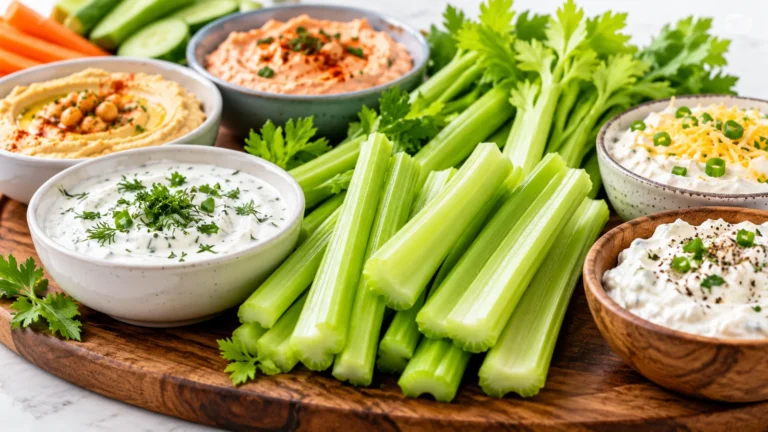
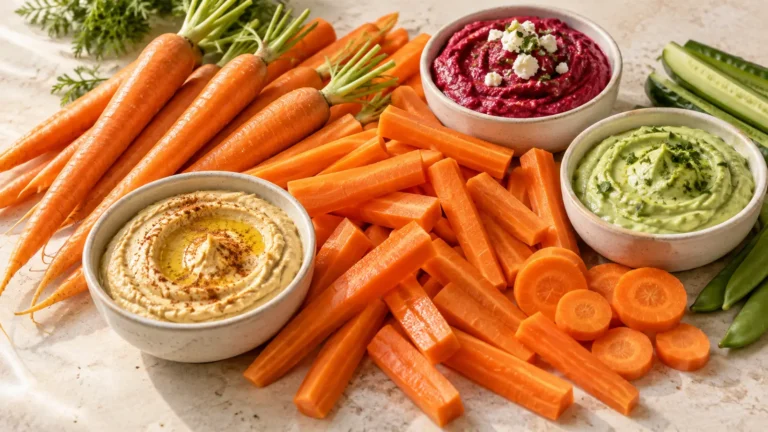
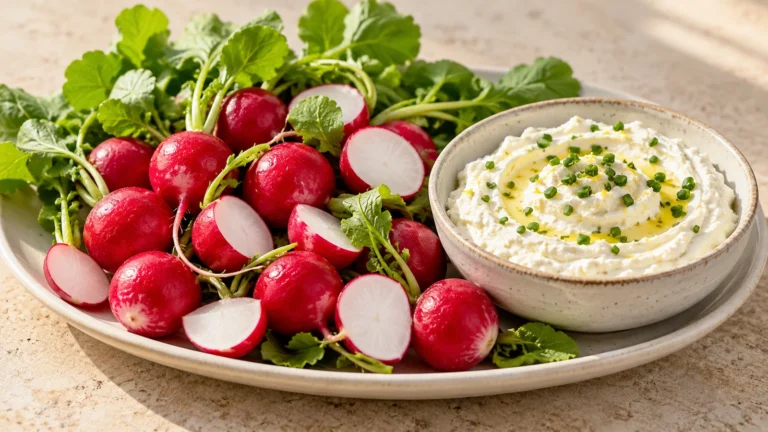
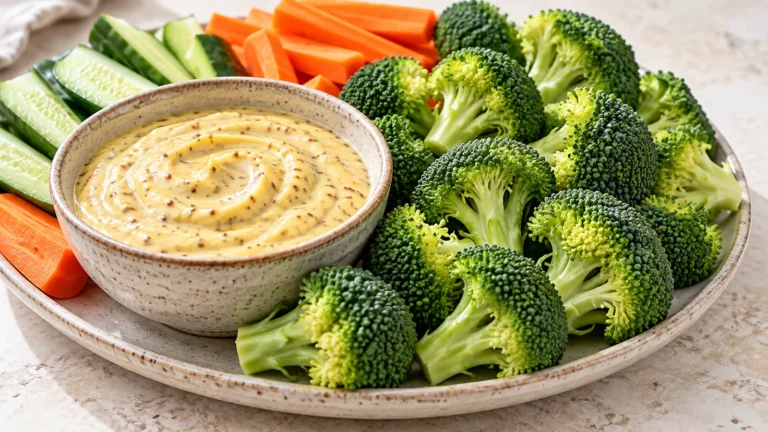
For raw vegetables, choose a sauce that is thick enough to cling to carrots, cucumber, celery, bell peppers or broccoli without being as dense as a traditional dip. Greek yogurt herb sauce, lemon tahini and peanut lime sauce can all work well when kept slightly thicker for dipping. If you want a fully scoopable dip rather than a sauce, use our Easy Vegetable Dip Recipe.
Best sauces for roasted vegetables
Roasting brings out sweetness and deeper flavors. Lemon tahini adds contrast to carrots and cauliflower; green herb sauce brings freshness to potatoes or zucchini; chili yogurt balances sweet potato. Spoon the sauce on shortly before serving so the vegetables retain some of their roasted texture. For a warm, buttery alternative rather than a creamy sauce, see our Garlic Butter Dipping Sauce.
Best sauces for grilled vegetables
Grilled vegetables often benefit from acidity. Try green herb sauce on zucchini and asparagus, roasted red pepper sauce on eggplant, or peanut lime sauce on peppers and broccoli. Brush on a small amount after grilling, then offer extra sauce at the table.
How to fix a sauce that is too thick or too thin
If a sauce is too thick, whisk in water, lemon juice or another liquid suited to its base one teaspoon at a time. If it becomes too thin, add more of the main ingredient, such as yogurt, tahini, avocado or peanut butter. Taste again after every adjustment, especially when adding citrus or salty ingredients.
Frequently asked questions
What sauce goes well with broccoli?
Garlic Parmesan yogurt, lemon tahini, peanut lime and chili yogurt all work with broccoli. Choose a thinner sauce for roasted broccoli so it can reach between the florets.
Can I turn a vegetable dip into a sauce?
Yes. Thin it gradually with a suitable liquid until it flows from a spoon. The amount needed depends on how thick the original dip is.
Which of these sauces can be made without dairy?
Lemon tahini, peanut lime, green herb, miso ginger, avocado lime and tomato basil can be prepared without dairy when the chosen ingredients contain none. Always check packaged ingredients if an allergy or dietary restriction applies.
Should I sauce vegetables before or after cooking?
Most yogurt, avocado and fresh herb sauces taste best added after cooking. Tomato sauce can be served warm, while a little herb or peanut sauce may also be brushed on after grilling. Add extra sauce at the table so guests can choose how much they want.
More vegetable ideas
For thick, scoopable options, browse 25 vegetable dip recipes. For a lighter creamy base that you can adapt into a sauce, start with the Greek yogurt vegetable dip.