Vegetable Dips for a Charcuterie Board: 8 Best Picks + Pairing Guide
Vegetable dips for a charcuterie board should provide more than several versions of the same creamy flavor. The best combination includes contrasting colors, textures and ingredients while leaving enough room for fresh vegetables, modest amounts of cheese and a few crackers.
A vegetable-forward board does not need eight bowls at once. Choose two or three dips from this list based on the size of the gathering. One familiar creamy dip, one colorful vegetable-based option and one dairy-free spread usually create enough variety without overcrowding the board.
8 vegetable dips for a charcuterie board
1. Cream Cheese Vegetable Dip
Cream Cheese Vegetable Dip is thick, creamy and familiar. Its firm texture works especially well with sturdy vegetables such as carrots, celery, broccoli and cauliflower.
Because cream cheese dip is relatively dense, serve cucumber as thick spears rather than thin rounds. Place this dip near the firmest vegetables on the board so guests can find an easy pairing.
2. Greek Yogurt Vegetable Dip
Greek Yogurt Vegetable Dip has a lighter texture and a fresh, tangy flavor. Dill, parsley, chives, lemon and garlic make it a versatile choice for cucumber, bell peppers, snap peas and radishes.
This is a useful familiar option when the other bowls have stronger roasted, earthy or sesame-forward flavors.
3. Beet and Feta Dip
Beet and Feta Dip brings vivid magenta color to a board dominated by green, orange and white vegetables. Its earthy sweetness and salty feta flavor pair naturally with cucumber, endive, carrots and radishes.
Taste the dip before adding extra salt because feta can already provide plenty of seasoning. This dip contains dairy.
4. Roasted Red Pepper White Bean Dip
Roasted Red Pepper White Bean Dip combines sweet roasted pepper flavor with the mild body of white beans. Its orange-red color creates a strong contrast beside pale yogurt dips and green vegetables.
Serve it with celery, bell peppers, cauliflower or cucumber. Drain roasted peppers thoroughly before blending to help the dip remain scoopable.
5. Roasted Carrot Tahini Dip
Roasted Carrot Tahini Dip has a warm orange color and a savory sesame finish. It works well with cucumber, broccoli, snap peas and endive leaves.
Tahini becomes thicker as it sits, so adjust the consistency gradually with water or lemon juice before serving. Tahini contains sesame, which should be identified when serving guests with food allergies.
6. Pea and Mint Dip
Pea and Mint Dip adds a bright green element to the board. Peas provide a naturally mild base, while mint and lemon keep the flavor fresh.
Pair it with radishes, carrots, cucumber or snap peas. Avoid placing this dip directly beside avocado dip because their similar colors create less visual contrast.
7. Eggplant Dip Without Tahini
Eggplant Dip Without Tahini provides a softer roasted flavor without adding another brightly colored bowl. Lemon, garlic, olive oil and cumin give the eggplant enough character to stand beside richer dairy-based dips.
It is especially good with bell peppers, cucumber spears, endive leaves and sturdy crackers. Drain very moist roasted eggplant before blending so the dip does not become watery.
8. Avocado Lime Dip
Avocado Lime Dip has a smooth texture, pale green color and fresh citrus flavor. It pairs well with radishes, bell peppers, carrots, celery and cauliflower.
Prepare avocado dip relatively close to serving time for the best color. Keep it covered and refrigerated until the board is ready.
The best three-dip combination
A balanced selection of vegetable dips for a charcuterie board could include:
- Cream Cheese Vegetable Dip for a familiar creamy option
- Roasted Red Pepper White Bean Dip for warm color and plant-based body
- Pea and Mint Dip for fresh green contrast
This combination provides three different bases, colors and flavor profiles. For a dairy-free board, replace the cream cheese dip with Eggplant Dip Without Tahini or Avocado Lime Dip.
How to arrange the board
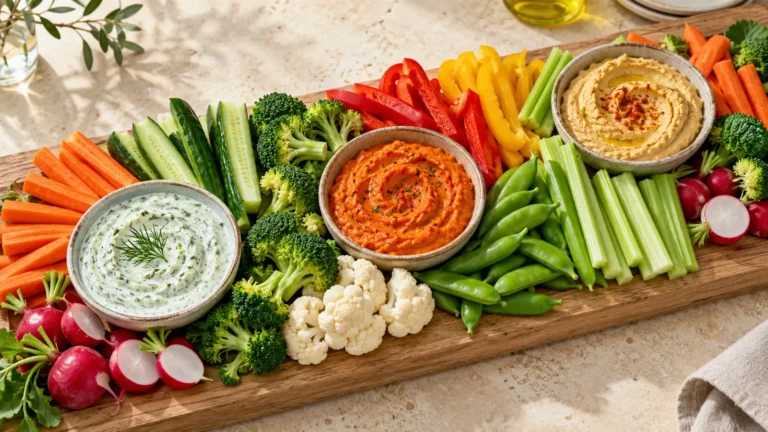
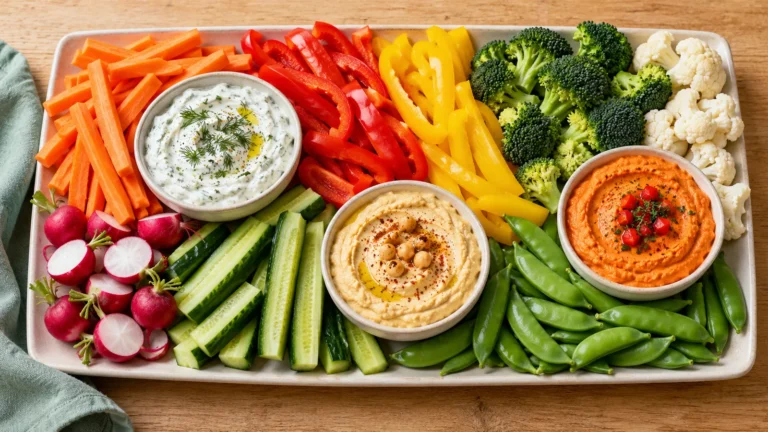
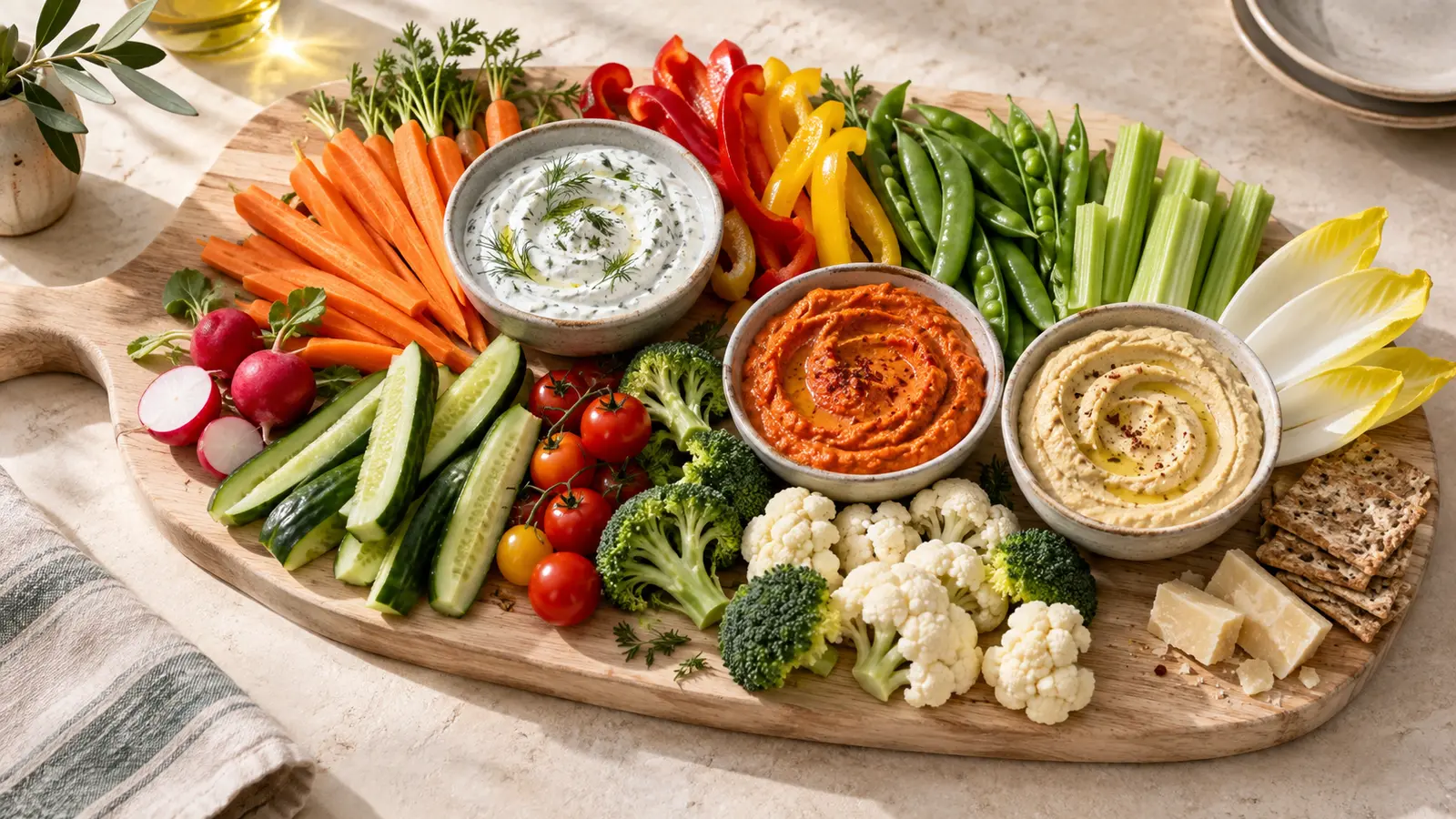
Position the dip bowls first and leave some distance between them. Arrange sturdy vegetables around thicker dips and place more delicate vegetables beside softer options.
Create several small clusters rather than one large section for each vegetable. Repeating carrots, cucumber or peppers in two areas makes the board look generous while helping guests reach ingredients from different sides.
Add crackers and cheese only after placing the vegetables. They should fill selected gaps rather than become the main ingredients. Leave a little visible space around the bowls so the arrangement remains clean and easy to use.
Choose vegetables by dipping strength
Carrots, celery, broccoli and cauliflower can support thick cream cheese, bean and tahini dips. Cucumber spears, endive leaves, radishes and bell pepper strips work better with medium-creamy or softer dips.
For more preparation and pairing ideas, see Best Vegetables for Dipping or use the Dipper Strength Meter.
How much dip should you serve?
Calculate the total amount of dip based on the number of guests before dividing it among the selected flavors. Two adequately filled bowls are more useful than several nearly empty ones.
Use How Much Vegetable Dip Per Person? for guest-count estimates and portion planning.
Storage and safe serving
Wash fresh vegetables under running water before cutting them. Keep dairy-based dips, cut vegetables and other perishable ingredients refrigerated until serving.
For a longer gathering, place out smaller quantities and replenish them from the refrigerator. FoodSafety.gov recommends refrigerating perishable foods within two hours, or within one hour when the temperature is above 90°F or 32°C. Review its four steps to food safety for additional guidance.
Do not pour fresh dip over a bowl that has been sitting at room temperature. Replace the serving bowl instead. For more detailed guidance, see How Long Does Veggie Dip Last?.
Build your board automatically
Use the free Best Vegetables for Dipping tool to create a vegetable palette and choose three complementary dips. It can help balance color, texture and dipping strength without overcrowding the board.
The most effective vegetable dips for a charcuterie board are not necessarily the richest or most elaborate. Choose dips that look different, suit the vegetables being served and remain easy for guests to scoop.