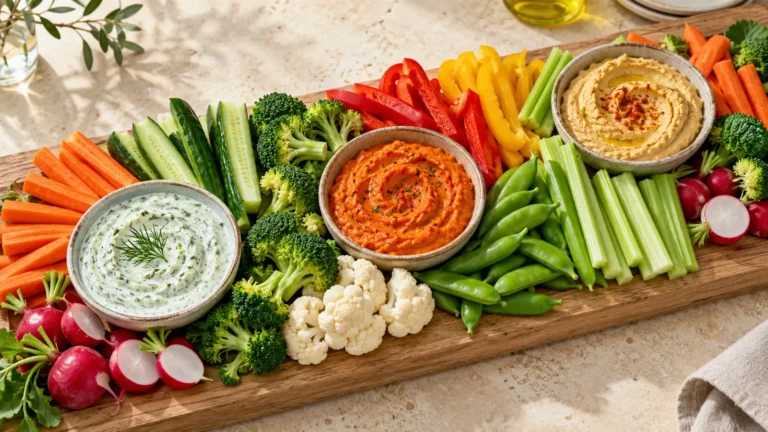
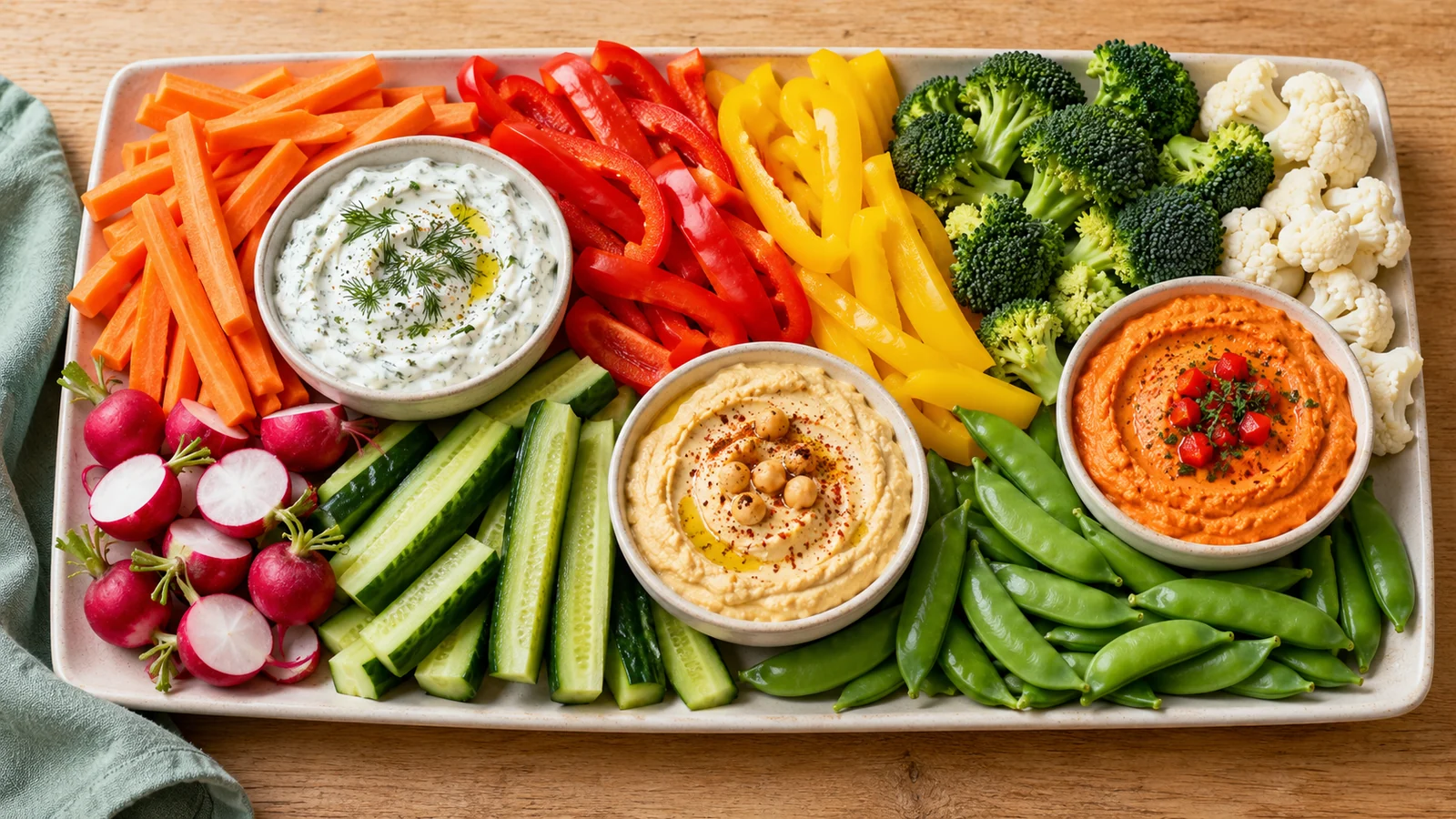
Creative veggie tray ideas do not need elaborate carving or a huge serving board. A few different cuts, repeated colors and small dip bowls can make an ordinary plate of vegetables look planned. The best arrangement also lets guests pick up a carrot stick without dismantling the whole tray.
These creative vegetable tray ideas work with round plates, rectangular platters and smaller snack trays.
Quick answer: Put the dip bowls down first, arrange vegetables in wedges or color bands around them, and repeat one color on the opposite side. Use sturdy sticks beside thicker dips and keep a chilled reserve for refills. Start with one of the seven layouts below, then size it for your guest count.
This guide focuses on arranging the vegetables. If you are still choosing the bowls, use our guide to dips for a vegetable tray for recipe pairings.
See the seven tray ideas · Plan quantities · Arrange your tray
What Makes a Veggie Tray Easy to Serve?
Choose a platter with enough space for the vegetables to sit in shallow clusters. A deep bowl can hide the smaller pieces; a very large board can look sparse unless you have enough food to fill it. Leave a little room around each dip bowl so guests can reach it without dragging vegetables through another flavor.
Use four to six vegetables as a starting point: carrot sticks, cucumber spears, bell pepper strips and broccoli offer different shapes, while radishes or snap peas add variety. The vegetable pairing guide helps match their firmness to the dip.
7 Creative Veggie Tray Ideas to Try
1. The Color-Wedge Tray
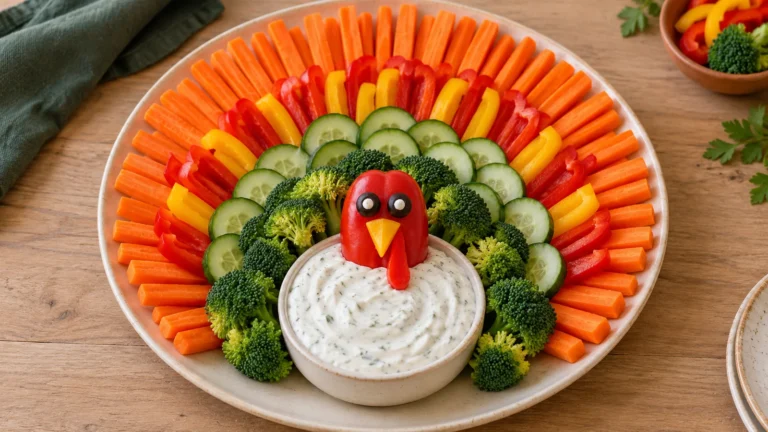
Place a small bowl of classic hummus in the center of a round plate. Build separate wedges of orange carrots, red peppers, yellow peppers and green cucumber around it. Point the sticks toward the bowl without burying their ends in the dip. This layout uses a simple shape and works well on a small plate.
2. The Rainbow-Band Platter
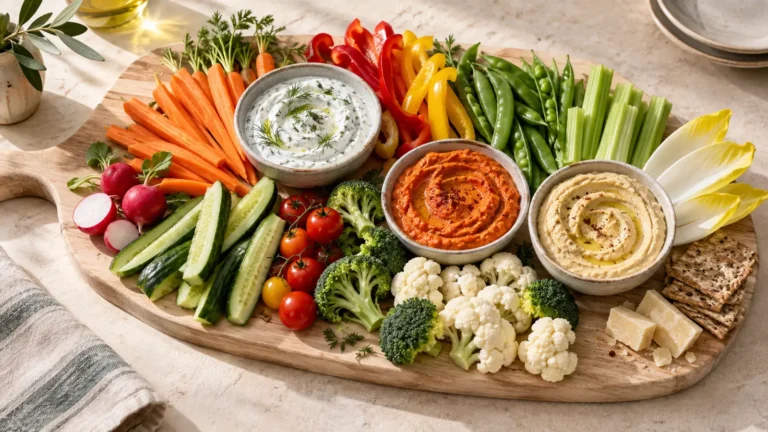
On a rectangular tray, arrange vegetables in loose rows: carrots, peppers, broccoli, cauliflower and cucumber. Break up the rows with two or three small bowls rather than one oversized bowl. Roasted red pepper white bean dip adds an orange contrast beside a pale Greek yogurt herb dip. Keep the vegetables in bands without pressing them into a perfectly packed grid.
3. The Two-Bowl Oval Tray
Set two small bowls at opposite ends of an oval platter. Curve carrot sticks and cucumber spears between them, then fill the wider spaces with broccoli, radishes and pepper strips. Try cucumber dill dip at one end and hummus at the other. Repeat a few red pepper strips near each bowl to make both ends feel connected.
4. The Dairy-Free Trio
Choose white bean dip, avocado lime dip and black bean lime dip for three different colors. Arrange carrots and peppers by the bean dips and cucumber beside the softer avocado bowl. Check the full recipes and packaged ingredients when dairy avoidance matters; the dairy-free dip guide gives more options.
5. The Individual Veggie Cups
Place a small portion of dip in each food-safe cup, then stand carrot, cucumber and pepper sticks upright. Keep the pieces short enough to eat comfortably and the dip portion easy to reach. Cups make portioning simple, but they still need chilled storage and replenishment. See individual vegetable appetizers with dip for more serving ideas.
6. The Green-and-White Herb Tray
Use cucumber, celery, broccoli, cauliflower and radishes on a pale platter. Put cottage cheese herb dip in a small bowl and use the pink edges of radish slices to break up the green. Vary the cuts: celery sticks, cucumber spears, small florets and radish rounds look more interesting than a tray of identical pieces.
7. The Seasonal Centerpiece
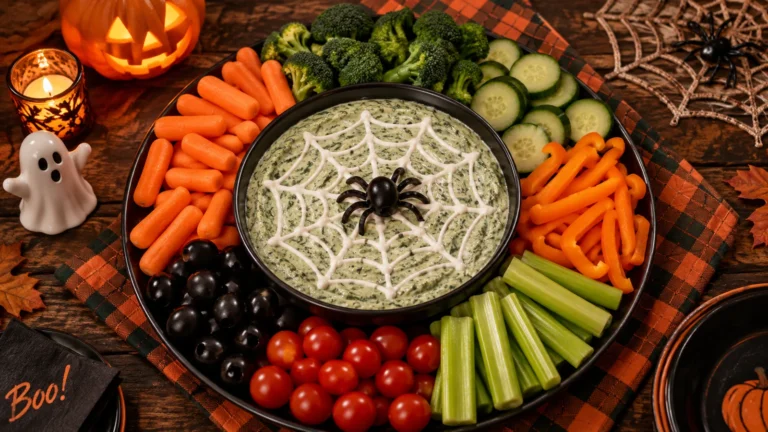
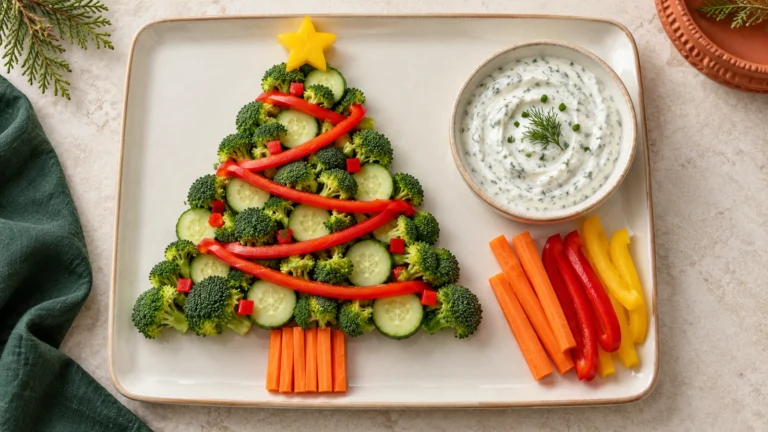
Build a familiar tray around one seasonal focal point instead of decorating every vegetable. For October, use the arrangement in our Halloween veggie tray with spider web dip. Keep decorations outside the food area unless they are edible and appropriate for the dish. For an everyday version, a bowl of colorful dip can provide the focal point on its own.
Choose a Round, Oval or Rectangular Layout
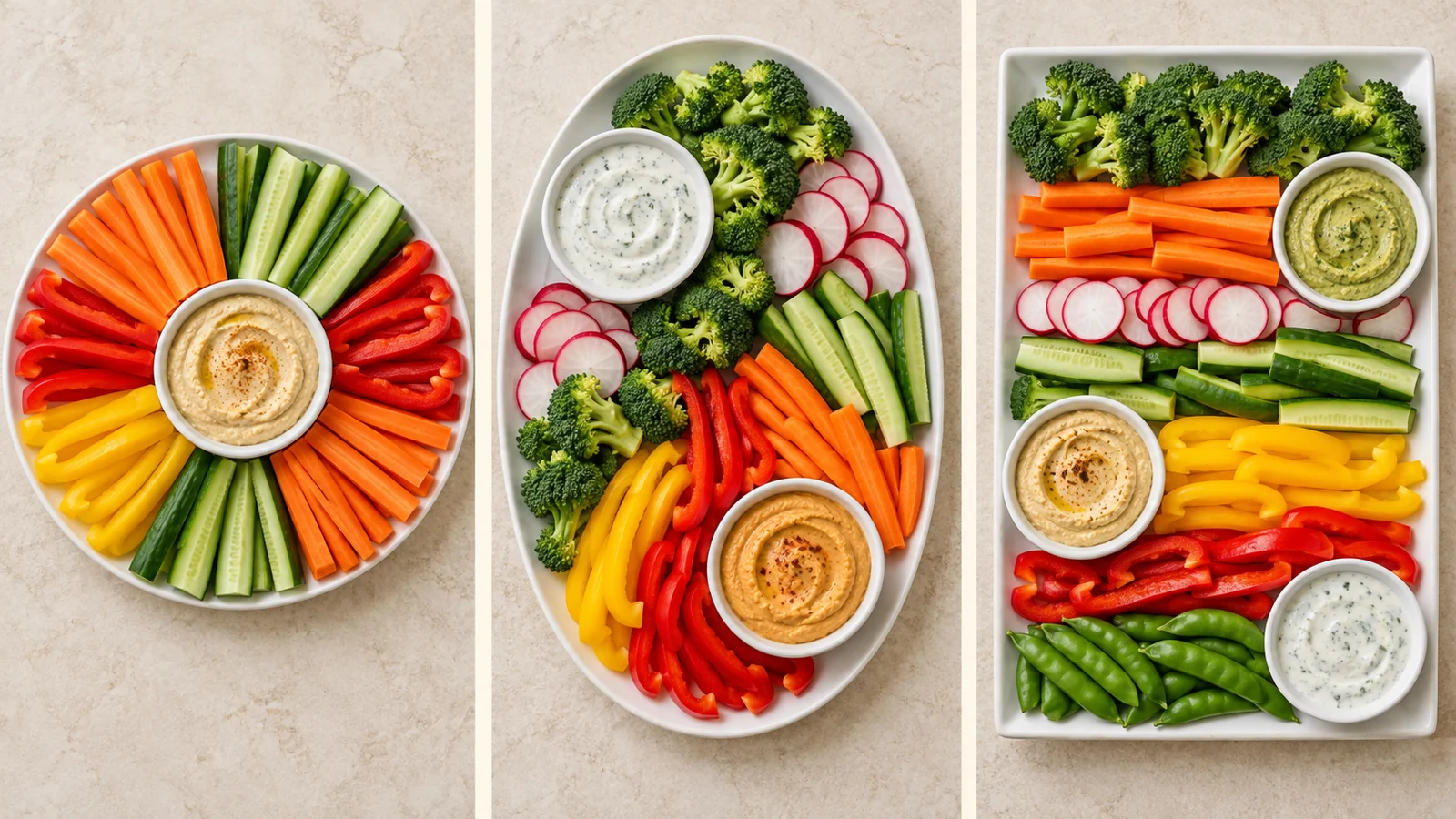
Choose the layout around the plate you already own. One bowl gives a round tray a clear center; two bowls balance an oval platter; three can spread access across a rectangular tray. Use the Veggie Board Builder to plan the vegetables and flavors before shopping.
How Much Food Do You Need for a Veggie Tray?
For adults having vegetables as one of several snacks, a practical starting estimate is about 3–4 oz (85–115 g) of prepared vegetables per person. Appetites, other food and the length of the gathering will change this. The weights below refer to washed, trimmed vegetables, not the untrimmed shopping weight.
For dip, the table uses 3 tablespoons per guest across all flavors. Our dip quantity guide explains a wider 2–4 tablespoon range. These are planning estimates, not dietary serving requirements.
| Guests | Prepared vegetables: estimate | Total dip at 3 tbsp each | Layout to start with |
|---|---|---|---|
| 6 | 18–24 oz (about 510–680 g) | 1⅛ US cups | One-bowl round plate |
| 12 | 36–48 oz (about 1–1.4 kg) | 2¼ US cups | Two-bowl oval platter |
| 20 | 60–80 oz (about 1.7–2.3 kg) | 3¾ US cups | Two refillable trays or a larger platter |
For 20 guests and three dips, 3¾ cups total divides into about 1¼ cups of each, before adjusting for popularity. Do not make 3¾ cups of every flavor. Use the Party Calculator to change the guest count and serving level.
How to Arrange a Veggie Tray Step by Step
- Choose the platter and bowls. Set empty bowls on the platter first and check that the arrangement fits in your refrigerator or plan to assemble just before serving.
- Prepare the vegetables. Wash, trim and cut into comfortable dipping pieces. Pat dry so cucumber and peppers do not leave water around the bowls.
- Place the sturdy pieces. Lay carrot, celery and pepper sticks in wedges, bands or curves. Face some cut ends outward so they are easy to pick up.
- Add the smaller shapes. Fill gaps with broccoli, cauliflower, radishes or snap peas. Keep clusters shallow rather than hiding small pieces beneath a mound.
- Repeat a color. Move a few pepper strips or radishes to the opposite side. This gives balance without requiring precise symmetry.
- Add dip and serve. Fill the small bowls near serving time, provide separate utensils and keep extra vegetables and dip chilled for fresh refills.
Choose Dips That Match the Cuts
Sturdy carrots can scoop thicker hummus or cream cheese dip. Cucumber spears need a dip that gives easily; thin rounds are better with a softer yogurt base. Our carrot and cucumber guide explains this difference. If your dip feels too firm, adjust it according to its recipe rather than forcing more liquid into every bowl.
Small dip bowls leave more room for vegetables and help you offer different flavors. They do not have to contain equal amounts: prepare more of the familiar mild option and less of a strongly flavored one if that suits your guests. Keep each recipe’s ingredients available when accommodating allergies.
Make Ahead Without a Soggy Tray
Prepare the dips according to their recipes and keep them covered in the refrigerator. Store washed, dried vegetables separately from the dips, and assemble closer to serving when practical. Cucumber can release moisture, so check and dry it again before it goes on the platter.
Keep perishable dips refrigerated at 40°F (4°C) or below. FoodSafety.gov advises limiting time out of refrigeration to two hours, or one hour above 90°F (32°C). Use small serving portions and chilled reserves; our dip storage guide covers more party-serving questions.
Common Veggie Tray Mistakes
- Bowls that dominate the tray: use smaller bowls and refill them instead of crowding out the vegetables.
- Only one shape: combine sticks, spears, florets and rounds for contrast.
- Wet vegetables: dry them before arranging, especially cucumber and washed pepper strips.
- A deep pile: shallow sections make it easier to reach the food underneath.
- Too much food on display: keep some chilled and replenish rather than putting every prepared piece on the table at once.
Creative Veggie Tray Ideas: Frequently Asked Questions
What should I put on a veggie tray?
Start with carrots, cucumber, peppers and broccoli, then add one or two contrasting vegetables such as cauliflower, radishes or snap peas. Choose cuts that can pick up the dips you plan to serve.
How do I make a small veggie tray look full?
Use a smaller plate, one small dip bowl and four vegetable clusters. Place the clusters close together without hiding pieces beneath a deep pile. A large empty board is harder to fill convincingly. For an even simpler everyday option, build a veggies and dip snack plate with a few crisp vegetables and one favorite dip.
How many dips should I offer?
One or two can be enough for a small tray. Two or three give a larger platter more contrast. Calculate the total amount first, then divide it across the flavors.
Can I assemble a veggie tray the night before?
You can prepare vegetables and dips ahead and refrigerate them separately. If assembling in advance, cover and refrigerate the tray and keep the dips in separate covered containers; check for moisture before serving. Follow the storage guidance for each ingredient.
What can I use instead of a large serving board?
Use a clean, food-safe dinner plate, shallow serving platter or a pair of smaller trays. Choose a washable surface and bowls that leave room for the vegetables. Two smaller trays are often easier to chill and refill than one oversized board.
For the next decision, choose your bowls from the vegetable tray dip guide or plan a larger menu with party vegetable dip ideas.