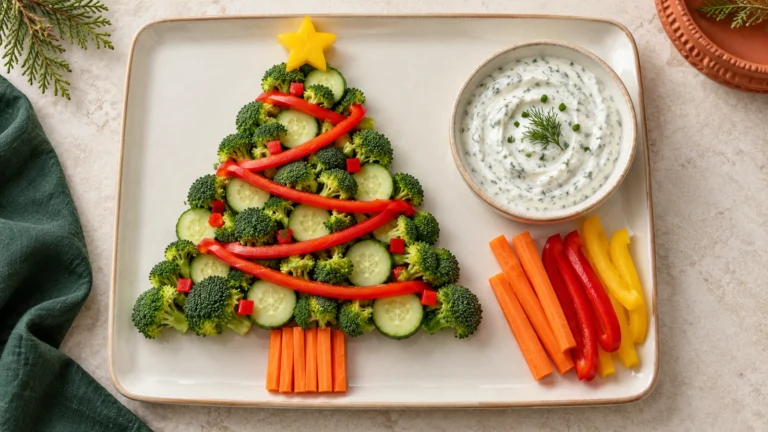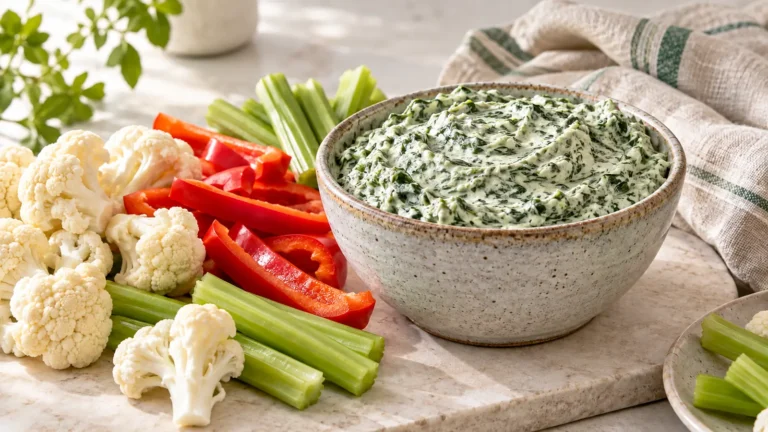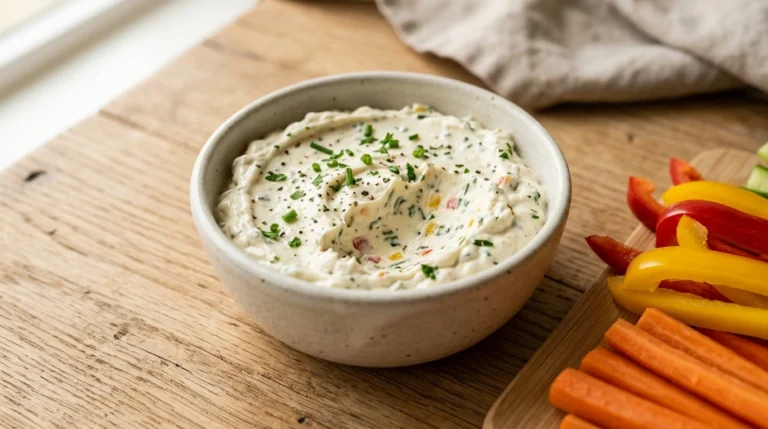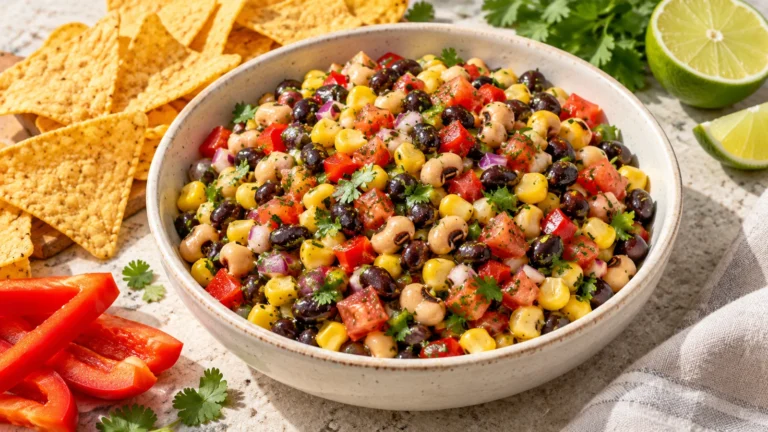
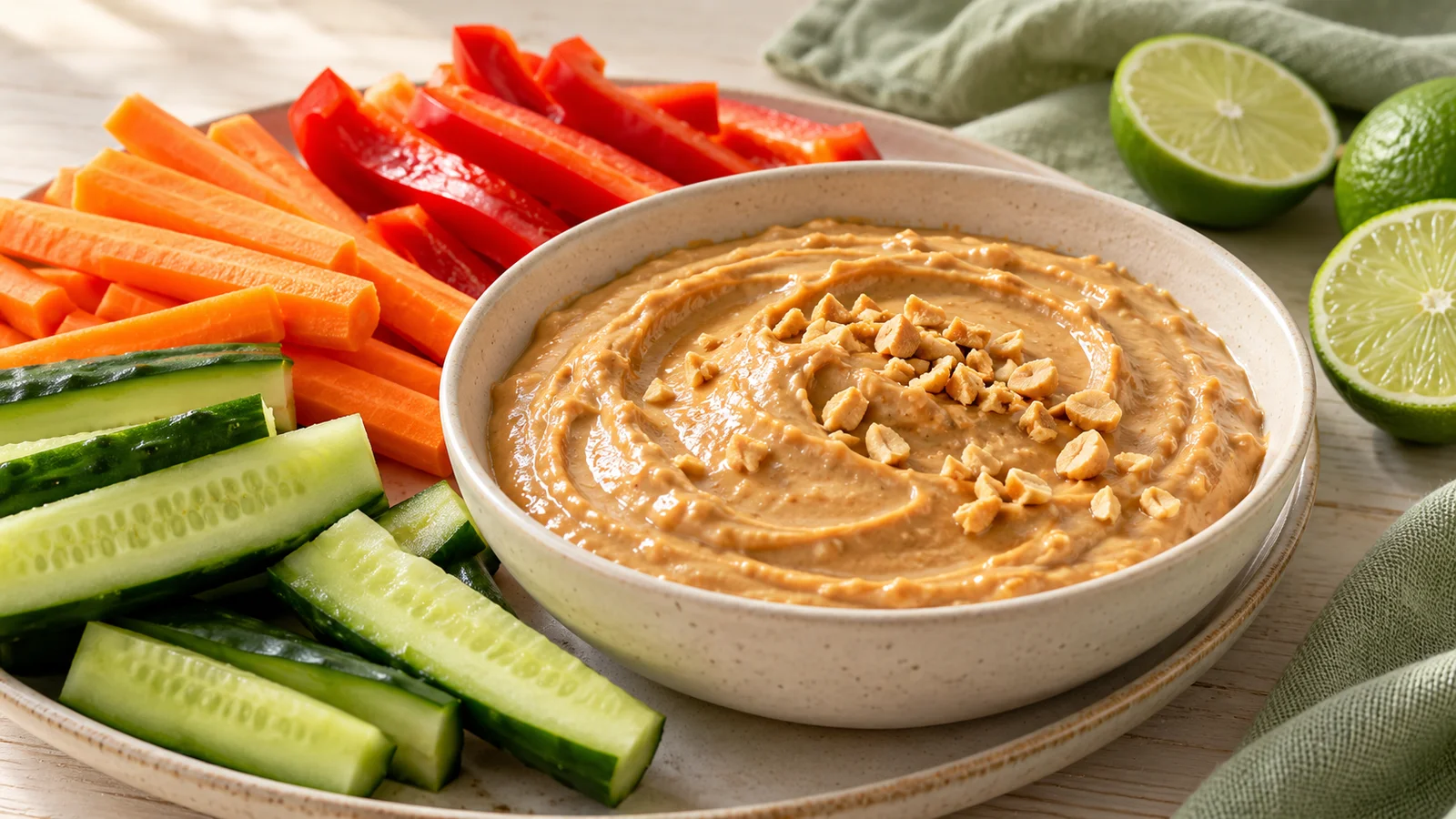
Peanut dip for veggies is a creamy, savory way to turn carrots, cucumber and peppers into a snack. Peanut butter gives this lime dipping sauce its body, ginger adds warmth, and a little maple syrup balances the tang. You can whisk it by hand without a blender.
Quick answer: Whisk smooth peanut butter with lime, soy sauce, maple syrup, ginger and garlic, then add water gradually. Keep it thick for raw vegetables or loosen a separate portion for a peanut dipping sauce.
The recipe uses no dairy ingredients. It contains peanuts and soy, and ordinary soy sauce may contain wheat. Check every packaged ingredient when dietary restrictions matter. Browse more dairy-free vegetable dips for other bases.
What makes this peanut dip suitable for vegetables?
This version starts with a small amount of water so the finished dip can cling to a carrot stick. A sauce intended for noodles or spring rolls may be too thin for a veggie tray. Taste with the vegetable you will serve, rather than judging the sauce alone.
Choose smooth peanut butter that you enjoy eating. Unsweetened peanut butter gives you more control over the balance; if yours is sweetened, start with less maple syrup. Natural peanut butter varies in thickness, so use the water range as a guide.
Peanut Dip Recipe with Lime
Prep: 10 minutes · Cook: 0 minutes · Total: 10 minutes · Yield: approximately 1 cup · Servings: 8, about 2 tablespoons each.
- ½ cup (128 g) smooth peanut butter, stirred well
- 2 tablespoons fresh lime juice
- 1 tablespoon reduced-sodium soy sauce
- 2 teaspoons maple syrup
- 1 teaspoon finely grated fresh ginger
- ¼ teaspoon garlic powder
- 3–5 tablespoons water, added gradually
- Optional: a pinch of chili flakes
How to make peanut dip
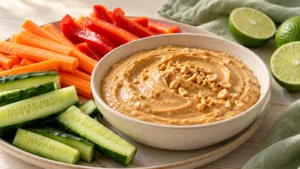
Peanut Dip for Veggies
Ingredients
Method
- Stir peanut butter thoroughly before measuring, especially if oil has separated.
- Whisk peanut butter, lime juice, soy sauce, maple syrup, ginger and garlic powder in a bowl.
- Add 3 tablespoons water one tablespoon at a time, whisking until smooth. Add up to 2 tablespoons more as needed.
- Taste with a vegetable stick and adjust lime, sweetness or optional chili gradually. Keep the dip thick enough to cling.
- Serve with washed, dried vegetables. Keep any reserve dip covered and refrigerated.
Notes
How to adjust peanut dip and dipping sauce
Too thick: Add water one teaspoon at a time. Peanut butter can firm up in the refrigerator, so stir and check again before serving. Stop when it holds on a vegetable without feeling pasty.
Too thin: Whisk in a small spoonful of peanut butter. Avoid automatically adding flour or starch to a cold dip. See our watery dip guide for texture troubleshooting.
Too salty or sharp: Add a little peanut butter and water, then taste again. More lime will not fix excess salt. For extra heat, add chili gradually and keep one mild portion aside.
Best vegetables for peanut dip
Carrot sticks give a sweet, sturdy contrast to the savory base. Cucumber spears and wide pepper strips work well with a softer consistency, while celery and small broccoli florets need a dip that is easy to scoop. Dry washed vegetables so they do not introduce extra water.
See more dips for carrots and Best Vegetables for Dipping for pairing ideas. On a mixed tray, serve this bowl beside black bean lime dip or roasted red pepper white bean dip for different colors and bases.
Ingredient substitutions and allergens
For a vegan version, use maple syrup and check the labels of the peanut butter and sauce. For gluten-free needs, replace ordinary soy sauce with a product specifically labeled gluten-free, such as an appropriate tamari; tamari is not automatically gluten-free.
This is not a peanut-free recipe. Replacing peanut butter changes both the flavor and the liquid balance, so do not describe a substitute as identical. For a different base, try white bean dip and check its ingredients against your guests’ requirements.
The FDA food allergy guidance explains why ingredient lists and allergen declarations matter. Use separate utensils when serving different dips, and consider cross-contact when preparing food for someone with an allergy.
Carrot peanut ginger dip variation
Cooked carrots turn the peanut base into a softer, orange-colored dip with gentle sweetness. Make this version from the ingredients below rather than adding carrots to the lime recipe above: it uses rice vinegar and omits soy sauce, maple syrup and garlic powder.
Ingredients for 6 equal portions:
- 250 g peeled carrots, sliced into thin rounds
- ¼ cup (64 g) smooth, unsweetened peanut butter, stirred well
- 1 teaspoon finely grated fresh ginger
- 1 tablespoon plain rice vinegar
- 1 teaspoon garlic-infused olive oil without garlic pieces
- 2–4 tablespoons water, added gradually
- ⅛ teaspoon fine salt, plus more to taste
1. Cook and drain. Steam the sliced carrots for 12–18 minutes, until a fork passes through easily. Drain well, spread on a plate and let cool until no longer warm. The cooking time depends on the thickness of the slices.
2. Blend. Process the cooled carrots with the peanut butter, ginger, vinegar, infused oil, salt and 2 tablespoons water. Scrape down the sides and blend again until smooth. Add the remaining water a teaspoon at a time only if needed; the dip should hold on a vegetable stick.
3. Taste and serve. Taste with a vegetable and adjust the vinegar or salt in small amounts. Divide into 6 equal culinary portions. The final volume varies with carrot moisture; the portion count is recipe planning, not a verified FODMAP serving. Keep covered and refrigerated using the storage guidance below.
For a FODMAP-focused meal, check the exact carrot, peanut butter, ginger, vinegar and infused-oil products and amounts in the current Monash FODMAP App, alongside the vegetables and other foods served. Use plain peanut butter without added flavorings and oil without garlic pieces. This finished variation has not been laboratory tested and is not Monash-certified; its ingredients alone do not establish a tested serving. It contains peanuts. Check labels for additional allergens.
Make-ahead and storage
You can whisk the dip earlier on the day of serving and keep it covered in the refrigerator. Store vegetables separately. Stir before serving and add a little water if the dip has firmed up. Use a clean spoon to portion it into a separate serving bowl.
Keep refrigerated at 40°F (4°C) or below. FoodSafety.gov advises refrigerating perishable foods within two hours, or one hour above 90°F (32°C). For more storage and buffet guidance, see our dip storage guide.
Frequently asked questions
Is peanut dip dairy-free? This recipe has no milk, yogurt, cream or cheese. Check your packaged ingredients if avoiding dairy is essential.
Can I use crunchy peanut butter? Yes, if you want peanut pieces in the dip. It will not be smooth, and you may need to adjust the water.
Can I use lemon instead of lime? Yes. Start with a little less juice and adjust to taste; the citrus flavor will differ.
Is this an authentic Thai peanut sauce? It is a simple peanut-lime dip with ginger and soy sauce, designed for vegetables. It is not presented as a traditional regional recipe.
Can I make it without a blender? Yes. A bowl and whisk are enough. Stir separated peanut butter first so it mixes evenly.
More dip ideas for your tray
Explore vegetable and nut dip ideas or Asian-inspired vegetable dips for other flavor combinations. Use the vegetable tray guide to plan contrasting bowls.