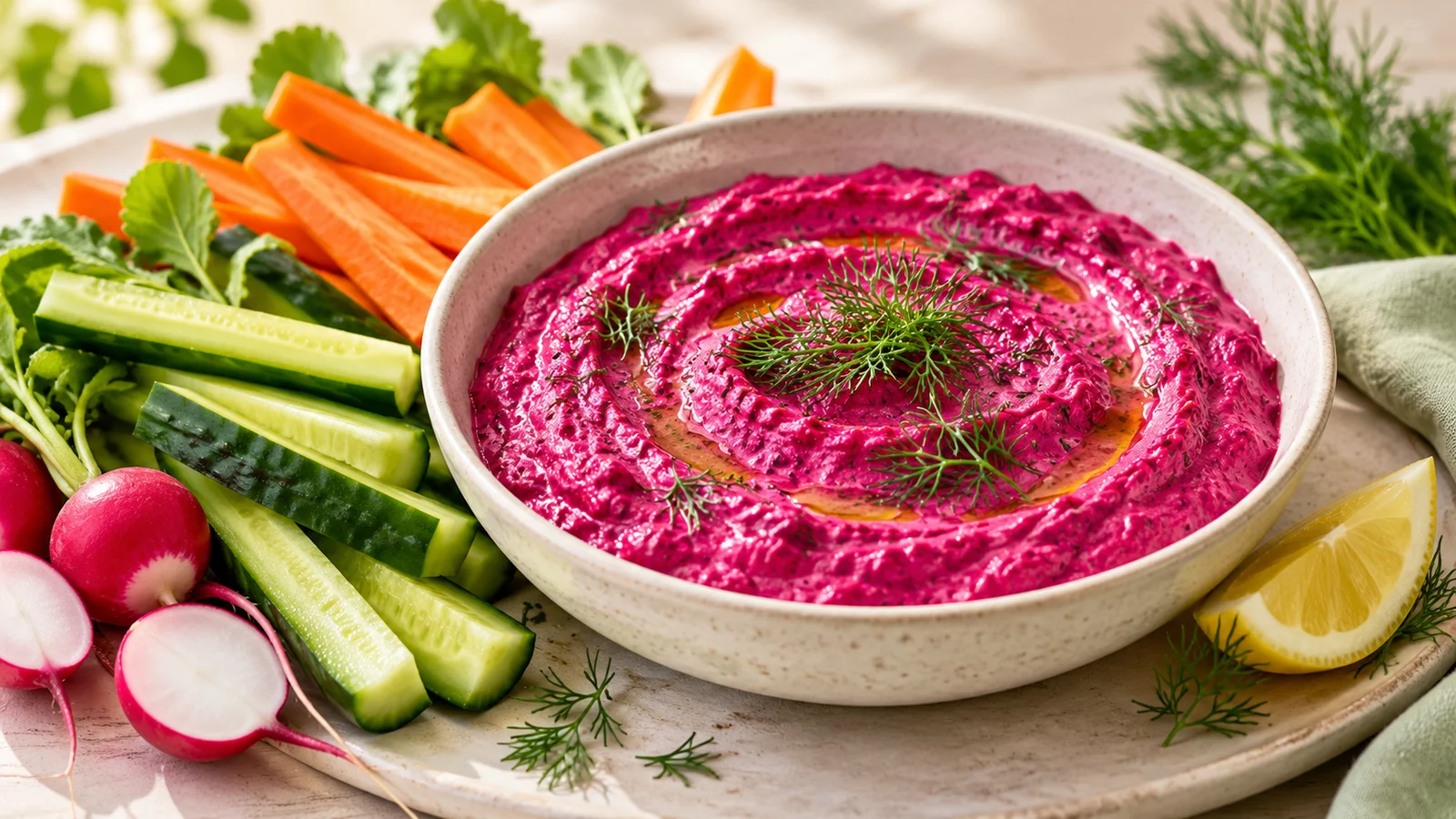
Beet yogurt dip brings a bright pink bowl to a vegetable tray without relying on feta, cream cheese or mayonnaise. Cooked beets give it earthy sweetness, plain Greek yogurt adds tang, and lemon and dill keep the flavor fresh.
Quick answer: Blend well-drained cooked beets with thick Greek yogurt, lemon, a little garlic and salt. Start with the yogurt amount below and adjust after blending; wet beets and thin yogurt can turn a scoopable dip into a sauce.
This is a yogurt-based recipe. For a saltier, cheese-based alternative, see Beet and Feta Dip. The two recipes serve different flavor preferences; adding feta is not required here.
What makes this beet yogurt dip different
The yogurt is part of the main base, rather than a small addition to a feta mixture. The result is tangier and softer than a cheese dip, with enough beet flavor to stand beside plain vegetables. There are no chickpeas or sesame ingredients in the base recipe. It does contain milk.
Use plain cooked beets, not pickled beets, for the intended flavor. Ready-cooked, vacuum-packed beets are convenient; check that vinegar or a sweetened marinade has not been added. Drain canned plain beets thoroughly. If you cook your own, let them cool before blending with yogurt.
Ingredients and useful choices
Thick, plain Greek yogurt is the easiest starting point. Full-fat or lower-fat yogurt can work, but thickness matters more than the label. Regular yogurt usually produces a looser sauce. Fresh dill contributes an herbal note; parsley is a milder alternative.
A small garlic clove is enough to start. Raw garlic can become more noticeable as the dip rests, so taste before adding another. Add lemon gradually, especially if your yogurt is already sharp.
Beet Yogurt Dip Recipe
Beet Yogurt Dip
Ingredients
Method
- Cut cooled cooked beets into small pieces and pat dry.
- Process beets, garlic and lemon until finely blended, scraping the sides.
- Add yogurt, dill, salt and pepper and pulse until combined.
- Taste and adjust seasoning. Do not add water unless you want a sauce.
- Serve immediately or cover and refrigerate for an optional 20 minutes. Add optional olive oil when serving.
Keep the texture thick enough for vegetables
Dry the beets before blending and use yogurt that holds its shape on a spoon. Do not add water at the beginning. If the processor struggles, stop and scrape rather than pouring in liquid. Small batches may work better in a mini processor than a large blender.
For a loose dip, stir in a little more thick yogurt or well-drained blended beet. Chilling may help the body, but it will not remove excess water. See How to Fix a Watery Dip for more troubleshooting.
Best vegetables for beet yogurt dip
Cucumber spears suit the tangy base, while carrots contrast with the earthy beet flavor. Celery, wide bell pepper strips and cauliflower florets are sturdy choices. Pat washed vegetables dry so they do not leave water in the bowl. Beet color can stain pale vegetables, boards and towels.
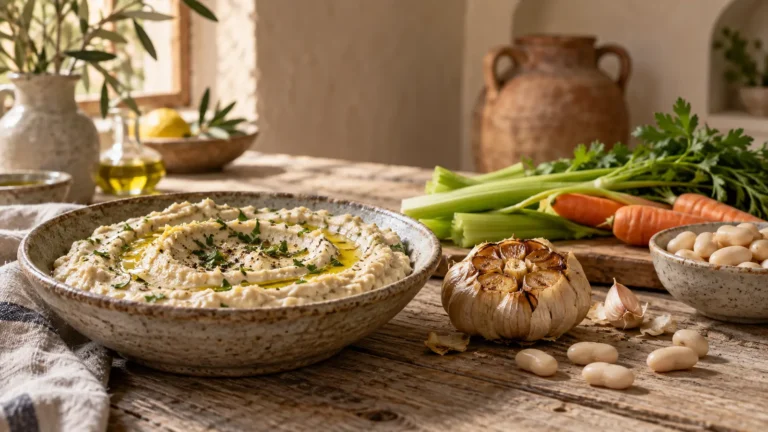
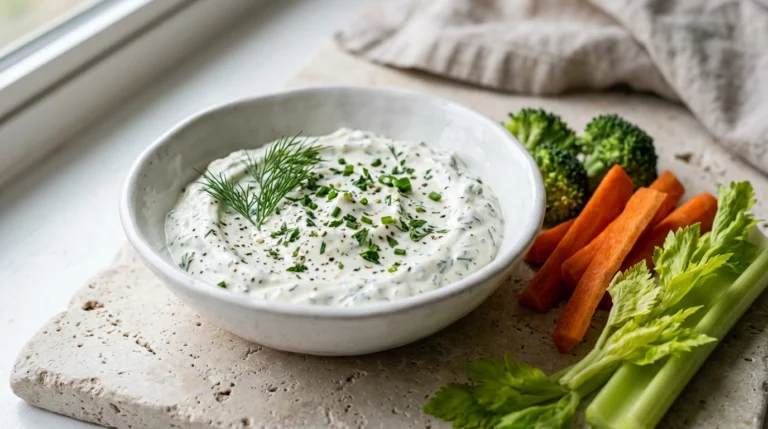
For a larger platter, pair this pink dip with classic hummus or Greek yogurt herb dip. Use the vegetable tray guide to choose contrasting bases and colors.
Make-ahead and storage
You can prepare the dip earlier on the day of serving and keep it covered in the refrigerator. Store chopped vegetables separately. Stir any small amount of separated liquid back in before serving, and use a clean spoon. For planning, see the dip storage guide.
Keep the dip covered and refrigerated at 40°F (4°C) or below. Serve small portions and replenish from the refrigerator rather than topping up a used bowl. FoodSafety.gov recommends refrigerating perishable foods within two hours, or one hour above 90°F (32°C).
Frequently asked questions
Can I use raw beets? This recipe calls for cooked beets. Raw beets produce a different, firmer texture and should not be swapped in without changing the preparation.
Can I make it without garlic? Yes. Omit garlic and adjust dill, lemon and salt to taste.
Is beetroot yogurt dip the same thing? Beetroot and beet are names for the same vegetable. This recipe fits either wording; regional recipes can differ in herbs and seasoning.
Can I add feta? You can, but it changes the base and salt balance. Use the separate beet-and-feta recipe if that is the flavor you want.
More dip ideas
Explore healthy vegetable dips for other ingredient-based choices, or cucumber yogurt dip for a fresh green alternative.