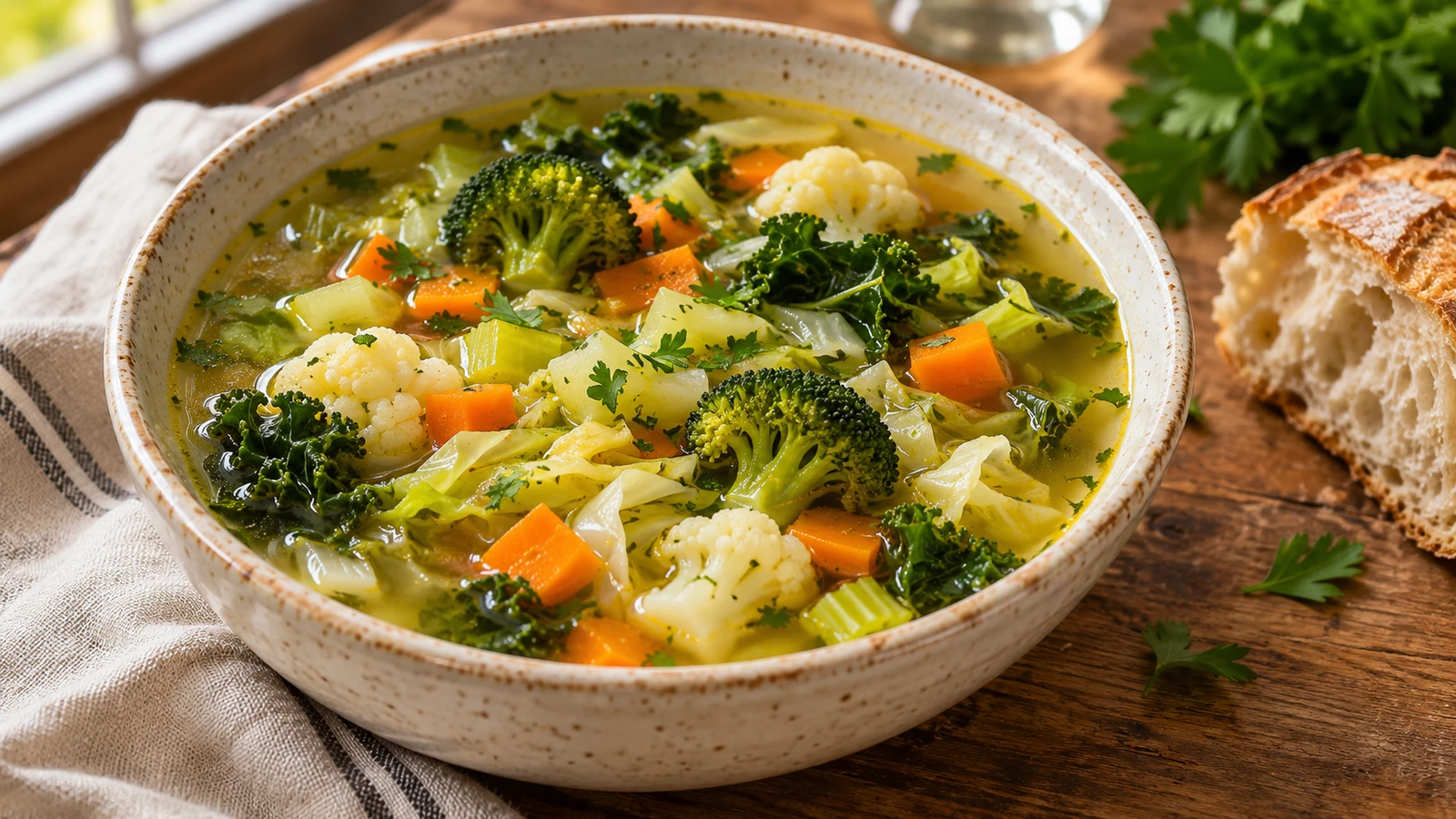
Vegetable soup without tomatoes does not need tomatoes, tomato paste, tomato sauce or canned tomatoes to be flavorful. This chunky, broth-based version includes carrots, celery, broccoli, cauliflower, cabbage and kale, simmered with onion, garlic and herbs. It is lighter than a creamy soup, with plenty of vegetables in every spoonful.
Quick answer: Sauté chopped onion, carrot and celery in olive oil, then add garlic, broccoli, cauliflower and a tomato-free vegetable broth. Simmer until nearly tender, add cabbage and kale, then finish with parsley and optional lemon. This is a simplified research-based adaptation of The Harvest Kitchen’s Vegetable Soup; unlike that reference recipe, this variation uses herbs directly instead of preparing a separate pesto.
Recipe transparency: Vegetable Dips has not independently cooked, tasted or timed this recipe. The quantities, six-serving estimate and times are based on a referenced method and editorial adaptation, not measurements from our kitchen.
Why Make Vegetable Soup Without Tomatoes?
Tomato-free soup can offer a milder vegetable-focused flavor and a lighter-colored broth. Sautéed aromatics provide depth, green vegetables add body, and parsley and optional lemon lift the finished bowl. Our Vegetable Soup Seasoning guide explains how to adjust dried herbs and add fresh parsley near the end. The vegetables stay in recognizable pieces, rather than being blended into a thick base.
Our Creamy Vegetable Soup uses potatoes, peas, corn and milk, with part of the soup blended for a spoon-coating consistency. This recipe uses broccoli, cauliflower, cabbage and kale in a mostly clear broth, so the two articles offer different textures and ingredients. For a more classic vegetable soup that includes diced tomatoes, zucchini, green beans and peas, try our Homemade Vegetable Soup Recipe. For a completely smooth alternative made with roasted cauliflower and no dairy cream, see our Cauliflower Soup Recipe.
Vegetable Soup Without Tomatoes: Ingredients
- 1 tablespoon olive oil for the flavor base.
- 1 small yellow onion, 1 cup diced carrots and 2 cups chopped celery for sweetness and savory flavor.
- 2 cloves garlic, minced, for fragrance.
- 3 cups broccoli and 2 cups cauliflower florets, cut into bite-size pieces.
- 1 cup sliced cabbage and 1 cup chopped kale, added toward the end.
- 2 bay leaves and 8 cups low-sodium vegetable broth. Read the broth label: packaged vegetable stocks sometimes contain tomato concentrate or tomato paste.
- Parsley, optional lemon zest and juice, salt and pepper to finish. Lemon is acidic and is optional; do not add it if avoiding acidic ingredients.
How to Make Vegetable Soup Without Tomatoes
- Chop the vegetables. Cut carrots and celery into small pieces; divide broccoli and cauliflower into spoon-sized florets. Remove tough kale stems and thinly slice cabbage.
- Sauté the aromatics. Warm olive oil in a large pot over medium-low heat. Cook onion, carrot and celery for about 4–5 minutes, stirring occasionally. Add garlic for about another minute.
- Simmer the broth. Add broccoli, cauliflower and bay leaves. Pour in the tomato-free broth, bring just to a boil and then reduce to a gentle simmer. Cover and cook about 12–15 minutes.
- Add the greens. Stir in cabbage and kale, then simmer another 5 minutes or until the vegetables are tender without turning mushy.
- Season and serve. Remove the bay leaves. Add parsley and, if desired, a little lemon zest or juice. Taste for salt and pepper before serving hot.
Printable Vegetable Soup Without Tomatoes Recipe
Vegetable Soup Without Tomatoes (Chunky Lemon-Herb Broth)
Ingredients
Method
- Heat olive oil in a large Dutch oven over medium-low heat. Add onion, celery and carrots. Cook, stirring, for about 4–5 minutes until the vegetables begin to soften. Add garlic and stir for 1 more minute.
- Add broccoli, cauliflower and bay leaves. Stir briefly. Pour in tomato-free low-sodium vegetable broth, bring to a boil, then reduce to a low simmer and cover.
- Simmer for about 12–15 minutes, depending on vegetable size. Add sliced cabbage and chopped kale; simmer another 5 minutes, until everything is tender but not mushy.
- Remove bay leaves. Stir in chopped parsley and small amounts of lemon juice and zest if using. Taste before adding salt and pepper.
- Serve hot in bowls with crusty bread if desired. Refrigerate leftovers promptly in shallow containers.
Notes
How to Build Flavor Without Tomato Paste
Use vegetable broth you enjoy because it is the base of the soup. Softening onion, carrot and celery before pouring in liquid makes a noticeable difference to the flavor foundation. Rather than boiling the vegetables aggressively, keep a gentle simmer and taste near the end. A little fresh parsley helps the greens feel bright without adding a packaged seasoning blend.
For a different herb profile, try thyme or Italian seasoning in a small amount. Cannellini beans can make it heartier, but they are an optional variation, not a required ingredient. Adding beans or potatoes may change the cooking time and serving yield. For a separately developed tomato-free soup focused on tender potato cubes, corn, peas and green beans, see our Vegetable Soup with Potatoes.
A Tomato-Free Broth Is Not Necessarily Low-Acid
This soup is made without tomato ingredients, but that does not mean it is automatically low-acid, low-histamine or suitable for reflux or other medical diets. Lemon is acidic, broth ingredients vary, and tolerance depends on more than the presence of tomatoes. If avoiding tomatoes for a medical reason, inspect every ingredient and consult the appropriate clinician rather than relying on a recipe title.
Best Vegetables and Easy Variations
- Broccoli and cauliflower: Main vegetables in this version, with enough structure for a chunky soup.
- Carrots and celery: Make the flavor base; dice them evenly for consistent cooking.
- Kale and cabbage: Add near the end so their color and texture remain appealing.
- Spinach instead of kale: A fast-cooking variation; add in the final minutes.
- Green beans or peas: Frozen or fresh options when you want to change the vegetables. Adjust cooking to their size and tenderness.
- Cooked beans: Stir in near the end if you want a more filling soup, and check seasonings again.
Serving Suggestions
Serve this tomato-free vegetable soup with slices of crusty bread, plain crackers or a fresh green salad. For an everyday lunch, keep the soup as a light starter; for a more substantial meal, pair it with a serving of cooked beans or another protein that suits your diet. Do not assume the bread or crackers are gluten-free simply because the soup contains no added flour.
Storage and Reheating Tips
Refrigerate cooked soup promptly in shallow containers and store at 40°F (4°C) or colder. Do not leave perishable food at room temperature longer than two hours, or longer than one hour if temperatures exceed 90°F (32°C). See FoodSafety.gov food-safety guidance. When reheating, heat thoroughly and follow food-safety guidance for leftovers.
Vegetables may soften further as the soup sits, so stop cooking once the pieces are just tender. If the broth reduces during reheating, add a little water or verified tomato-free broth. If freezing, use freezer-safe containers and allow space for expansion; vegetable textures may soften after thawing.
Vegetable Soup Without Tomatoes vs. Creamy Vegetable Soup
This recipe is deliberately brothy and chunky, using broccoli, cauliflower, cabbage and kale with no milk. The Creamy Vegetable Soup article uses potatoes and partly blended vegetables, plus milk, peas and corn. If you want a richer texture, choose the creamy version. If you want a vegetable-forward broth without tomatoes, choose this one.
Frequently Asked Questions
Can vegetable soup taste good without tomatoes?
Yes. Start with a flavorful onion, carrot and celery base, then add garlic, green vegetables and a good broth. Tomatoes are not required for a satisfying vegetable soup.
Does vegetable soup need tomato paste?
No. This recipe has no tomato paste, sauce or canned tomatoes. However, check the label on bouillon and packaged broth because they can include tomato ingredients.
Is vegetable soup without tomatoes automatically low-acid?
No. The optional lemon is acidic, and the remaining ingredients matter. This recipe does not promise suitability for reflux, histamine intolerance or other medical conditions.
Can I add potatoes to this soup?
Yes, but as a variation. Dice them small and simmer until fully tender. That will change the soup’s cooking time and texture.
Can I make it creamy?
You can blend some vegetables, but that changes the planned broth-style result. For a thick, partly blended recipe designed around potatoes, see our Creamy Vegetable Soup.
Is it vegan or gluten-free?
The recipe uses plant ingredients, but check the stock and any serving sides for additives and allergens. Do not assume packaged broth or bread is suitable without reading labels.
Recipe Sources
This editorial recipe adapts vegetable selection and cooking method from The Harvest Kitchen — Vegetable Soup by Deborah Duncan (the original includes a separate herb pesto). For another tomato-free vegetable soup approach, see Through The Fibro Fog — Vegetable Soup Without Tomatoes, which uses sweet potatoes and plant milk. Food storage guidance: FoodSafety.gov. No independent kitchen test or measured nutrition calculation is claimed.