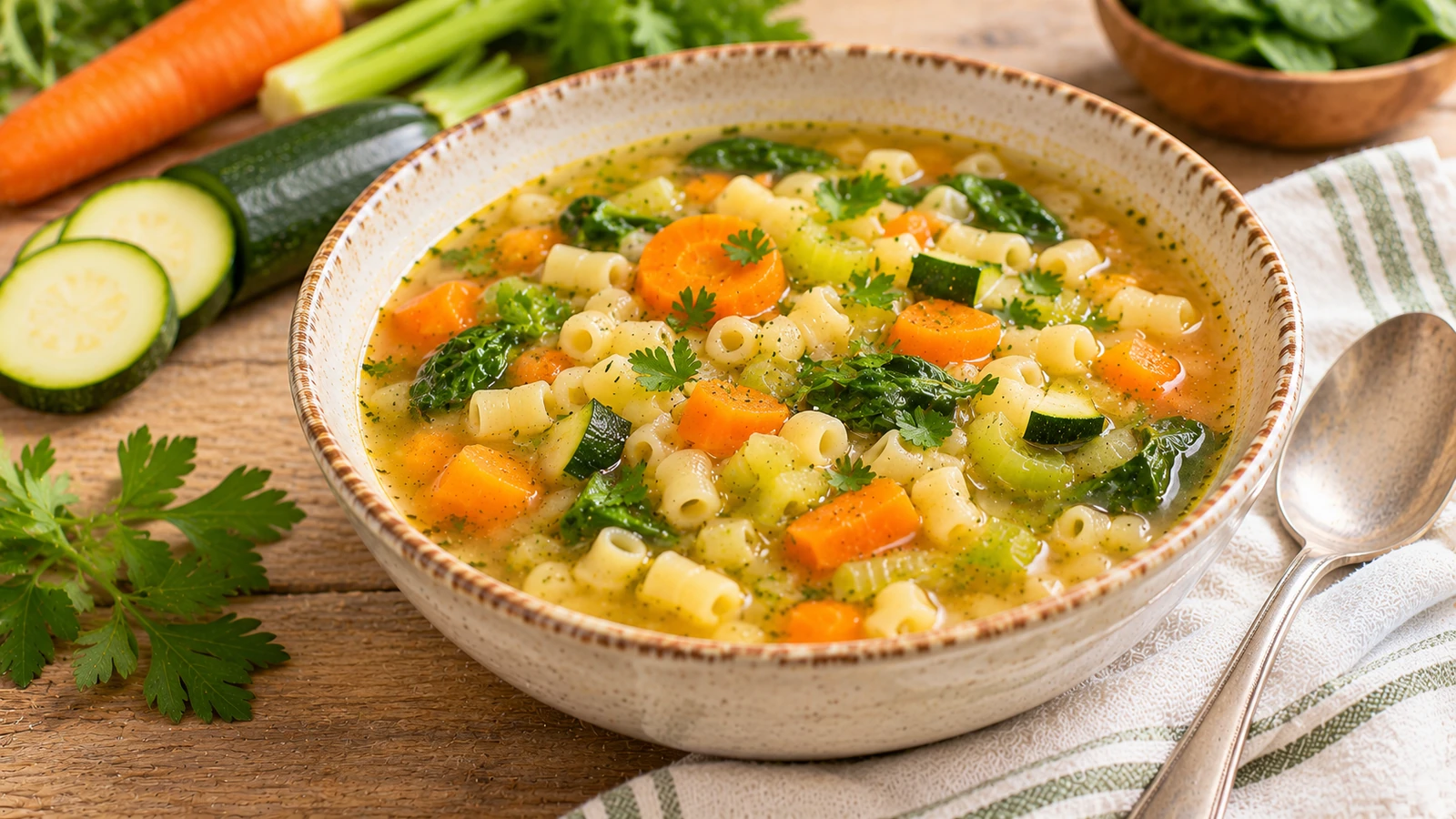
Vegetable pasta soup, sometimes called vegetable soup with pasta, vegetable and pasta soup or veggie pasta soup, is a brothy soup of small pasta and diced vegetables simmered in vegetable broth. This version uses carrots, celery, zucchini and baby spinach in a light golden broth, with no beans, cream or tomato sauce. The pasta cooks right in the pot and the spinach goes in at the end, which makes it a simple pasta soup recipe for a weeknight, with every vegetable still distinct in the bowl.
Looking for vegetable noodle soup? This recipe uses small pasta shapes rather than noodles, which keeps each spoonful small and the broth light.
Quick answer: Cook the diced onion, carrots and celery in 1 tablespoon olive oil for 5–6 minutes. Add the garlic and zucchini for 2 minutes. Pour in 5 cups low-sodium vegetable broth and the dried basil, then simmer 4–5 minutes. Stir in ¾ cup dry small pasta and cook for its package time, usually about 6–10 minutes. Add 2 cups baby spinach for the last 1–2 minutes, season with salt and pepper, and serve. Makes 4 servings in about 35 minutes (12 minutes prep, 23 minutes cooking).
An Old-Fashioned Vegetable Soup with Pasta, Made Light
This is old-fashioned vegetable soup with pasta in spirit: everyday vegetables, small pasta and a clear broth. It is a light soup, not a bean-and-pasta stew. Small pasta is the main starch, and carrots, celery and zucchini carry the flavor. The vegetables stay chunky instead of puréed.
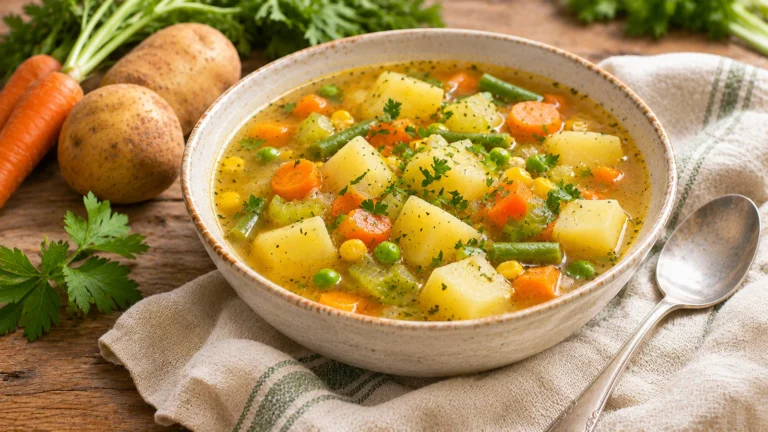
For other styles, see our Homemade Vegetable Soup Recipe (tomatoes, green beans and peas, no pasta), our Vegetable Soup with Potatoes (large potato cubes), or our Vegetable Minestrone Soup (beans, tomatoes and pasta).
Ingredient Tips for This Pasta Soup Recipe
- Vegetables: Cut the carrots, celery and zucchini small and even so they soften during the short simmer.
- Garlic: Add it after the first vegetables start to soften so it doesn’t burn.
- Broth: Low-sodium vegetable broth gives a pale golden soup and lets you control the salt. If you’re avoiding tomato, read the label, since some brands contain tomato-derived ingredients.
- Pasta: Use ditalini, small shells, pastina or orzo, one shape per pot.
- Herbs: Dried basil is the only herb in the base. A mild Italian herb blend also works, so taste before adding more seasoning.
- Spinach: Use fresh baby spinach, washed, or ready-to-eat prewashed leaves.
- Seasoning: Add salt and pepper after the pasta cooks, when the broth is easiest to judge.
This soup contains no beans, tomato sauce, milk, cheese, potatoes or meat.
Step-by-Step Tips for Vegetable and Pasta Soup
The recipe card has the full method. These are the points that matter most:
- Stir the onion, carrot and celery often during the first 5–6 minutes.
- Simmer until the carrots begin to soften before the pasta goes in.
- Stir the pasta occasionally so it doesn’t stick.
- Add the spinach only in the last 1–2 minutes, then taste and adjust the salt and pepper.
- Serve promptly, with the pasta and vegetables clearly visible in each bowl.
Which Pasta Is Best for Vegetable Soup?
Ditalini, small shells, orzo and pastina all work. Choose one shape and follow its package cooking time.
| Shape | What it’s like | Good to know |
|---|---|---|
| Ditalini | Small tubes, even bites | Easy to scoop with vegetables |
| Small shells | Small cups | Catch bits of carrot and spinach |
| Orzo | Rice-shaped | Cooks quickly in light broth |
| Pastina | Very small | Gives the finest texture |
Check the pasta a minute or two early, because overcooked small pasta turns soft and absorbs broth. Shapes that cook longer leave the zucchini softer, so keep an eye on it.
When Do You Add Carrots, Zucchini and Spinach?
Add them in order of firmness. Carrots and celery cook first with the onion, the zucchini joins 5–6 minutes later with the garlic, and the spinach goes in last for 1–2 minutes. The carrots then get a short simmer in the broth before the pasta goes in. Iowa State University Extension’s vegetable pasta soup also cooks onion and carrot first, then boils the soup before adding pasta and greens. Cut everything small so it fits the short schedule, and if your carrots are larger, simmer a little longer.
Vegetable Variations for Veggie Soup with Pasta
The recipe card is the base. If you’d like to change it up:
- Green beans: add them with the carrots.
- Peas or corn: stir them in with the spinach near the end.
- Kale or chard: add a few minutes before the pasta is done, since they take longer than baby spinach.
- Frozen vegetables: add them toward the end, as they only need to heat through.
Extra vegetables soak up liquid, so keep a little warm broth or water nearby. For a soup with beans and tomatoes, try our Vegetable Minestrone Soup.
Troubleshooting: Soup Too Thick or Too Thin
Soup too thick: Pasta keeps absorbing broth, so the soup thickens as it sits. Stir in warm low-sodium vegetable broth or water, a splash at a time, until it loosens, then taste and adjust the salt.
Soup too thin: Simmer it uncovered for a few more minutes so some liquid cooks off. A little more pasta also thickens it, but cook it for its full package time.
Pasta too soft: Check it earlier next time. For leftovers, cook the pasta separately and add it to each bowl.
Flavor flat: Season after the pasta cooks, then adjust. A squeeze of lemon brightens a light broth.
Spinach dull or stringy: Add it only in the last 1–2 minutes and serve right away.
How Do You Keep Pasta Soup Brothy?
Cook the pasta separately and add it to each bowl when you serve. Pasta cooked in the pot keeps absorbing broth, which thickens the soup, especially in leftovers. For soup you’ll eat right away, cooking the pasta in the broth is fine and saves a pot. If leftovers have thickened, stir in a splash of warm low-sodium broth or water while reheating, then taste before adding salt.
Vegetable Pasta Soup vs. Minestrone
| This soup | Our Vegetable Minestrone Soup | |
|---|---|---|
| Beans | No | Yes |
| Tomatoes | No | Yes |
| Broth | Pale, golden | Tomato-based |
| Style | Light and brothy | Fuller, Italian-style |
Minestrone varies by region and kitchen, so beans aren’t a universal rule. The difference here is simply what goes in each pot.
What to Serve with Vegetable Pasta Soup
A small salad, crusty bread or simple crackers work well. Because the soup already has pasta, a vegetable side balances it better than another starch. For seasoning ideas, see our Vegetable Soup Seasoning guide, but taste before adding a blend, since this recipe starts with dried basil only.
Optional Toppings
- Fresh parsley (as in the recipe card)
- Freshly ground black pepper
- A squeeze of lemon juice
- A drizzle of olive oil
- A pinch of red pepper flakes for gentle heat
How to Store, Reheat and Freeze Vegetable Pasta Soup
Refrigerating
Refrigerate within 2 hours of cooking (1 hour if it’s above 90°F/32°C), in shallow containers at 40°F (4°C) or colder. Eat within 3–4 days, per USDA leftovers guidance.
Reheating
Heat leftovers to at least 165°F (74°C), stirring for even heating. On the stovetop, bring soup to a boil, per USDA reheating guidance.
Freezing
Freeze the broth and vegetables, and cook fresh pasta when serving, since cooked pasta softens after thawing.
Making Ahead
Chop the vegetables in advance and make the soup base. Cook the pasta separately just before serving to keep the broth light.
Dietary and Allergen Notes
Wheat pasta contains gluten. For a gluten-free soup, use verified gluten-free small pasta and broth, and follow the pasta’s package time, since texture can differ. Some pasta contains egg, so the recipe isn’t automatically vegan or egg-free. The recipe adds no dairy or meat. Calories, sodium and other nutrients vary with the broth and pasta brand, so check the labels on everything you buy.
Sources and Recipe Credits
This recipe is adapted from Iowa State University Extension’s Vegetable Pasta Soup and UAMS Health’s Vegetable Soup with Pasta and Greens. Both use tomatoes; this version leaves them out for a lighter broth. Food-storage guidance comes from USDA leftovers guidance and USDA reheating guidance.
Printable Vegetable Pasta Soup Recipe

Vegetable Pasta Soup Recipe
Ingredients
Method
- Wash and chop onion, carrots, celery and zucchini into small even pieces. Mince garlic; rinse spinach unless labeled ready-to-eat.
- Heat olive oil in a large pot over medium heat. Cook onion, carrot and celery for about 5–6 minutes until starting to soften. Add garlic and zucchini, stirring for about 2 minutes.
- Pour in low-sodium vegetable broth and stir in dried basil. Bring to a gentle boil, then reduce to a simmer for about 4–5 minutes, or until the carrot begins to tenderize.
- Add the dry small pasta and simmer uncovered according to the package cooking time, usually about 6–10 minutes depending on the shape; stir occasionally. Add a little water or broth if it becomes too thick.
- During the last 1–2 minutes, stir in baby spinach until wilted and ensure pasta is tender. Taste and adjust salt and pepper; sprinkle parsley if desired and serve promptly.
Notes
FAQ
What is vegetable pasta soup?
Vegetable pasta soup, also called vegetable and pasta soup or vegetable soup with pasta, is a brothy soup of small pasta and diced vegetables. This one has carrots, celery, zucchini and spinach in a light broth, with no beans or tomatoes.
How long does vegetable pasta soup take to make?
About 35 minutes: 12 minutes of prep and 23 minutes of cooking. The pasta’s package time is the main variable.
Is this vegetable noodle soup?
It uses small pasta shapes rather than noodles, which keeps the bites small and the broth light.
Is vegetable pasta soup the same as minestrone?
No. This soup has no beans or tomato base, while our vegetable minestrone soup combines beans, tomatoes and pasta. Recipes vary by kitchen, so the difference here is the ingredient list.
What pasta is best for vegetable soup?
Ditalini, small shells, orzo and pastina all work. Use one shape and follow its package time, checking a minute or two early.
How much pasta do I add to 5 cups of broth?
Use ¾ cup dry small pasta for 5 cups of broth. Use less if you prefer a thinner soup.
How do I fix soup that is too thick or too thin?
If it’s too thick, stir in warm low-sodium broth or water a splash at a time. If it’s too thin, simmer it uncovered for a few more minutes.
Can I add other vegetables?
Yes. Green beans can go in with the carrots, and peas or corn near the end. Add kale or chard a few minutes before the pasta is done, and keep a little extra broth handy.
How long do leftovers keep, and can I freeze them?
Refrigerated at 40°F (4°C) or colder, leftovers keep 3–4 days, per USDA guidance. Refrigerate within 2 hours of cooking, or 1 hour above 90°F (32°C). You can freeze the broth and vegetables and cook fresh pasta when serving, because cooked pasta softens after thawing. Reheat to 165°F (74°C).
Is it gluten-free, vegan or tomato-free?
The recipe adds no tomatoes, dairy or meat, but wheat pasta contains gluten and some pasta contains egg. Use verified gluten-free pasta if needed, and read the labels on pasta and broth, since some broths contain tomato-derived ingredients.