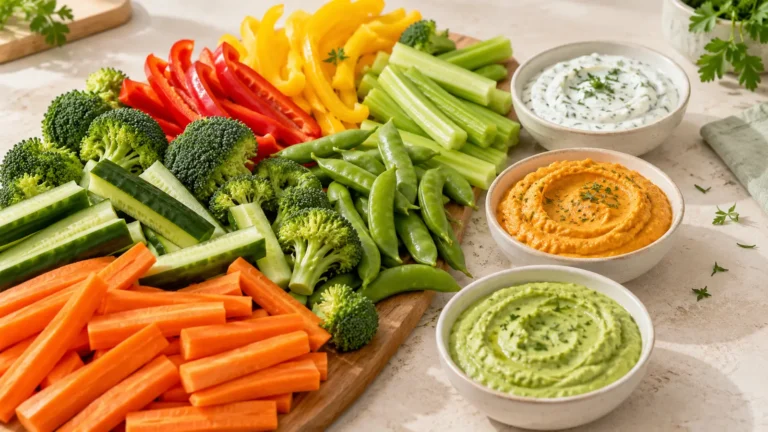
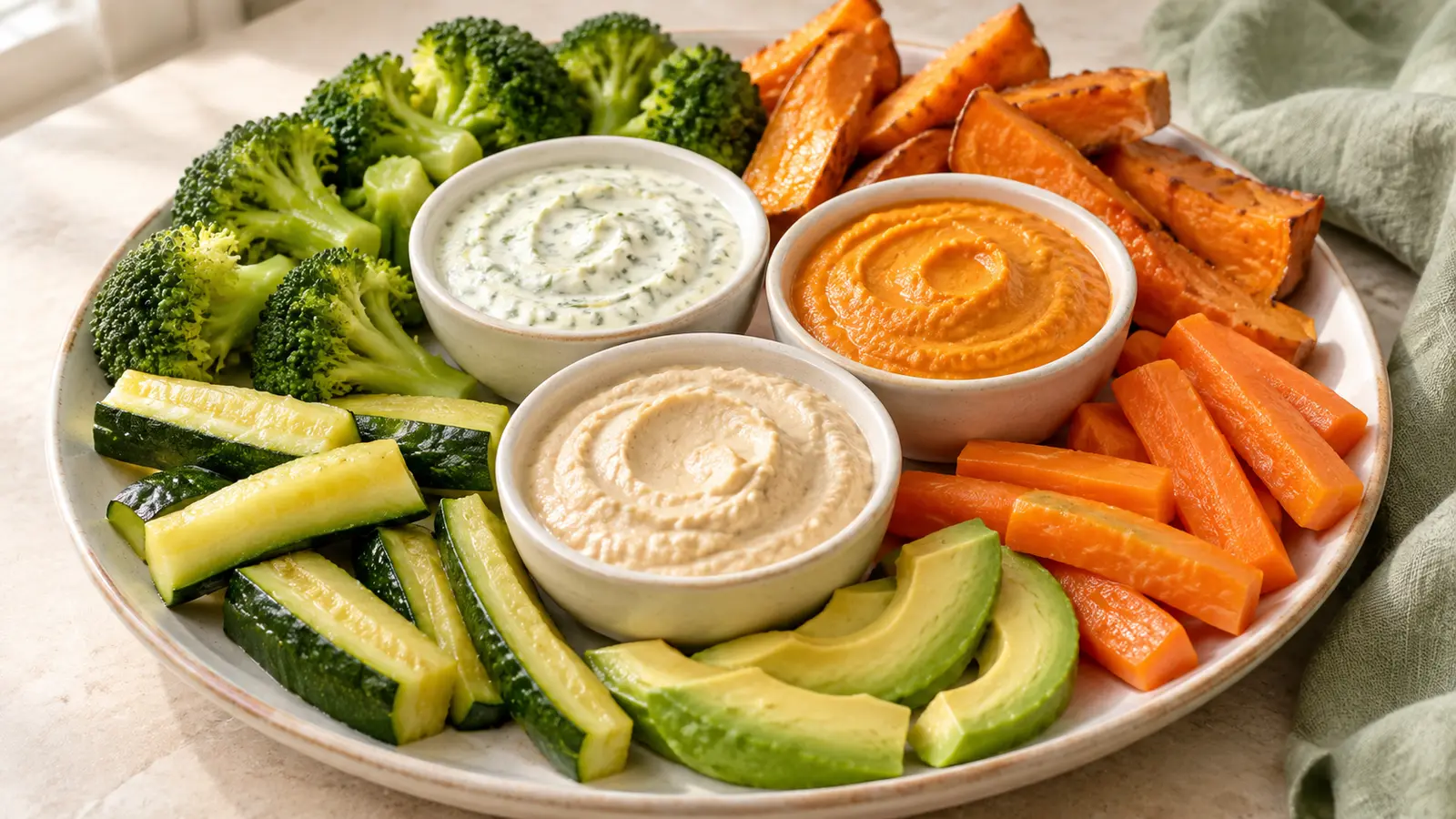
Vegetable dips for toddlers can make cooked vegetables more interactive and introduce mild flavors and smooth textures. However, every dipper should be prepared in a shape, size and texture appropriate for the child’s developmental skills.
Toddler dips require a different approach from general kids’ recipes. The dip itself should remain simple and smooth, but the vegetable or other dipper is equally important. A smooth dip does not make a hard, round or otherwise unsuitable dipper safe.
Quick answer: Keep toddlers seated upright and continuously supervised while eating. Modify hard, round or dense foods according to the child’s development; this page is not a substitute for individualized feeding advice.
8 Vegetable Dips for Toddlers to Try
1. Plain Yogurt Herb Dip
Use plain unsweetened yogurt with a very mild amount of herb. Keep the texture smooth and choose a dipper prepared to match the child’s developmental skills.
2. Avocado Yogurt Dip
Blend avocado with plain yogurt for a soft texture. Milk is a major allergen, so this assumes yogurt is already appropriate for the child.
3. Smooth White Bean Dip
Blend beans completely smooth. Whole beans can be a choking hazard for young children, so do not simply serve the same ingredient whole.
4. Mild Smooth Hummus
A smooth chickpea-and-tahini dip can work when sesame is appropriate. Tahini contains sesame, a major allergen.
5. Blended Cottage Cheese Dip
Blend cottage cheese smooth and keep seasoning mild. Sodium varies by product.
6. Cucumber Yogurt Dip
Finely grate cucumber into plain yogurt and drain excess moisture so the dip stays smooth. For the adult-style preparation, see our cucumber yogurt dip; adapt ingredients and dippers to the child’s needs.
7. Smooth Carrot Yogurt Dip
Use cooked-soft carrot blended with yogurt rather than hard raw carrot sticks as the default toddler format.
8. Sweet Potato Yogurt Dip
Cook sweet potato until very soft, cool and blend with plain yogurt without added sugar.
Choking safety matters more than the dip
When serving vegetable dips for toddlers, choking safety matters more than the dip itself. Hard raw vegetables such as raw carrots, uncut cherry tomatoes, whole beans, whole nuts and thick spoonfuls of nut or seed butter are recognized choking concerns for young children.
Children should eat in a safe seated position with continuous adult supervision. Avoid eating while walking, crawling, riding in a moving car or otherwise distracted.
If an ingredient is new to your child
This toddler guide does not impose a rigid first-food schedule. If your child already eats yogurt, sesame, beans or avocado comfortably, a dip containing that familiar ingredient is not necessarily a first exposure.
If an ingredient is genuinely new—especially a major allergen—or your child has a history of reactions, severe eczema or another allergy concern, follow individualized guidance from the child’s healthcare professional.
Added sugar and honey
For young children, keep added sugars limited and choose plain unsweetened bases where practical. Honey should not be given before 12 months because of infant botulism risk.
This article is written primarily for toddlers. Feeding recommendations differ for younger infants who are just beginning complementary foods.
Frequently asked questions
Can toddlers eat raw carrot sticks with dip?
Hard raw carrots can be a choking hazard. Prepare carrots in a developmentally appropriate soft shape rather than assuming an adult veggie-tray format is suitable.
Can toddlers eat hummus?
Smooth hummus may be appropriate for some children, but sesame is a major allergen and the accompanying dipper still needs to be age-appropriate.
Should I force a toddler to try a dip?
No. Repeated low-pressure exposure is more appropriate than forcing bites.
Does dipping make a food safe?
No. The safety of the dipper still depends on its size, shape, texture and the child’s developmental skills.
More Vegetable Dips for Toddlers and Kids
For older children and more general flavor combinations, explore Vegetable Dips for Kids. You can also see our Greek Yogurt Vegetable Dip as a general recipe, then adapt the seasoning, texture and dipper to the child’s developmental needs.