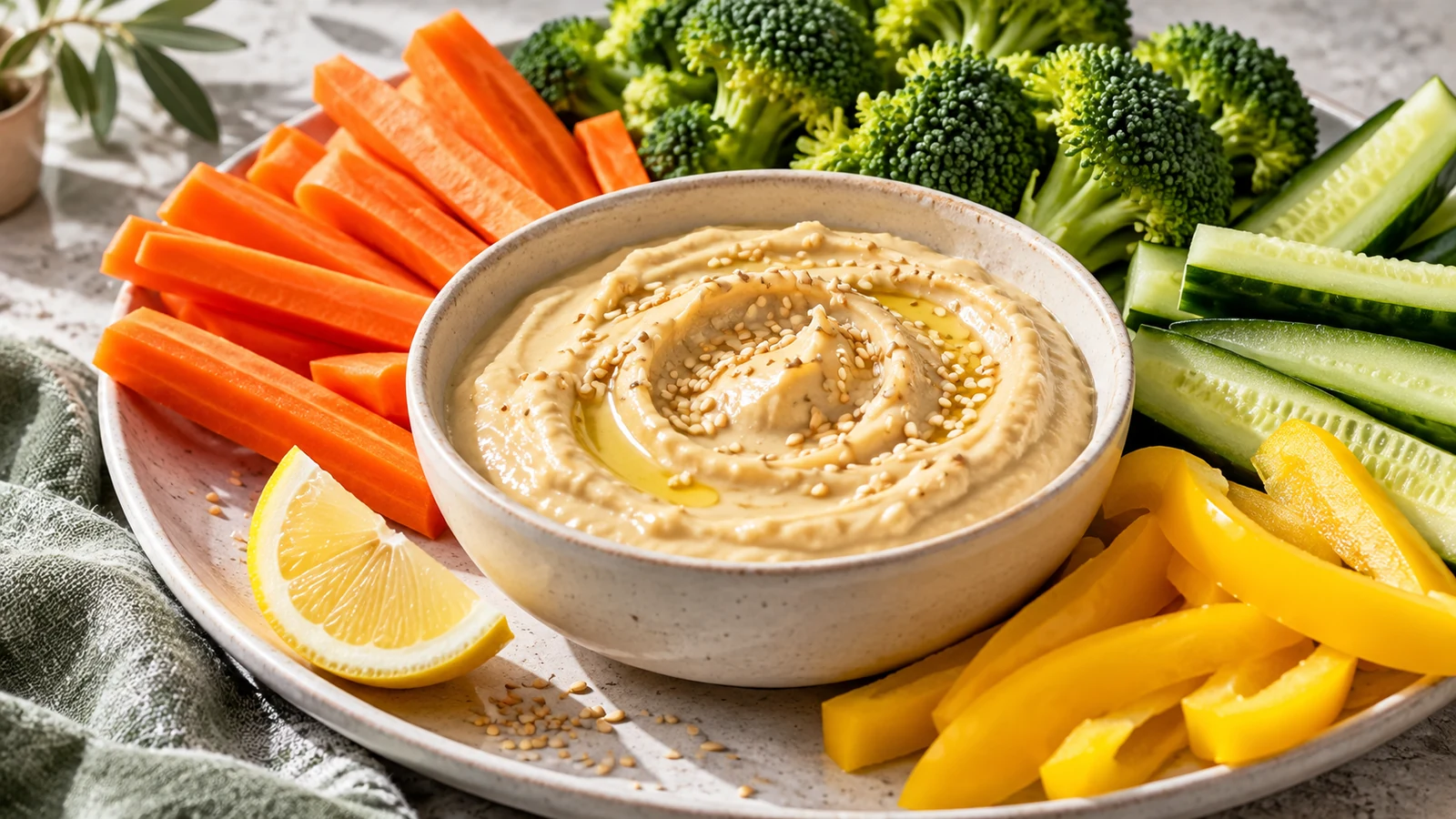
Lemon tahini dip for vegetables is creamy, tangy and nutty, with no yogurt or sour cream. The key is adding water slowly: you want a dip that clings to carrot sticks and broccoli florets, rather than a thin dressing that runs to the bottom of the tray.
Quick answer: Whisk tahini with lemon juice, garlic and salt, then add cold water one tablespoon at a time until smooth and scoopable. Serve with carrots, broccoli, cucumber, bell peppers or cauliflower. Jump to the printable recipe card.
Why Make a Lemon Tahini Dip for Vegetables?
Tahini is a paste made from sesame seeds. It gives this dip a rich texture and a savory flavor that contrasts with sweet carrots and peppers. Lemon brings brightness, while garlic adds depth without requiring a long ingredient list.
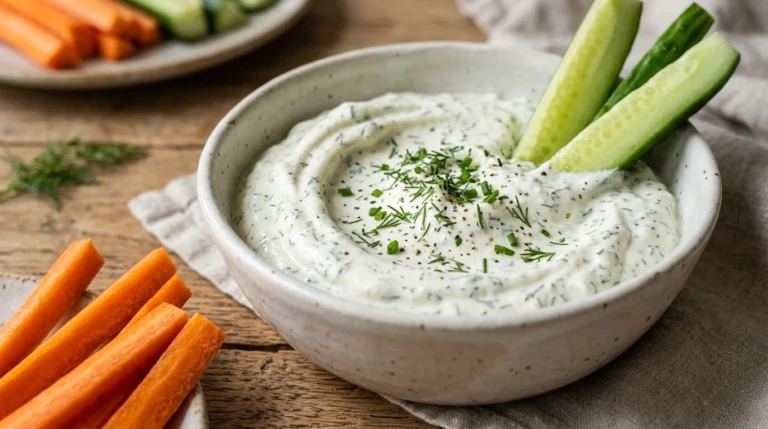
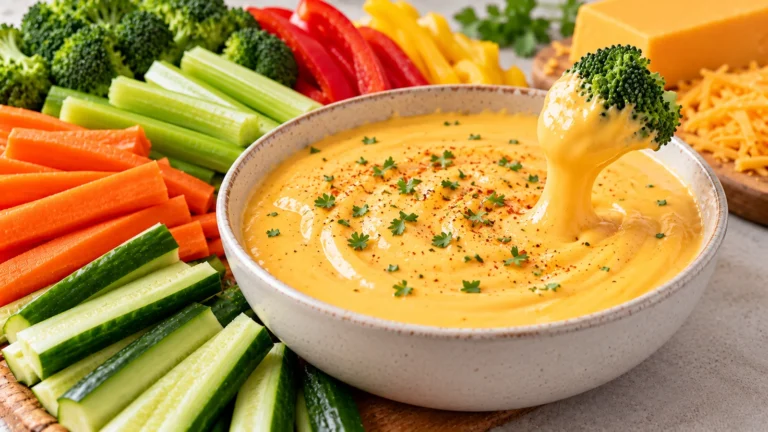
A small bowl of lemon tahini works well beside a familiar creamy dip on a vegetable tray. If you also serve hummus, remember that both dips contain tahini; choose a different third flavor if you want more variety.
Allergen note: Tahini contains sesame, a major allergen. Check the ingredient label and let guests know when serving.
Ingredients for Lemon Tahini Dip for Vegetables
- ½ cup tahini, stirred well if the oil has separated
- 3 tablespoons fresh lemon juice
- 1 small garlic clove, finely grated or crushed
- ¼ teaspoon fine salt, plus more to taste
- 3–6 tablespoons cold water, added gradually
- Optional: 1 teaspoon maple syrup, if you prefer a softer lemon flavor
How to make lemon tahini dip
- Put the tahini, lemon juice, garlic and salt in a medium bowl. Whisk until combined. The mixture may become thick or stiff at first; that is expected.
- Add cold water one tablespoon at a time, whisking thoroughly after each addition. The mixture will loosen and become smooth.
- Stop adding water when the dip is creamy but thick enough to stay on a carrot stick. Taste and adjust the lemon juice or salt. Add the optional maple syrup only if you want to mellow the tang.
- Spoon into a serving bowl. If it thickens while you prepare the vegetables, whisk in another teaspoon or two of water.
A blender or small food processor also works, although a whisk is enough for this amount.
Dip or dressing: how much water should you add?
For a vegetable tray, begin with three tablespoons of water and test the texture before adding more. The exact amount depends on the tahini brand and how thick the paste is when you open the jar. A good dipping texture forms a soft mound on a spoon and stays on a broccoli floret.
For a pourable dressing, you would add more water. This recipe is intended to be scooped with raw vegetables, so adjust it by feel rather than using all six tablespoons automatically.
Best vegetables to serve with lemon tahini dip
Carrot sticks balance the nutty flavor with sweetness. Broccoli and cauliflower florets catch the dip in their branches. Bell pepper strips add crunch and color, while cucumber spears make a cool contrast to the garlic and lemon. Cut cucumber into sturdy pieces so they do not bend under a generous scoop.
For more combinations, use the guide to the best vegetables for dipping. Pat washed vegetables dry before arranging them so water does not thin the dip on the platter.
Ways to adjust the flavor
For a sharper dip, add another teaspoon of lemon juice. For more garlic flavor, let the mixed dip rest briefly, then taste before adding more garlic; its flavor can become stronger as it sits. For a gentler version, use half a small garlic clove or omit it.
If the dip tastes bitter, first check the flavor of the tahini itself. A small amount of maple syrup can soften the edge, but it will not fix a stale or unpleasant-tasting paste. Taste the tahini before mixing the full recipe.
Frequently asked questions
Why did my tahini mixture become thick when I added lemon?
Tahini can seize and look stiff when first mixed with lemon juice or a small amount of water. Keep whisking and add cold water gradually. It should loosen into a smooth dip.
Can I make lemon tahini dip without garlic?
Yes. Leave out the garlic and taste the dip after whisking. You may want a little more lemon juice or salt.
Is this lemon tahini dip dairy-free?
The ingredients listed here contain no dairy. If you are serving someone with an allergy, check packaged ingredients and avoid cross-contact during preparation.
Can I use it as a salad dressing?
Yes. Whisk in extra water until it pours easily. For a vegetable tray, leave it thicker so guests can scoop it with raw vegetables.
What can I serve beside it?
A creamy herb dip or a colorful roasted pepper dip gives guests a different flavor. For ideas on choosing two or three contrasting bowls, see the vegetable tray dip guide.
Lemon Tahini Dip Recipe Card
Lemon Tahini Dip for Vegetables
Ingredients
Equipment
Method
- Whisk the tahini, lemon juice, garlic and salt in a medium bowl. The mixture may stiffen at first.
- Add cold water one tablespoon at a time, whisking after each addition until smooth.
- Stop when the dip clings to a carrot stick. Taste and adjust lemon or salt; add optional maple syrup if desired.
- Spoon into a serving bowl. If it thickens, whisk in a teaspoon or two of water.