
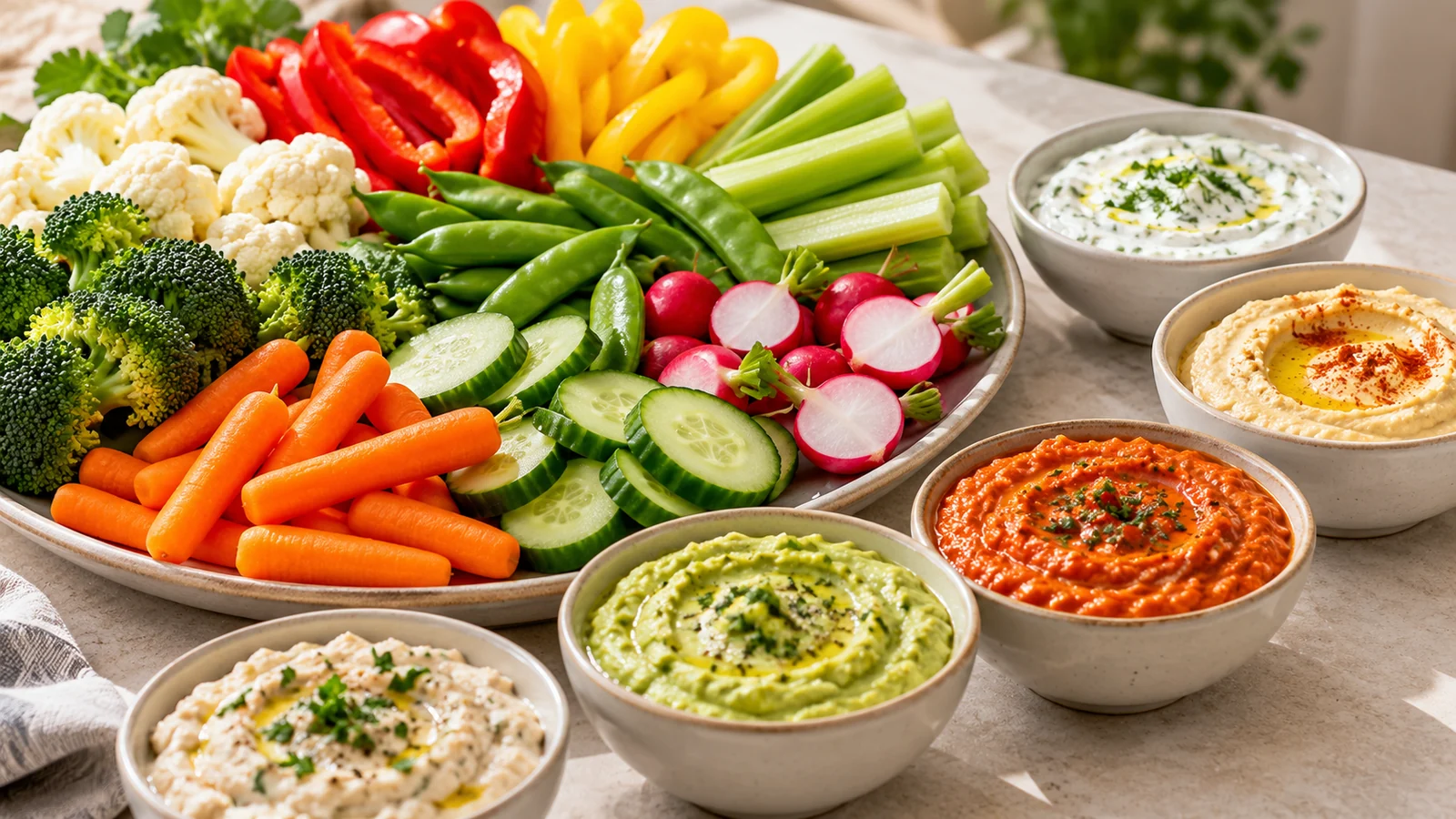
Store-bought vegetable dips can save preparation time, but the right choice depends on your vegetables, guests and menu. A creamy ranch-style dip, savory hummus and colorful roasted-vegetable dip each bring something different to a tray. This guide compares eight types by texture, ingredients and intended use. It does not claim hands-on testing or rank individual brands.
Quick answer: For a mixed veggie tray, choose one familiar creamy dip and one contrasting option such as hummus, guacamole or a roasted-vegetable dip. Check each product’s current ingredients, allergens, Nutrition Facts and storage instructions because products with similar names can differ.
How This Guide Evaluates Store-Bought Dips
Use these questions when comparing products at the store:
- Texture: Will the dip cling to a carrot or broccoli floret without being difficult to scoop?
- Flavor: Does it offer something familiar, fresh, savory, spicy or vegetable-forward?
- Pairing: Does it work with sturdy carrots and broccoli, delicate cucumber, or both?
- Ingredients and allergens: Can you confirm what is in the exact product you are buying?
- Serving and storage: Is the container size useful for your group, and how must it be stored?
This is a comparison of product categories, not a blind taste test. Availability and formulations vary by store, brand and location.
8 Store-Bought Vegetable Dip Types to Compare
1. Classic Ranch-Style Veggie Dip
Best with: Carrots, celery, broccoli, cauliflower and bell peppers.
A thick, herb-forward ranch-style dip is a familiar starting point for a mixed group. Compare the serving size, sodium and allergen information on the products available to you. Two containers called “ranch dip” may have different ingredients and textures.
2. Greek Yogurt Ranch or Herb Dip
Best with: Cucumber, carrots, peppers and broccoli.
A yogurt-based option often has a tangier flavor. Check whether the container is sold as a dip or a dressing: a pourable dressing may slide off vegetables on a tray. Thickness and added ingredients vary, so use the product’s label rather than the category name to make dietary decisions.
3. Classic Hummus
Best with: Carrots, cucumber, peppers, celery, cauliflower and snap peas.
Hummus offers a savory contrast to a creamy dairy dip. Many versions contain tahini, which is made from sesame. Sesame is a major food allergen in the United States, so check the exact product and make the ingredient clear to guests who need that information. fda.gov
4. Tzatziki-Style Dip
Best with: Cucumber, carrots, peppers and radishes.
Tzatziki-style products commonly combine yogurt, cucumber, garlic and herbs. Choose a thick version for a vegetable tray. A thinner sauce may be better spooned over food than used as a dip. Check the label for its dairy ingredients and refrigeration instructions.
5. Guacamole or Avocado Dip
Best with: Bell peppers, cucumber, carrots, radishes and snap peas.
Guacamole brings a fresh green color and a different flavor from ranch or hummus. It can provide a dairy-free choice when the exact ingredient label confirms that it contains no dairy. Check storage and use-after-opening directions; products sold as “avocado dip” do not all have the same ingredients.
6. Roasted Red Pepper or Vegetable-Forward Dip
Best with: Carrots, cucumber, peppers, celery and cauliflower.
This category can add bright color and roasted flavor. Some products use beans for body; others include cheese, yogurt, nuts or sesame. The name on the front of the container does not tell you the complete ingredient profile, so read the full label.
7. Cheese-Based Herb Dip
Best with: Sturdy carrots, broccoli, cauliflower and peppers.
Cheese-based dips tend to be richer and may be firmer when cold. A smaller bowl can provide contrast beside a softer dip. Compare serving sizes on the Nutrition Facts labels and follow the package’s refrigeration directions.
8. White Bean or Black Bean Dip
Best with: Carrots, peppers, celery and broccoli.
Bean-based dips can give a tray a savory option with a different texture from dairy dips. They are not automatically dairy-free, sesame-free or nut-free: seasonings and additional ingredients vary. Check the exact label, particularly when buying for someone with an allergy.
How Many Store-Bought Dips Should You Buy?
One dip may be enough for a small snack tray. For a gathering, two or three contrasting types usually offer more useful variety than several similar creamy dips.
Estimate the total amount of dip for your guest count first, then divide it among the flavors. The Party Calculator can help you plan portions without buying a full party quantity of every type.
Store-Bought Dip Label Checklist
Before putting a container in your cart:
- Read the full ingredient list and allergen information.
- Check the serving size before comparing Nutrition Facts values.
- Follow the product’s refrigeration and after-opening directions.
- Compare container size with the number of guests and other foods on the menu.
- Read the label again on repeat purchases; do not assume the product is identical to the one you bought before.
The FDA’s Nutrition Facts Label guide explains the information available for comparing packaged foods.
Frequently Asked Questions
What Is the Best Store-Bought Dip for a Veggie Tray?
A thick ranch-style dip is a familiar choice for many guests. Hummus, tzatziki, guacamole or a vegetable-forward dip can add contrast. The best combination depends on preferences, ingredient restrictions and the vegetables you plan to serve.
Are Store-Bought Dips Gluten-Free?
Some may be, but the dip type does not guarantee it. Check the current label and information for the exact product, especially when strict gluten avoidance matters.
Are Store-Bought Vegetable Dips Healthy?
There is no single answer for every product or eating goal. Compare the stated serving size, ingredients, sodium, saturated fat, protein and added sugars on the current label rather than judging a dip by a phrase on the front of the package.
Which Two Types Should I Choose for a Mixed Group?
Start with a familiar creamy dip and a contrasting bean or vegetable-based option. If guests have allergies or dietary restrictions, check both labels and provide separate serving spoons.
Homemade Alternatives
If you prefer to control the ingredients yourself, explore 25 Vegetable Dip Recipes or 15 Healthy Vegetable Dips. These are recipe collections, so review each individual recipe for the needs of your guests.