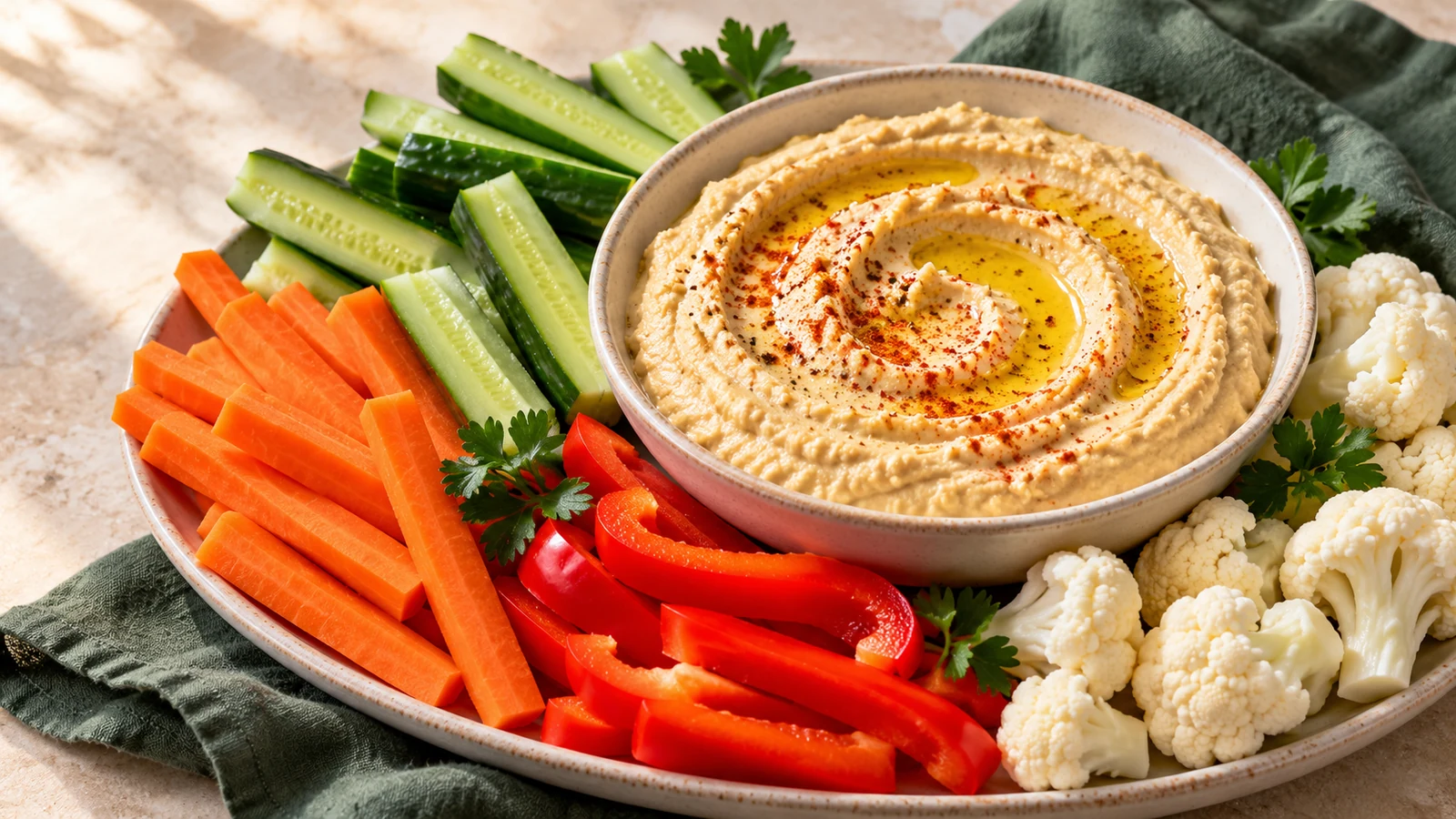
Classic hummus for veggies is a simple way to add a savory, creamy dip to a vegetable tray. Chickpeas give it body, tahini adds a nutty flavor, and lemon keeps each bite bright. Blend it thick enough to cling to a carrot stick, then adjust it a spoonful of water at a time for the vegetables you plan to serve.
Quick answer: For a scoopable classic hummus, blend chickpeas, tahini, lemon juice, garlic, olive oil and salt until smooth. Add cold water gradually. Serve it with carrots, cucumber, bell peppers, celery or cauliflower. Jump to the printable recipe card.
Why hummus works on a vegetable tray
Hummus offers a different flavor and texture from dairy-based herb dips. Its mild chickpea base pairs with both sweet vegetables, such as carrots and peppers, and less sweet options, such as celery and cauliflower. It also gives guests a plant-based choice.
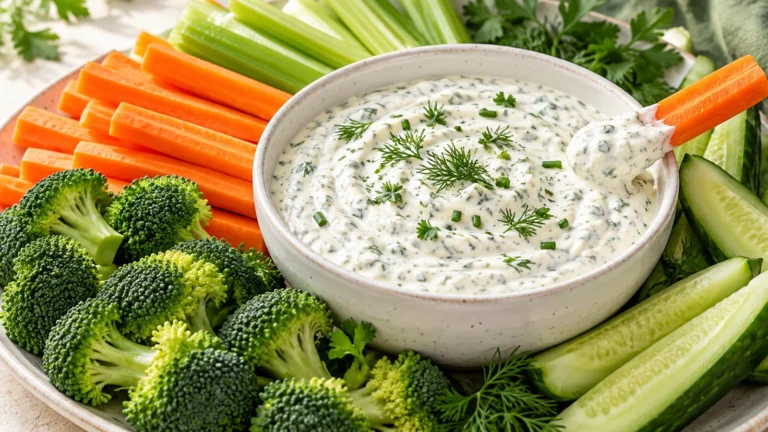
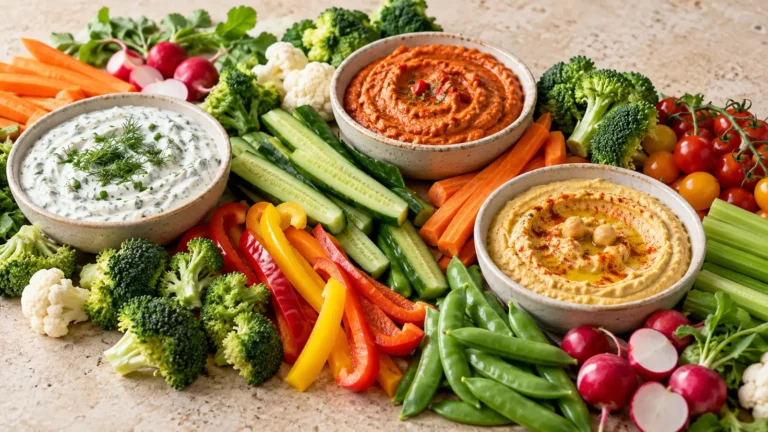
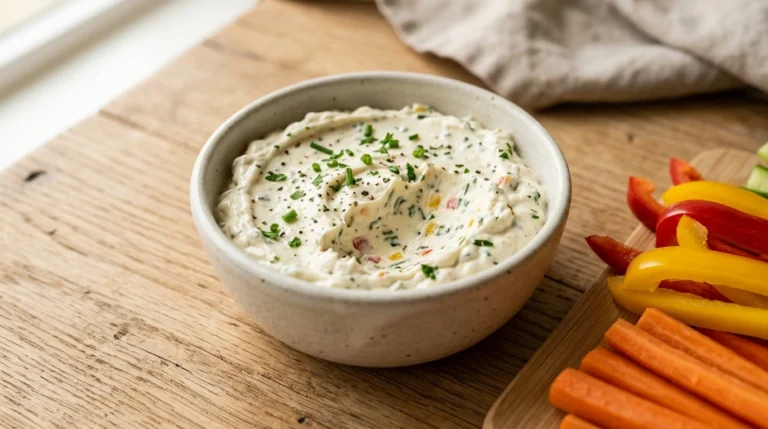
For a medium platter, serve hummus beside a creamy herb dip and a colorful third option. The vegetable tray dip guide explains how to choose contrasting flavors without crowding the tray with bowls.
Ingredients
- 1 can (15 ounces) chickpeas, drained and rinsed
- ¼ cup tahini
- 3 tablespoons fresh lemon juice
- 1 small garlic clove
- 1 tablespoon olive oil, plus a little more for serving if desired
- ½ teaspoon fine salt, or to taste
- 2–4 tablespoons cold water, added gradually
Note: Tahini is made from sesame. Check the label and tell guests that the hummus contains sesame.
How to make classic hummus for veggies
- Add the tahini and lemon juice to a food processor. Blend for about 30 seconds, stopping to scrape down the sides.
- Add the garlic, olive oil and salt. Blend again until combined.
- Add the chickpeas and process until they begin to break down. Scrape down the bowl, then continue blending.
- Add cold water, one tablespoon at a time, until the hummus is smooth and easy to scoop. For a vegetable tray, stop while it is still thick enough to hold on a carrot stick.
- Taste and adjust the lemon juice or salt. Spoon into a bowl and serve with prepared vegetables.
If the hummus seems grainy, give it more blending time before adding extra water. Too much water can turn a sturdy vegetable dip into a thin sauce.
Best vegetables to serve with hummus
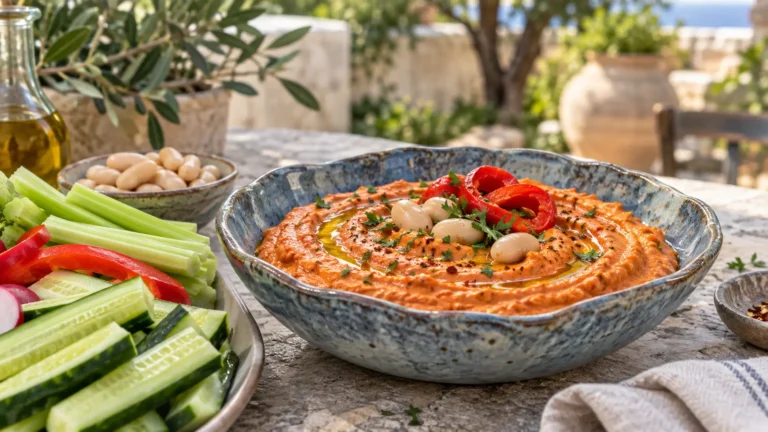
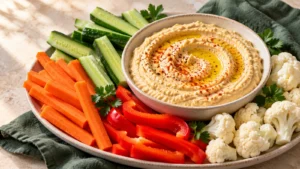
Carrot sticks bring sweetness and enough strength for a generous scoop. Cucumber spears add a cool, juicy contrast; cut them thick enough to hold the dip. Bell pepper strips provide sweetness and crunch, while celery gives you a firm, easy-to-hold scoop. Cauliflower florets also work well with hummus’s savory flavor.
Pat washed vegetables dry before placing them around the bowl. If you are deciding what else to add, the guide to the best vegetables for dipping can help you build a varied tray.
How to get the right texture
A dip for raw vegetables needs enough body to stay on each piece. Start with less water than you think you need. After blending, test the hummus with an actual carrot stick or cucumber spear. It should scoop easily without running off.
If it is too thick, blend in another tablespoon of cold water. If it tastes flat, try a little more lemon juice or salt before changing its texture. For a smoother finish, let the food processor run longer and scrape down the sides as needed.
Easy ways to serve it
For a simple snack, pair the hummus with carrots, cucumber and bell pepper strips. For a party tray, add broccoli, cauliflower or celery and set the hummus next to a contrasting dip. If you want to plan quantities for guests, use the party dip calculator.
A small drizzle of olive oil on top is optional. Keep the vegetables as the focus and place the bowl where guests can reach it from more than one side of the platter.
Frequently asked questions
Can I make classic hummus without tahini?
Yes, but the flavor will be different. You can blend chickpeas with lemon, garlic, olive oil and a little water for a simple chickpea dip. If sesame is being avoided because of an allergy, check every ingredient label and prevent cross-contact when preparing and serving the food.
Why is my hummus too thick?
Chickpeas and tahini absorb moisture, and the finished dip can thicken as it sits. Blend in cold water a tablespoon at a time until it reaches the texture you want.
What makes hummus too runny for vegetables?
Adding too much water at once is a common cause. Begin with two tablespoons, blend thoroughly and test with a vegetable before adding more.
Is hummus a good choice for a crudités platter?
Yes. Its savory flavor works with a range of raw vegetables, and its texture can be adjusted to suit sturdy sticks and florets. Pair it with a creamy herb dip if you want contrasting choices on the platter.
Classic Hummus Recipe Card
Classic Hummus for Veggies
Ingredients
Equipment
Method
- Blend tahini and lemon juice in a food processor for about 30 seconds. Scrape down the bowl.
- Add garlic, olive oil and salt; blend again.
- Add chickpeas and process, scraping down the sides, until broken down.
- Blend in cold water one tablespoon at a time until smooth and thick enough to cling to a carrot stick.
- Taste, adjust lemon or salt, and serve with prepared vegetables.